


AI Maktoum International Airport (DWC): Dubai's Aviation Future
Table of Contents
- Loading contents...
| Project at a Glance | |
| Project Name | AI Maktoum International Airport |
| Project Type | Greenfield |
| Sector | Infrastructure |
| Subsector | Airport Infrastructure |
| Project Value | AED 128 billion (USD 34.85 billion) |
| Project Status | Under Expansion |
| Built By | Dubai Aviation Engineering Projects (DAEP) |
| Operated By | Dubai Airports Company |
| Project Commissioned Date | 2013 |
| Special Mention | To be the World’s Largest Airport |
Project Overview
AI Maktoum International Airport, popularly known as the DWC (Dubai World Central), is the world’s largest airport. It was initially launched for cargo operations on 27th June 2010 and became operational for commuters on 27th October 2013. It was developed under the emirate’s ruler, Sheikh Mohammed bin Rashid Al Maktoum.
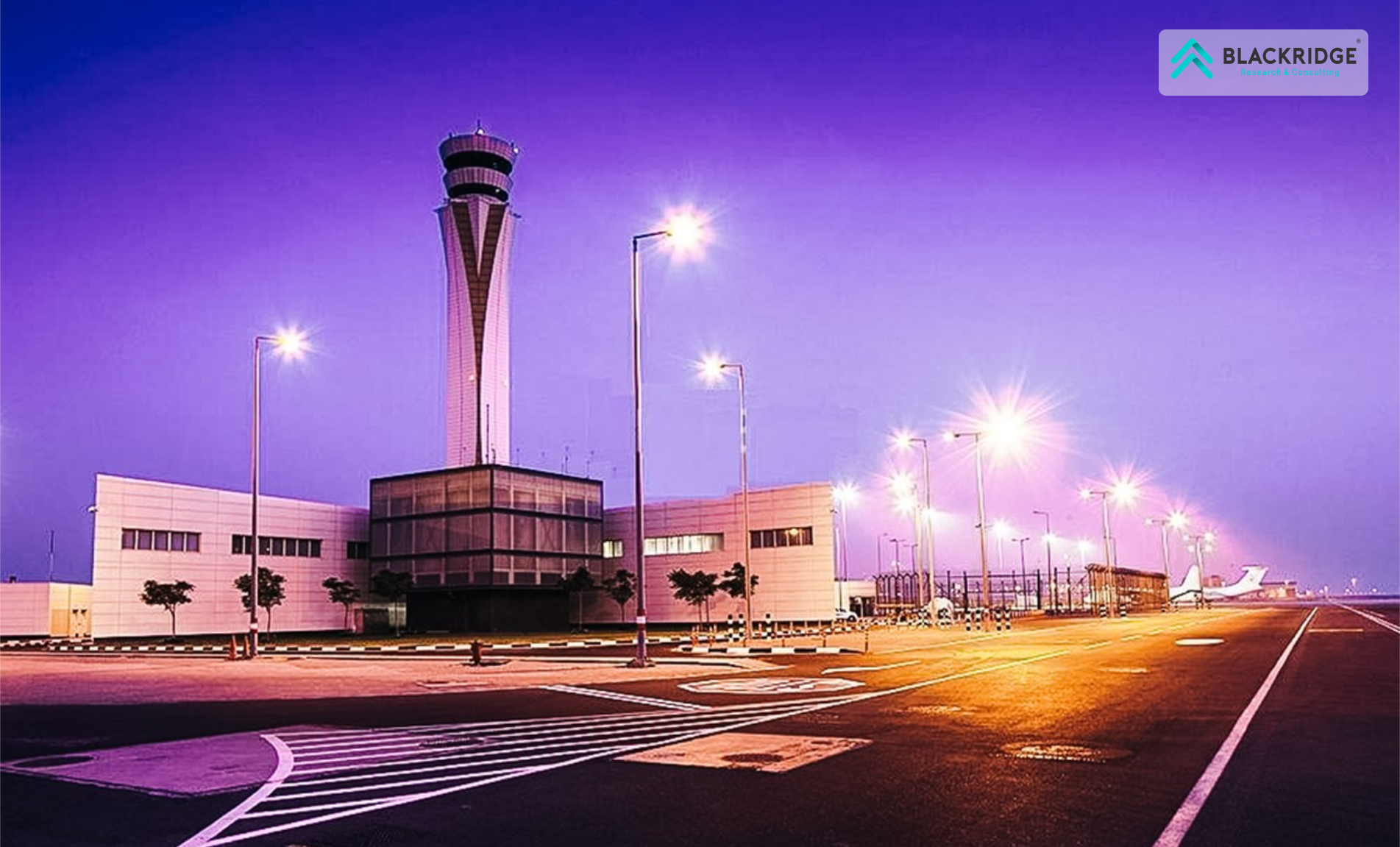
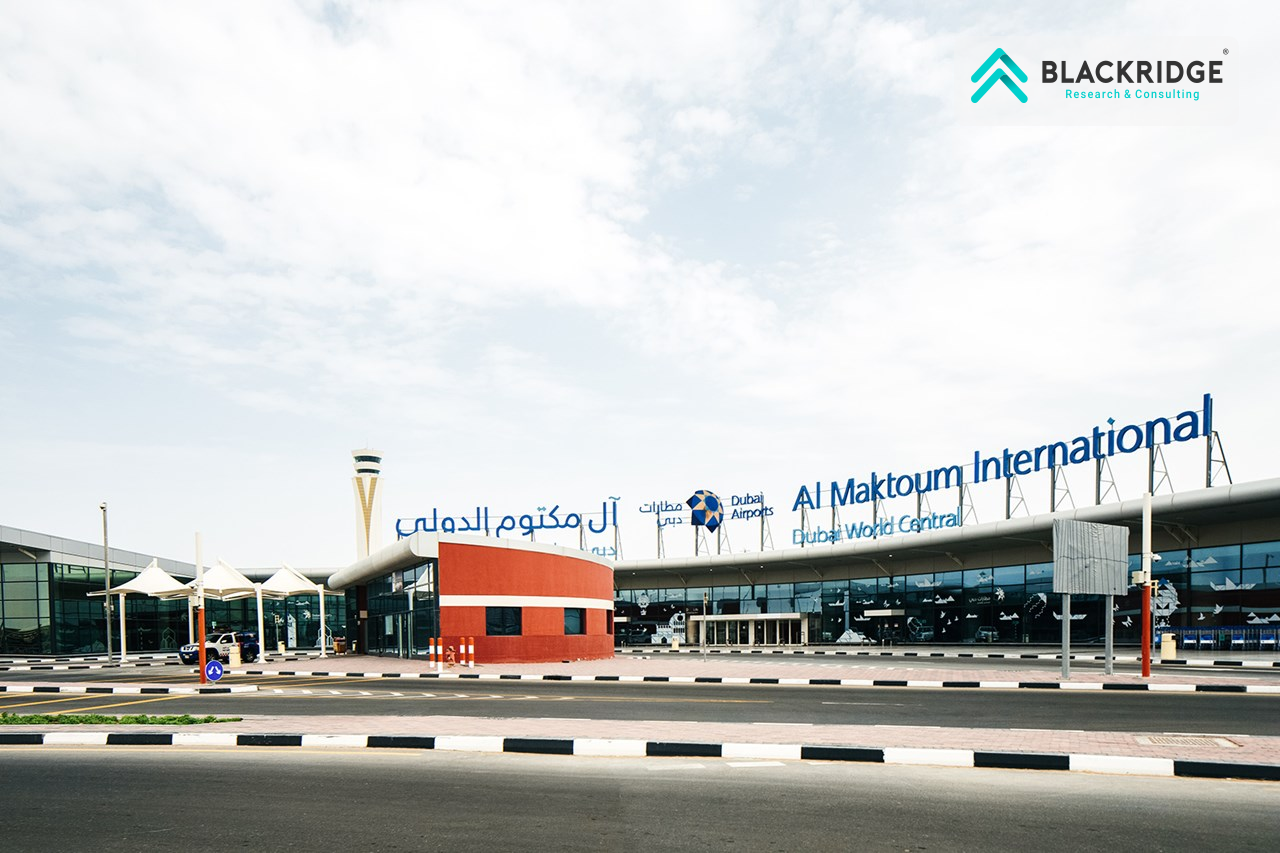
Al Maktoum International Airport photo. Source: Daep.gov
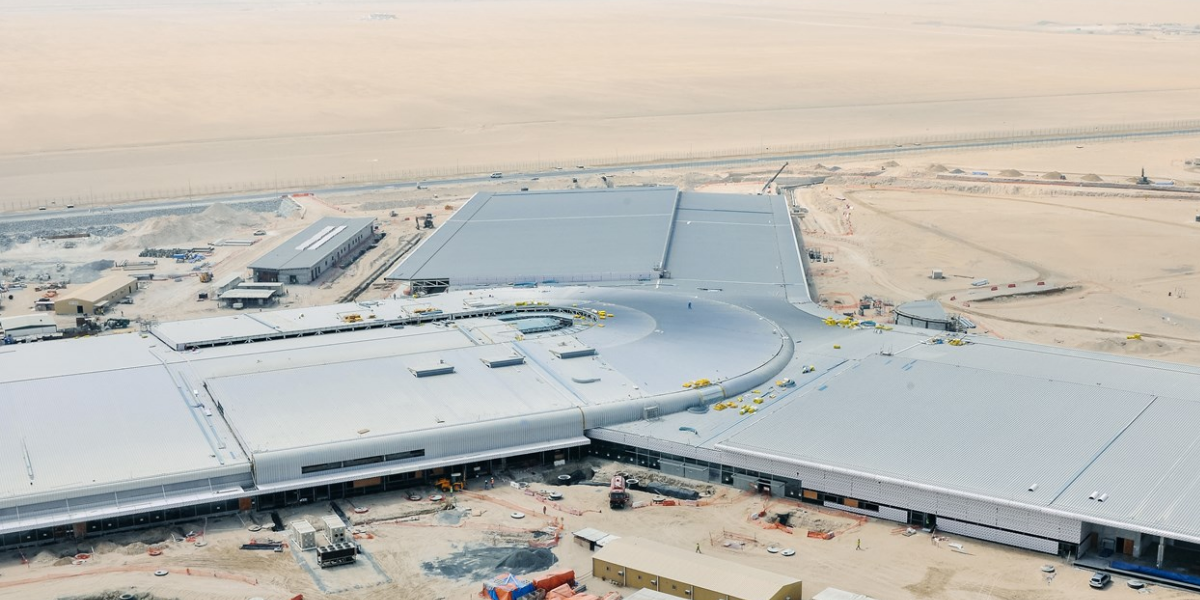
It is being built for AED 128 billion (USD 34.85 billion) and is spread across 70 square kilometers, with five parallel runways and 5 passenger terminal buildings. This world’s most expensive airport will feature a capacity of 260 million passengers and 12 million tons of annual cargo capacity. The world’s largest airport is 5 times the size of the Dubai Airport.
Project Background
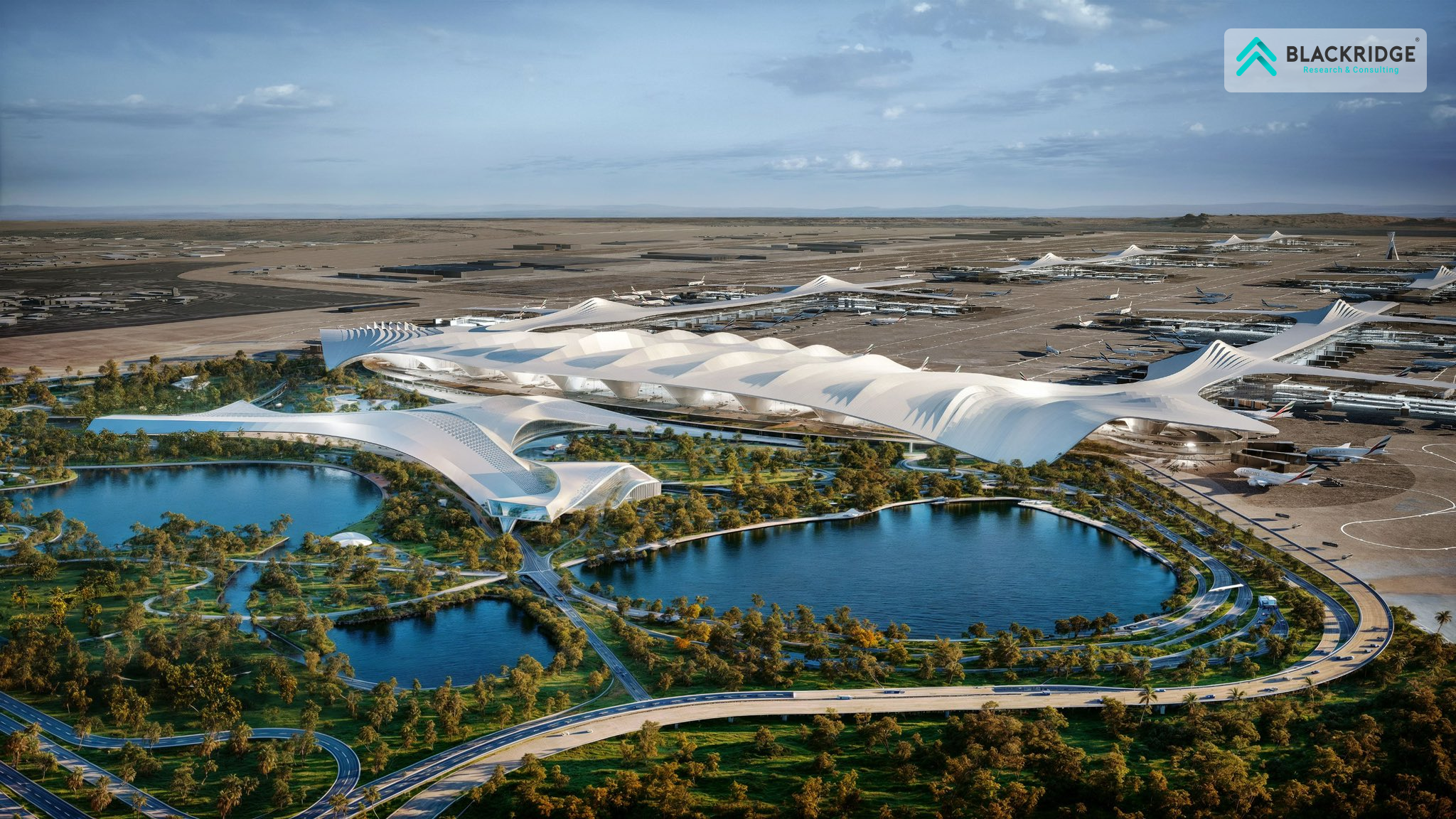
Al Maktoum International Airport photo. Source: Daep.gov
The Dubai World Central was constructed to position Dubai as a global aviation hub and promote economic growth in Dubai and the United Arab Emirates (UAE). It was originally built for cargo operations in 2010, but later, the passenger terminal was expanded to increase the airport’s annual passenger capacity from 7 million to 26 million passengers per year.
A major driver for the DWC project is the challenge of expanding the existing Dubai International Airport (DXB) which has only two runways and with urban areas built on both sides, leaving place for new runway construction. Another driver is the regional competition, DXB is one of UAE's largest airport, and Sheikh Mohammed bin Rashid Al Maktoum plans to position Dubai as an aviation Hub by expanding the existing AI Maktoum International Airport and further shifting the operations of current Dubai International Airport to DWC over the next decade.
DWC was initially known as Jebel Ali International Airport (JXB), but it was later renamed Dubai World Central International Airport. After its passenger terminal extension, it was renamed as Al Maktoum International Airport with an airport code of DWC. In April 2024, the Dubai government announced the Phase Two expansion of the Al Maktoum airport.
Al Maktoum International Airport Location
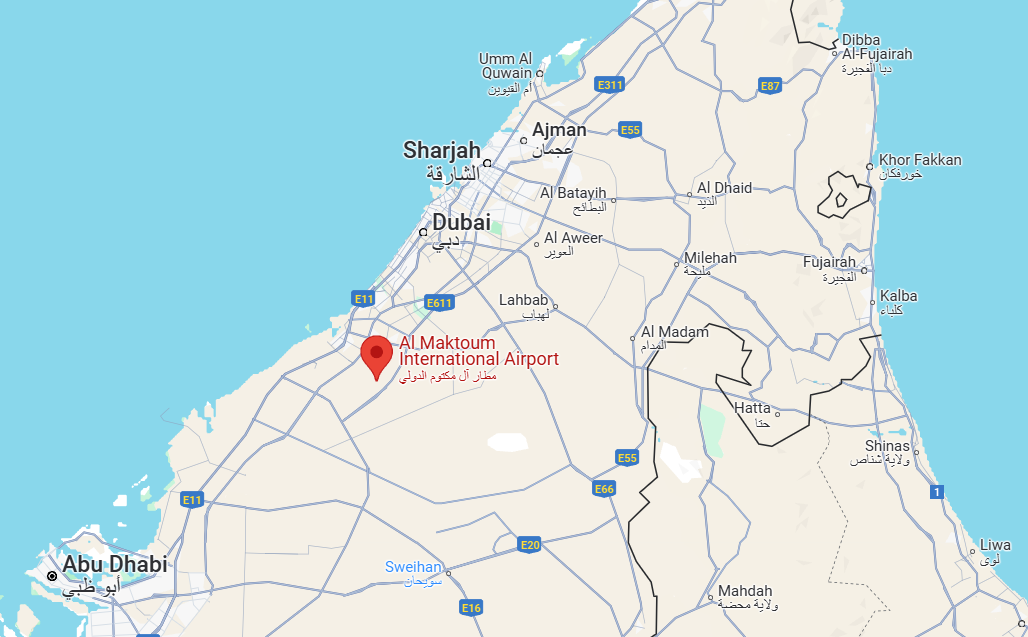
The AI Maktoum International Airport (AMIA) is located in Dubai South. It is surrounded by six dedicated areas, which comprise of EXPO 2020 site and districts dedicated to residential, aviation, leisure, logistics, business and commercial spaces. It is considered as world’s largest international airport which is 5 times the size of the Dubai International Airport.
Project Cost
It is being built at a project cost of AED 128 billion (USD 34.85 billion).
Want to Stay Updated About Latest Infrastructure Projects in UAE? Click to know
Project Timeline
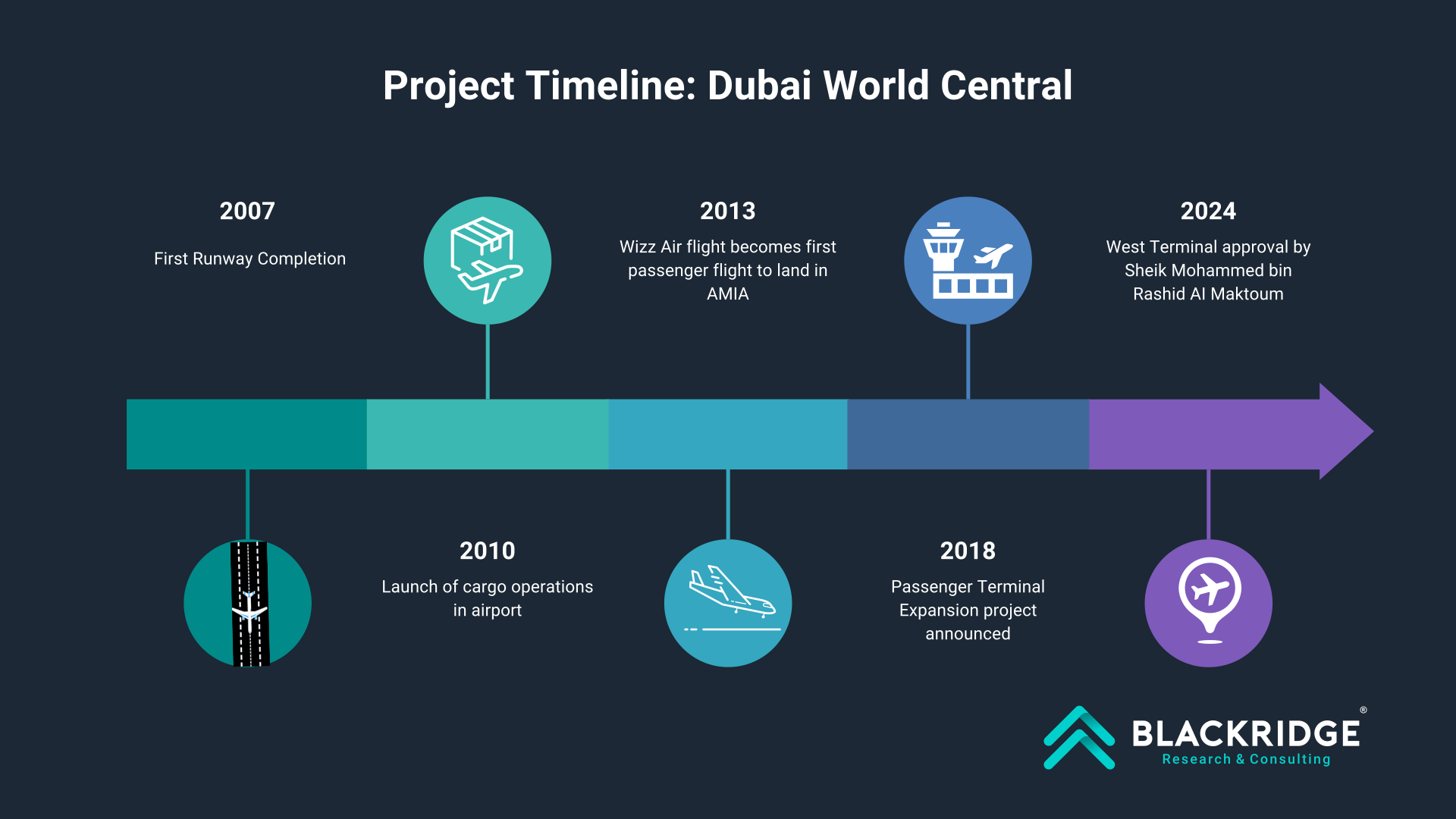
On 20th May 2024, the Government of Dubai invited contractors to express interest in the infrastructural works of the expansion of the AI Maktoum International Airport.
Al Maktoum International Airport Project Layout
Al Maktoum International Airport photo. Source: Daep.gov
The already operational Al Maktoum International Airport is being expanded in three phases. The expansion began in 2024 and is expected to be completed by 2027. The expansion is planned as follows:
Phase 1
The first phase included the construction of Concourse 1 with 100 contact gates, the West Terminal Building, and a metro line connected to the city.
4 underground stations, runway 2 and runway 3, ground service equipment road network, underground baggage handling system, energy centers, fire safety, and other support facilities for duty-free catering, maintenance, and storage on the airport's Northside. Phase 1 will cater to 130 million passengers annually.
Phase 2
On 28th April 2024, the expansion of His Highness Sheikh Mohammed bin Rashid Al Maktoum announced and approved phase 2 of the airport. This includes the construction of Concourse, which includes 3 new APM stations (Automated People Mover), expansion of existing ground service equipment roads network and automated baggage handling system and support facilities. Phase 2 will allow 150 million annual passengers to be catered through 200 contact gates.
Final Phase
In the project's final phase, the East terminal will be constructed, including Concourse 3 and Concourse 4, and ground transportation from the East side of the city. This ground transportation will connect to Etihad Rail and the new metro line. Runway 4 and 5 will be completed in this phase and the total APM stations count will be increased to 14, connecting all the airside buildings in a giant loop. Upon completion, this international airport will serve about 260 million passengers annually through 400 contact gates and process 15 million tons of cargo.
Technical Specifications
Dubai Airshow Facility
It was moved from DXB to DWC in 2013 as a part of the DAEP Strategic Plan 2020. Started in 2011, and inaugurated in 2013, it is under development and enhancements since 2020.
The number of chalets and pavilions is 85.
Cargo Terminal
First constructed in 2006 with a control tower and runway for freight operations, underwent first renovation in 2018, facilitating 15% annual cargo growth for DWC year on year.
Specifications
| Storage Height | 11 meters |
| Annual Cargo Capacity | 1,000,000 tonnes |
| Number of Destinations | 45 |
| Number of Cargo Carriers | 20+ |
Control Tower
First constructed in 2006, it underwent first renovation in 2010 which included a new control tower and a runway accommodating more air traffic controllers. Under the current expansion plan, the AMIA will feature two control towers and 5 runway systems that will connect both the AMIA and Dubai International Airport.
Specifications
| Concrete Shaft Depth | 70 meters |
| Control Tower Height | 92 meters |
Logistics District
In 2006, it was planned as a trimodal cargo hub, which was completed with ten buildings, dedicated agent space, and a host of 6,400 logistics companies with active operations in 2017. As a part of the expansion, eight more buildings will be constructed to handle 15 million tons of air freight annually. This logistics district connects AMIA and Jebel Ali seaport. It is located between the DWC and Jebel Ali Free Zone, improving logistics connectivity and ensuring fast logistics.
The logistics district includes a DEWA 132/11 kV facility as an electrical substation with 132 kV cable-laying works.
Specifications
| Current Built-up Area | 26,253 sq. m |
| Number of Logistics Companies | 6,400 |
| Number of Buildings to be constructed | 8 |
Contractors
Dubai Aviation Engineering Projects (DAEP) was awarded the development of Al Maktoum International Airport, which includes the design, construction, and installation of the smart airport systems infrastructure. In 2006, DAEP built the first runway, a control tower, and a passenger terminal building.
DAEP is also responsible for designing and planning the AMIA, which includes installing intelligent airport systems that allow passengers to check in from home and drop baggage in curbside mobile carts and optimal vehicle movement systems. ADP Ingénierie is the project consultant.
Investors
The Government of Dubai supports the project under the rule of Sheikh Mohammed bin Rashid Al Maktoum. AED 128 billion (USD 34.85 billion) has been allocated for the expansion.
Want to Stay Updated About Latest Infrastructure Projects in UAE? Click to know
Conclusion
Al Maktoum International Airport photo. Source: Daep.gov
AI Maktoum International Airport is set for expansion, making it five times the size of Dubai International Airport, which will support 260 million passengers and 12 million tonnes of cargo annually. It will be the world's largest airport with 5 parallel runways and 400 aircraft gates, along with cargo flights. New aviation technologies will be employed for the first time in the aviation sector. Apart from the terminal expansion in Dubai South, millions of homes will be built around the airport, which will host logistics and air transport sectors.
FAQ's
Which airlines use Al Maktoum airport?
Smartwings, Transavia, Ural Airlines, Utair are a few airlines which use the Al Maktoum airport.
Al Maktoum International Airport code?
Al Maktoum International Airport also known as Dubai World Central airport code is (DWC).
Does Dubai have two airports?
Yes, Dubai International Airport (DXB) and AI Maktoum International Airport or Dubai World Central (DWC). The operations of the DXB will be shifted to DWC over next 10 years.
What is DWC airport used for?
It was used for cargo in 2010 and passenger flights in 20113. In 2024, the expansion of the DWC was announced.
What is Dubai main airport called?
Dubai main airport is called Dubai International (DXB), which is the largest in Dubai with a traffic of 87 million guests and 1.8 million tonnes of cargo in 2023.
Does DWC have passenger flights?
DWC or OMDW has passenger flights which was initiated in 2013. However, Dubai announced its plans to expand its size to five times the size of Dubai International Airport.
Stay updated on the latest infrastructure projects in the UAE!
Subscribe to infrastructure projects database in UAE to get access to:
- Reliable and high-quality insights
- Upcoming, in-progress, and completed construction
- EPC projects
- Essential details on key stakeholder contact information
- Timely updates
Start a free demo to take your business to the next level!
Leave a Comment
We love hearing from our readers and value your feedback. If you have any questions or comments about our content, feel free to leave a comment below.
We read every comment and do our best to respond to them all.