



What is Grey Hydrogen?
Grey hydrogen is produced from natural gas or methane, which causes carbon emissions into the atmosphere, making it less environmentally friendly. Grey hydrogen is similar to blue hydrogen without carbon capture and storage.
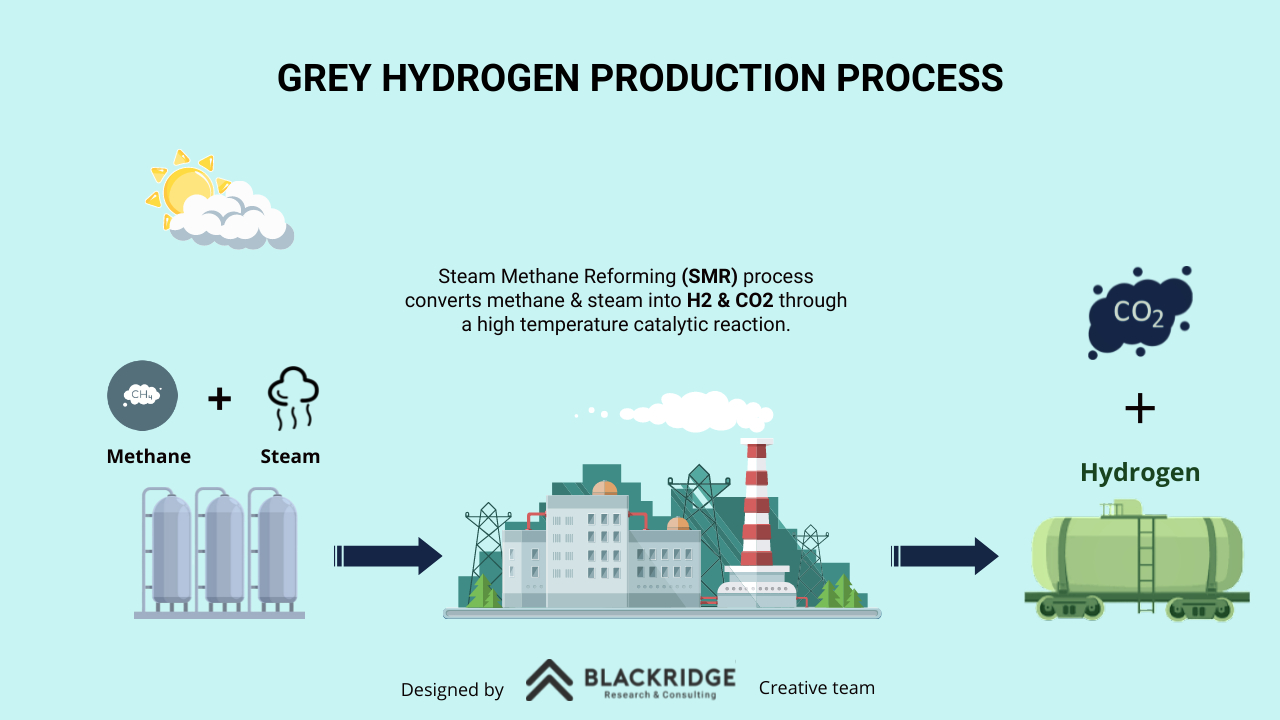
Grey hydrogen is inexpensive and is most commonly used in the chemical industry to prepare fertilizers and refining oils.
Where Is Grey Hydrogen Produced From?
Grey hydrogen is produced from natural gas called methane using a process called SMR (Steam Methane Reforming). In this steam reforming process, methane is taken as an input and is passed through high temperatures of steam to produce hydrogen and CO2 as a byproduct. The hydrogen produced is collected, and the CO2 emission produced is released into the atmosphere.
Steam Methane Reforming Process (SMR)
Steam Methane Reforming Process is the most commonly used method to produce gray hydrogen. Below is the breakdown of the steps:
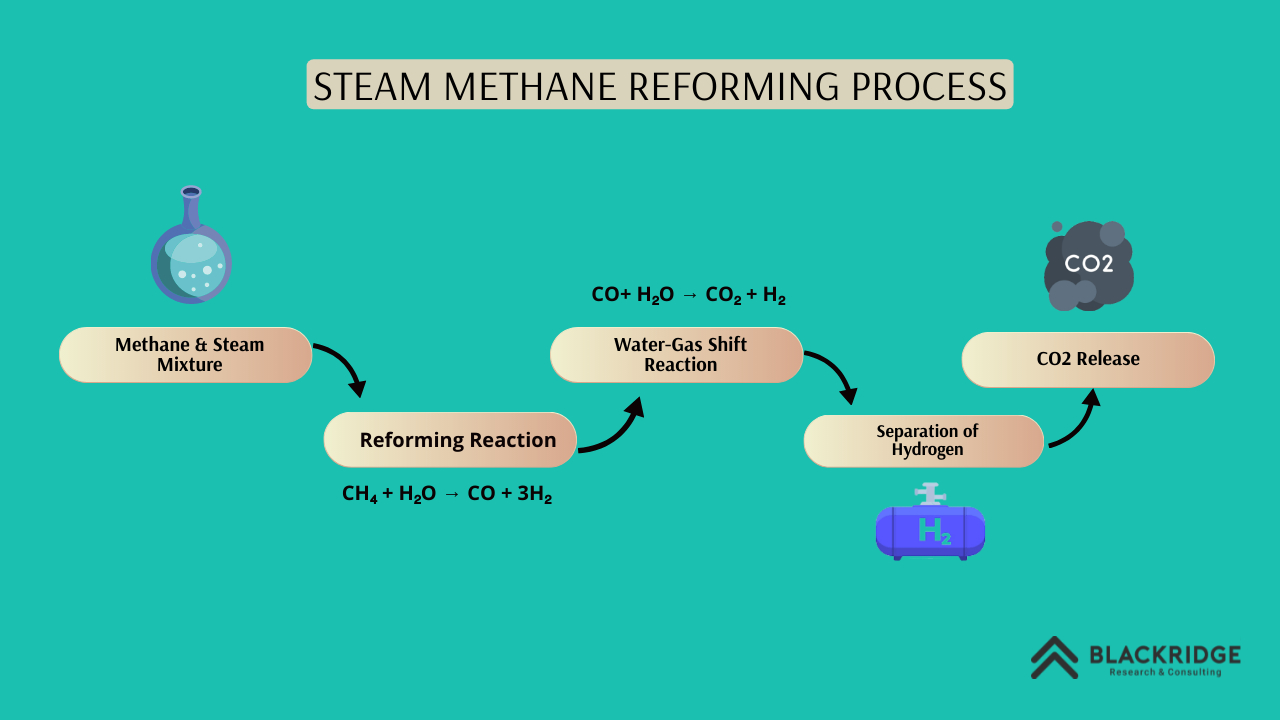
Methane & Steam Mixture: Methane is the most commonly used natural gas which is mixed with steam at a temperature of 700-1000°C.
The Reforming Reaction: The methane & steam mixture is passed through a catalyst causing them to react and produce two byproducts that are hydrogen (H2) and carbon monoxide (CO).
Reaction: CH? + H?O → CO + 3H?
The Water Gas Shift Reaction: The CO captured from the previous step is further processed with steam to produce additional hydrogen and carbon dioxide (CO2).
Reaction: CO+ H?O → CO? + H?
Separation of Hydrogen: The H2 produced from the process is separated from the entire mixture and is further purified for various purposes.
CO2 Release: The CO2 produced is released into the atmosphere, leading to greenhouse gas emissions. Hence, it is known as “grey hydrogen”.
Green Hydrogen v/s Grey Hydrogen v/s Blue Hydrogen
|
|
|
|
|
|
|
|
|
|
Feature
|
|
Green Hydrogen
|
|
Grey Hydrogen
|
|
Blue Hydrogen
|
|
|
|
|
|
|
|
|
|
|
|
Production Process
|
|
It uses renewables like wind and solar power to power the electrolysis process of water.
|
|
Steam Methane Reforming (SMR) from methane.
|
|
SMR from natural gas with carbon capture and storage (CCS).
|
|
|
|
|
|
|
|
|
|
|
|
Energy Source
|
|
Renewable energy like solar & wind
|
|
Natural Gas (Methane)
|
|
Methane with CCS technology
|
|
|
|
|
|
|
|
|
|
|
|
Carbon Emissions Level
|
|
None
|
|
High
|
|
Low
|
|
|
|
|
|
|
|
|
|
|
|
Carbon Capture
|
|
Not Applicable
|
|
CO2 is released into the atmosphere
|
|
CO2 is captured using CCS.
|
|
|
|
|
|
|
|
|
|
|
|
Environmental Impact
|
|
Environmentally friendly.
|
|
It leads to global warming.
|
|
It is less harmful than grey hydrogen
|
|
|
|
|
|
|
|
|
|
|
|
Cost
|
|
Expensive due to the use of renewables
|
|
Cheaper due to the use of natural gas
|
|
Most Expensive due to CCS technology
|
|
|
|
|
|
|
|
|
|
|
|
Primary Use
|
|
Sustainable green energy projects
|
|
Fertilizers and Refining Oil Production
|
|
Used in Fuel cells and electric vehicles
|
|
|
|
|
|
|
|
|
|
|
Trusted by Leading EPCs & Manufacturers
Find Latest Hydrogen Projects Around the World
Gain exclusive access to our industry-leading database of hydrogen opportunities with detailed project timelines and stakeholder information
Request Free Trial → Learn More →
No credit card Up-to-date coverage
Grey Hydrogen Uses
Grey hydrogen is majorly used in oil refining, fertilizer production, steel manufacturing, and it is used as fuel to power combined heat and power systems (CHP).
Grey Hydrogen Price
The cost of hydrogen production is based on several factors, such as the natural gas prices, the availability of natural gas, the energy costs required for the SMR process, operational and maintenance costs.
The gray hydrogen production cost is low compared to its counterpart green hydrogen (clean hydrogen). As of 2023, the gray hydrogen produced from natural gas costs about USD 0.98 - USD 2.93 per/Kg. The other forms of hydrogen produced from fossil fuels integrated with carbon capture technology such as blue hydrogen costs about USD 1.8 - USD 4.7 per/Kg.
Blackridge’s Research Report forecasts that as per the recent levelized cost of hydrogen analysis, from 2030, green hydrogen production in a new plant can be 18% cheaper compared to existing gray hydrogen plants in five major economies of Brazil, China, India, Spain, and Sweden. Additionally, experts foresee newly built low emission hydrogen (green hydrogen) plants replacing existing gray hydrogen plants.
Trusted by Leading EPCs & Manufacturers
Find Latest Hydrogen Projects Around the World
Gain exclusive access to our industry-leading database of hydrogen opportunities with detailed project timelines and stakeholder information
Request Free Trial → Learn More →
No credit card Up-to-date coverage
Global Transition from Grey Hydrogen to Green Hydrogen
According to Blackridge Research expert's Global Green Hydrogen Market Report the global hydrogen production produced from fossil fuels without CCS (CO2 capture) technology is around 95 MtH2/yr (megatons of hydrogen per year). About 1,100-1,300 Megatons of CO2 is emitted globally every year.
Gray hydrogen driving is a major contributor to climate change, and several countries are aiming for an energy transition towards renewable energy sources. The use of grey hydrogen in several sectors has been reduced and is replaced with green hydrogen (pure hydrogen). The high carbon emissions produced due to the SMR process have negatively affected the environmental factors, resulting in climate and global warming.
Grey hydrogen market is high predominantly due to its use in fertilizer production, oil refining, and downstream chemical processes. Initiatives are being made to reduce about two-thirds of carbon dioxide emissions by increasing renewable energy supply, such as green hydrogen towards a net-zero energy system. This includes fueling energy services such as heavy-duty trucks and other industrial processes with renewable hydrogen currently supplied with fossil fuels.
A major barrier toward the smooth transition from gray hydrogen to green hydrogen is the higher cost of production due to the use of renewables like solar and wind. However, the cost of renewable power is witnessing a dip due to advanced technologies, thus leading the world’s largest green hydrogen plants.
Several countries and union territories have launched programs and initiatives to replace gray hydrogen with renewable green hydrogen across various sectors. According to the Blackridge's Green Hydrogen Market Report, The European Union (EU) REPowerEU plan targets achieving 20 million tons of renewable hydrogen use by 2030. Likewise, India targets producing 5 MMTPA (million metric tons per annum) under its National Green Hydrogen Mission. China targets introducing 50,000 hydrogen fuel cell vehicles on the road along with hydrogen refueling stations by 2025 under its long-term hydrogen development plan (2021-2035).
Thus, in the future, global hydrogen production needs are likely to be fulfilled by green hydrogen production with two key factors on the horizon: the cost of renewable electricity and the cost of electrolyzers.
Summary
Grey hydrogen is produced from natural gas (methane) using a process called SMR, which produces high levels of carbon emissions, making it less environmentally friendly. The grey hydrogen produced is majorly used in fertilizer production and oil refining.
Grey hydrogen fulfills major global hydrogen demand and is preferred over other sources of hydrogen due to its low cost of production and attainability across several countries. However, initiatives are made to replace existing gray hydrogen with new green hydrogen production plants to achieve environmental benefits.
Ready to Win More Business Contracts?
Subscribe to our 1900 + global hydrogen project database worth USD 460+ billion and receive exclusive benefits like:
Leads to win project contracts
Stakeholder contact information
Regular updates on project development
Industry trends and insights by experts
Claim your free leads by subscribing to Global Hydrogen projects database and stay ahead with bespoke market intelligence!


Leave a Comment
We love hearing from our readers and value your feedback. If you have any questions or comments about our content, feel free to leave a comment below.
We read every comment and do our best to respond to them all.