



The U.S. renewable energy sector continued its rapid expansion through 2025 as utilities and independent power producers accelerated investments in solar, wind, and energy storage projects. Utility-scale solar generation reached about 296 billion kWh in 2025, while wind generation climbed to nearly 476 billion kWh, reflecting strong project execution and rising clean energy demand across the country.
Top renewable energy companies in US including NextEra energy, Constellation energy and Invenergy are also preparing for another record year in 2026, with plans to add nearly 86 GW of new utility-scale capacity, including major solar, storage, and wind installations. Against this backdrop, leading renewable energy companies in the U.S. are expanding their project pipelines, strengthening generation portfolios, and playing a central role in the country’s energy transition.
This list highlights the top renewable energy companies in the U.S. in 2026 based on their market presence, installed capacity, and ongoing clean energy developments.
Top 15 Renewable Energy Companies in the US 2026 (ranked based on installed renewable capacity as of 2025)
Rank | Companies | Established in | Headquarters | Installed Renewable Capacity |
1 | NextEra Energy | 2000 | Juno Beach, Florida | 37.5 GW |
2 | Constellation Energy | 1816 | Baltimore, Maryland | 32.4 GW |
3 | Berkshire Hathaway Inc. | 1955 | Omaha, Nebraska | 15.7 GW |
4 | Invenergy | 2001 | Chicago, Illinois | 13.8 GW |
5 | Enel Green Power North America | 2008 | Andover, Massachusetts | 12.6 GW |
6 | Cypress Creek Renewables | 2014 | Durham, North Carolina | 12 GW |
7 | Recurrent Energy | 2011 | Austin, Texas | 11 GW |
8 | RWE AG | 1898 | Valhalla, New York | 10.8 GW |
9 | Brookfield Renewable US | 2011 | New York City | 10.2 GW |
10 | Clearway Energy | 2018 | San Francisco, California | 9 GW |
11 | Vistra Energy Corp. | 2016 | Irving, Texas | 7.8 GW |
12 | XPLR Infrastructure LP | 2014 | Juno Beach, Florida | 7.4 GW |
13 | Southern Company | 1945 | Atlanta | 6.4 GW |
14 | AES Corp. | 1981 | Arlington, Virginia | 5.4 GW |
15 | Arevon Energy | 2017 | Scottsdale, Arizona | 4.5 GW |
*In the above list we have ranked the companies based on the installed renewable capacity as of December 2025.
NextEra Energy, Inc
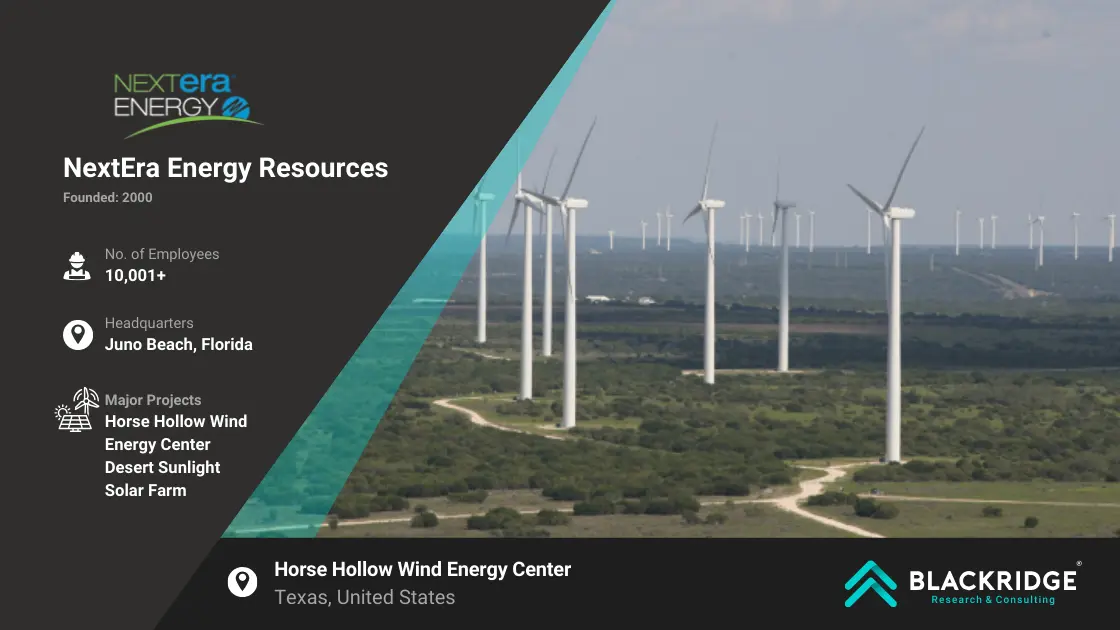
NextEra Energy Resources a yieldco of NextEra Energy partners is one of the US's largest green energy companies, and it is known for its wind and solar sources. It operates across 49 US states and 4 Canadian Provinces. It was founded in 2000 and is headquartered in Juno Beach, Florida, United States.
NextEra Energy partners has several subsidiaries, such as Florida Power & Light (FPL) and NextEra Energy Resources (NEER). It currently has an installed renewable energy capacity of 37.5 GW It specializes in:
Wind Energy
Solar Energy
Energy Storage
Nuclear Energy
Energy Marketing
Retail Energy
Pipelines
It is known to be biggest energy companies in the US and one of world's largest renewable energy generator, powered by solar and wind energy.
NextEra Energy delivers high-quality renewable energy projects across North America by developing, constructing, and operating power projects to produce electricity. Additionally, it also offers energy-related products and services to its customers across the globe.
| Project | Capacity | Location | Date of Commission |
Major Projects | Blythe Solar Power Project | 235 MW | California | 2016 |
| Golden Hills Wind Energy Project | 85 MW | California | 2015 |
Upcoming Projects | Green Hydrogen Pilot Project | 250 MW | Florida | NA |
| Oklaunion Wind Expansion | 250 MW | Texas | NA |
NextEra Energy Resources achieved several milestones, from servicing 76,000 customers to providing clean, reliable, and affordable electricity to more than 12 million people.
Between 2024 and 2027, NextEra announced its plans to develop 13.9 GW of solar PV capacity, targeting to increase its total renewable and energy storage capacity to 81 GW by 2027.
Trusted by Leading EPCs & Manufacturers
Find the Latest Renewable Energy Projects Across the United States
Gain exclusive access to our industry-leading database of renewable energy project opportunities with detailed project timelines and stakeholder information.
Request Free Trial → Learn More →
No credit card Up-to-date coverage
Constellation Energy
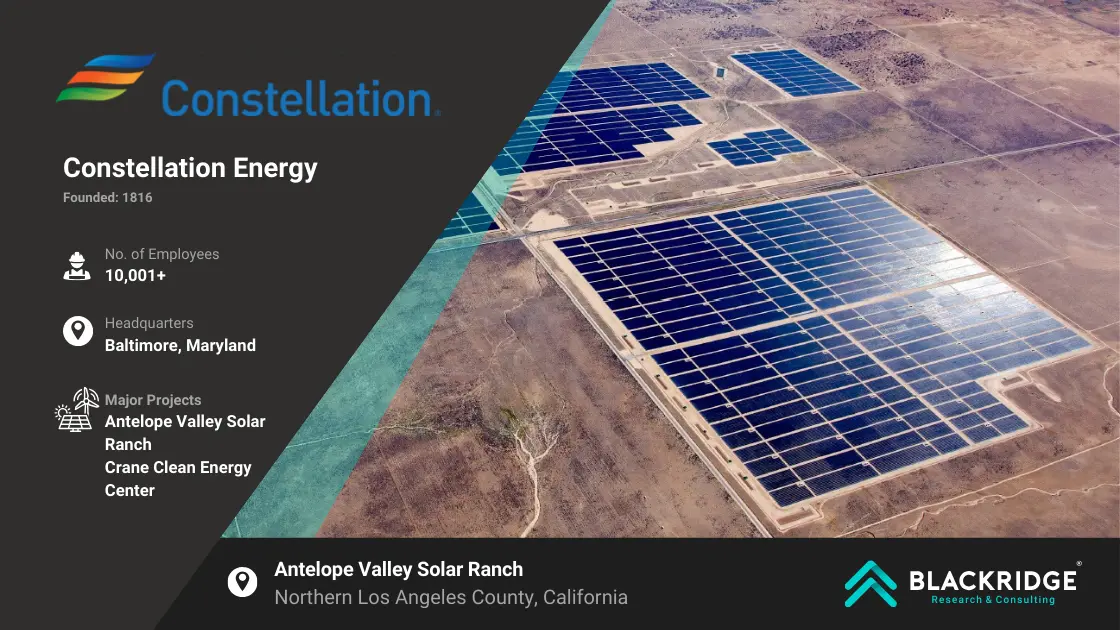
Constellation Energy is one of the US's largest energy producers. It is known for its reliable, clean and carbon-free energy projects for homes, institutional and commercial projects. It was founded in 1816 and is headquartered in Baltimore, Maryland.
It specializes services in:
Wind
Solar
Nuclear
Hydro
| Project | Capacity | Location | Date of Commission |
Major Projects | Nine Mile Point Clean Energy Center | 1907 MW | Oswego, New York | 2023 |
| Antelope Valley Solar Ranch One | 242 MW | Northern Los Angeles County, California. | 2013 |
Upcoming Projects | ||||
Currently, Constellation Energy has a renewable energy capacity of 32,400 MW. It has been powering more than 16 million homes and businesses and 10 % of all clean energy to the US grid. To ensure a carbon-free future, it targets to achieve:
95% carbon-free electricity by 2030
100% reduction of operations-driven emissions by 2040
In June 2025, Constellation Energy signed a 20 year PPA wit Meta for the Clinton Energy Center which also includes a 30 MW power uprate.
Berkshire Hathaway Inc.
Berkshire Hathaway is a diversified holding company with significant energy investments through Berkshire Hathaway Energy. The energy business operates regulated utilities, electricity transmission infrastructure and power generation assets.
Its renewable generation interests include wind, solar and hydroelectric power. Berkshire Hathaway Energy's operating companies have invested in renewable projects across several US electricity markets.
The group is particularly relevant to the US renewable industry because of its combination of utility operations, generation assets and long-term infrastructure investments.
The benchmark places Berkshire Hathaway second, with 15.7 GW of operating utility-scale renewable capacity.
Main activities: Wind energy, solar energy, hydropower, electricity generation and regulated utility operations.
Why it matters: Its renewable energy portfolio is supported by a large energy infrastructure business with long-term investment capabilities.
Invenergy
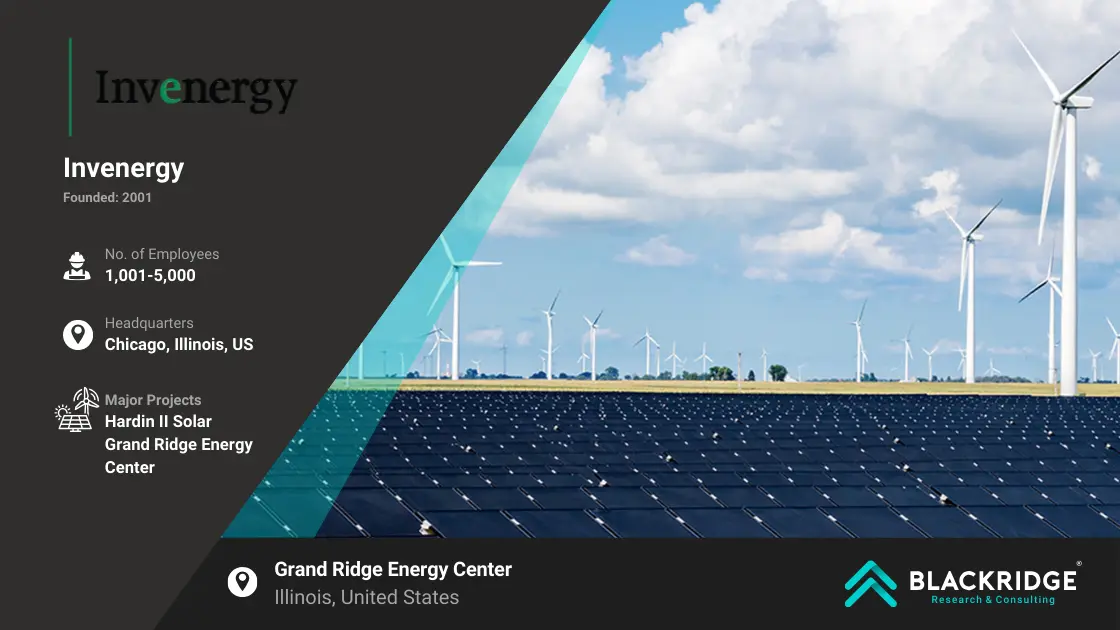
Invenergy, founded in 2001, is one of the major renewable energy companies in the US, with a total capacity of 31000 MW, including construction, contract awarded, and operation. It holds an installed capacity of 13,800 MW.
Their portfolio comprises 13,700 MW of wind projects through 119 projects, 4200+ MW of solar capacity through 42 projects, 510+ MW of storage capacity through 18 projects and 5700+ MW of natural gas capacity through 12 projects.
Its portfolio consists of more than 207 projects worldwide, powering 12.7 million homes. It specializes services in development, building, owns, and operates large-scale renewable projects across the globe. For a closer look at the companies focused on solar generation, see our overview of top solar power companies in the USA.
Apart from renewables, it holds a thermal capacity of 5,700 MW through 12 projects and 460 + MW of energy storage through 19 projects.
It offers services in:
Wind
Solar
Offshore Wind
Transmission
Clean Hydrogen
Natural Gas
| Project | Capacity | Location | Date of Commission |
Major Projects | Hardina II Solar Project | 150 MW | Ohio | 2025 |
| Delilah I | 300 MW | Northeast of Dallas, Texas | 2024 |
Upcoming Projects | Koshkonong | 300 MW | Dane County, Wisconsin | 2025 |
| Split Rail | 300 MW | Warren County, Missouri | 2026 |
It has operations in the Americas, Europe, and Asia. Its portfolio includes projects across the US, including those contracted, in construction, and commissioned. Cadence, Pleasant Prairie, Trade Post, Washtenaw, and Yuma Solar are a few of the contracted solar projects in the US. To stay updated about these contracted projects, you may subscribe to our solar projects database. Book a free demo to unlock new business opportunities.
Invenergy, in June 2025, broke ground on 240 MW Pleasant Praire Solar Energy Center in Franklin County tat bean construction in June 2025. Back in February 2025, began the commercial operations of its 300 MW Delilah I solar PV plant in Texas. Back on 7th January 2025, Invenergy announced its Hardina II solar project and began its commercial operations with a 150 MW capacity in Hardin County, Ohio.
Enel Green Power North America
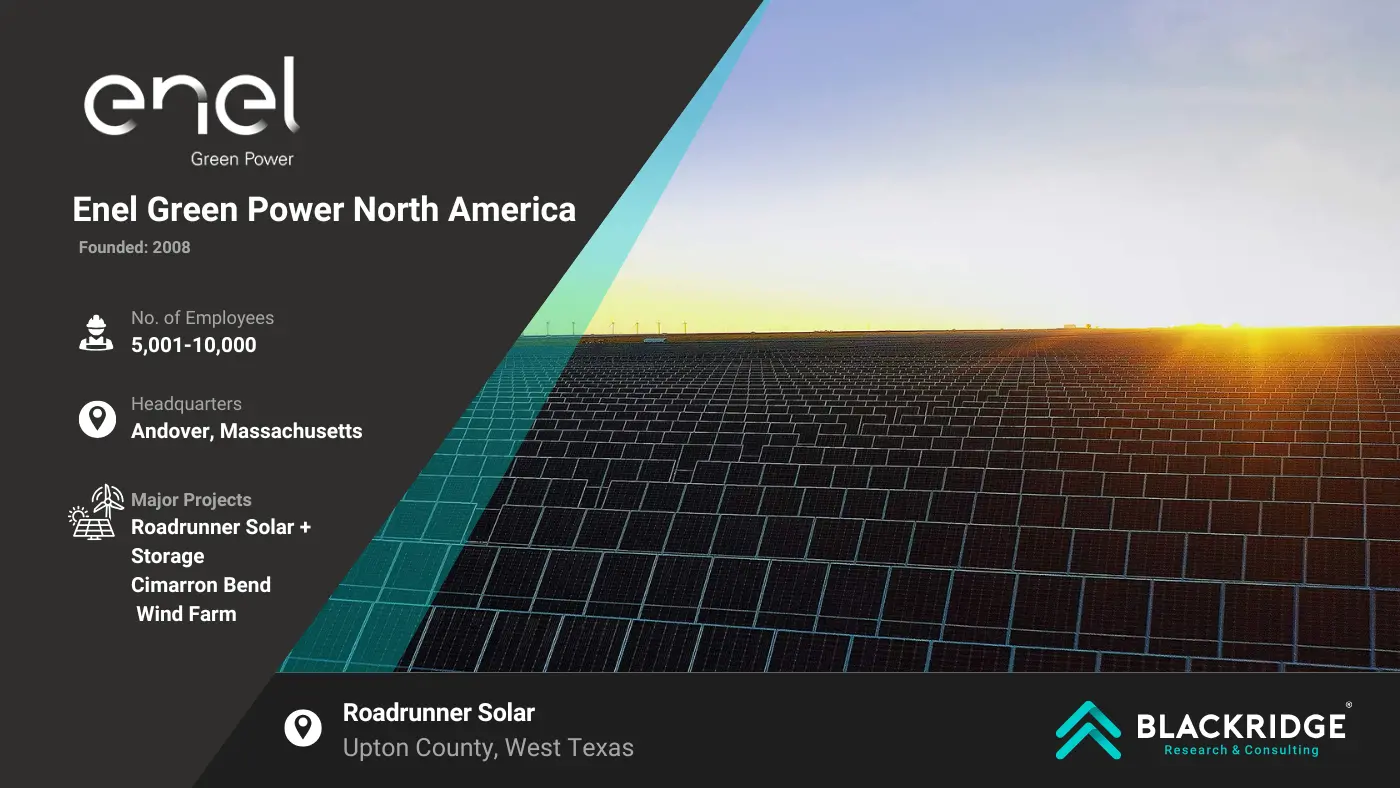
Enel Green Power is one of the leading renewable energy companies that develops, owns and operates renewable energy plants across 9 states in the US. Enel Green Power was founded in December 2008 and is a part of the Enel Group that develops and manages power generated from renewable resources worldwide.
Enel Green Power operates about 83 renewable energy plants including wind and solar energy. with a total operational capacity of 12558.03 MW (US Capacity) as of September 2024, it currently has 3 solar projects under construction across several states of the US. Apart from renewable energy projects it also boasts 1.3 GW of operational storage capacity.
Enel Green Power North America - US portfolio
Energy Source | Capacity (MW) |
Solar | 4044.11 |
Wind | 7181.7 |
Storage | 1666.42 |
Total | 12892.23 |
Back in 2021-22 Enel green power supported 305 SUST Projects (Sustainable Infrastructure Projects). It offers a wide range of services such as development, construction, own and operate. It also provides clean energy through various agreements, such as Power Purchase Agreements (PPAs).
In March 2025, Enel Green Power and Masdar signed an agreement to develop 446 MW solar PV power plant in Spain. Back in February 2025, Enel North America announced the operation of an Estonian solar-plus-storage plant in Delta County, Texas. This plant boasts a combined capacity of 202 MW solar photovoltaic (PV) facility paired with a 104 MW battery energy storage system (BESS). This project in Texas is supported by a PPA with BXP and Capri Holdings.
Likewise, Enel North America also announced a PPA agreement for a 115-megawatt (MW) portion of the Rockhaven wind farm in Murray and Carter counties, Oklahoma.
| Project Name | Capacity | Location | Year of Operation |
Major Projects | Roadrunner Solar + Storage | 497 MW (Solar) + 57 MW (Storage) | Upton County, Texas | 2019 (Phase 1), 2020 (Phase 2) |
Cimarron Bend Wind Farm | 599 MW | Kansas | 2020 (Expansion) | |
Upcoming Projects | ||||
Cypress Creek Renewables
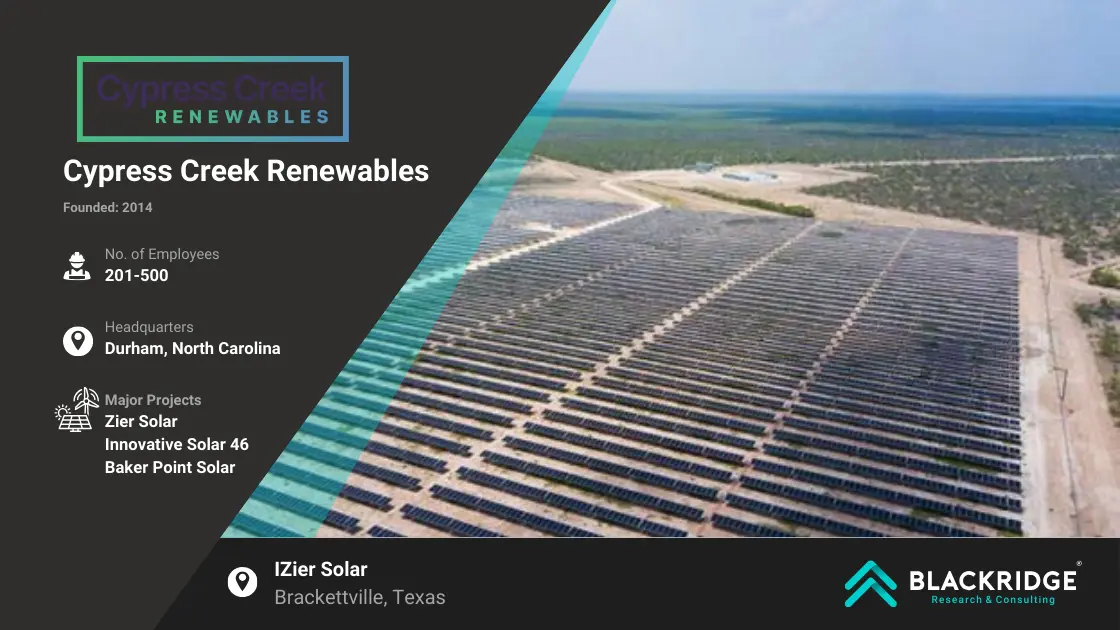
Cypress Creek is one of the leading renewable energy companies and is one of the largest storage and solar developers in the United States. Since its inception in 2014, its portfolio has offset 11 million metric tons of CO2 from solar and storage projects.
Its portfolio includes the successful development of 12 GW of solar energy projects, apart from utility-scale solar projects, it also offers energy storage projects to more than 2000 American homes. It specializes in project financing, Mergers & Acquisitions (M&A), and EPC (Engineering, Procurement, and Construction).
| Project | Capacity | Location | Date of Commission |
Major Projects | Zier Solar | 208 MW | Brackettville, Texas | 2024 |
| Innovative Solar 46 | 100 MW | Cumberland County, North Carolina | 2016 |
Upcoming Projects | Oxbow Hill Solar Project | 140 MW | Madison County | NA |
It has about seven offices, including Durham and Asheville, North California, New York, Chicago, San Francisco, and Washington D.C. Its operations include 850+ solar and storage projects.
About 5 GW of the total installed capacity is operated by the Cypress Creek Renewables and third-party customers. Cypress Creek Renewables owns about 2.4 GW of the total solar and storage. Back in March 2025, Cypress Creek secured USD 133 million in financing for a 200 MW Destiny Energy storage project in Texas. Tis project is expected to be completed in early 2026.
Recurrent Energy
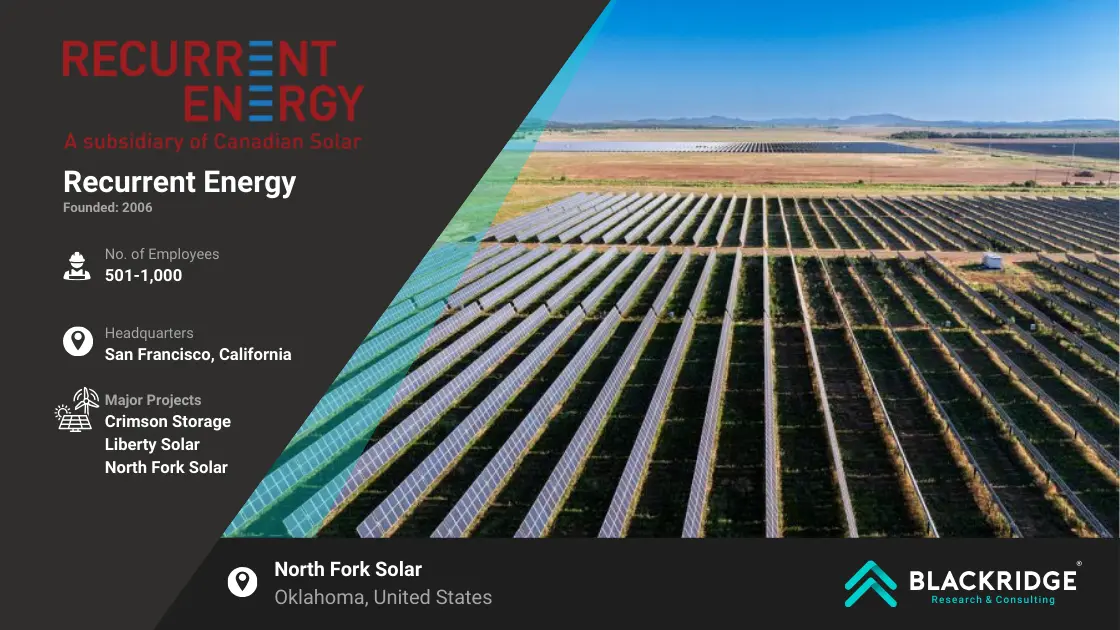
Recurrent Energy is a subsidiary of Canadian Solar Inc., one of the top solar PV module manufacturers in the world. It was founded in 2006 and is headquartered in Austin, Texas.
It specializes in solar and energy storage technology and has developed a portfolio of 11 GWp of solar and 3.7 GWh of battery storage projects. It operates across 11 countries, including the United States, Canada, China, Australia, and Brazil.
| Project | Capacity | Location | Date of Commission |
Major Projects | Slate Solar + Storage |
390 MWp solar + 561 MWh storage | California, United States | 2021 |
| North Fork Solar |
160 MWp | Oklahoma, United States | 2024 |
Upcoming Projects | Bayou Galion | 98 MWp |
Morehouse Parish, Louisiana | NA |
| Cobalt Solar | 250 MWac | Riverside County, California | 2025 (expected) |
It specializes in project development, organization & structuring, asset management, energy storage, project financing, EPC, and O&M (Operations & Maintenance). It is known to execute the world's first large-scale solar-plus-storage tolling agreements. It offers solar and energy storage solutions.
Back in July 2025, Recurrent Energy announced sale of its 100 MWp Cafayate PV project in Argentina, the company received a financial closure for the Blue Moon Solar project in Kentucky.
RWE AG
RWE is an international energy company with a substantial renewable energy business in the United States through RWE Clean Energy.
The company develops, constructs and operates utility-scale renewable energy projects, particularly onshore wind and solar facilities. Its US activities also include battery energy storage, which can help balance electricity supply and demand.
RWE has expanded its US renewable presence through project development, acquisitions and investments in new generation facilities. Its portfolio serves utilities and commercial customers through electricity supply agreements.
The benchmark places RWE third, with 10.8 GW of operating utility-scale renewable capacity.
Main activities: Onshore wind, solar energy, battery storage and renewable project development.
Why it matters: RWE is a major international renewable energy investor with a significant US operating and development platform.
Brookfield Renewable US
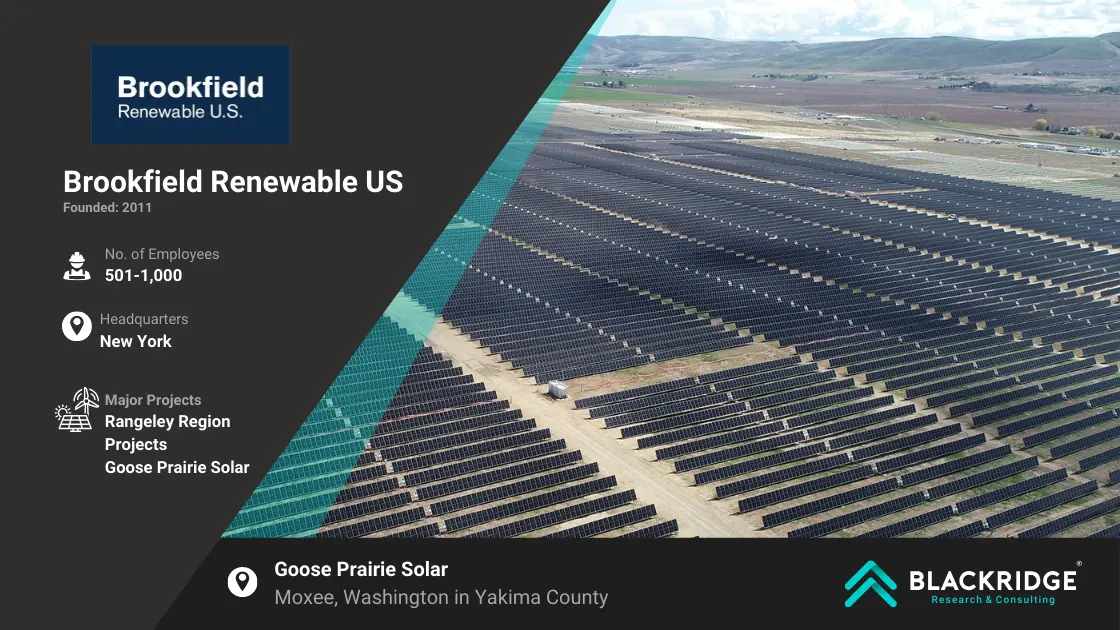
Brookfield Renewable U.S., a subsidiary of Brookfield Partners, is one of the leading developers, owners, and operators of renewable power in New York City. They operate across 34 US states with a total installed capacity of 8922 MW in the US.
On a global level, Brookfield Renewable Partners operates across North America, South America, Europe, and Asia. On a global level. Brookfield Partners holds renewable power and transition assets of 34,000 MW. Additionally, it has a pipeline of approximately 200,000 MW.
Brookfield Renewables Global Portfolio
Renewables | Installed Capacity in MW | No of Facilities |
Hydro | 8,300 | 238 |
Wind | 11,300 | 186 |
Solar | 7,200 | 233 |
Distributed Energy and Storage facilities | 5,700 | NA |
Total | 32,500 |
|
*the remaining capacity is from the sustainable solutions portfolio (investment in Westinghouse (a leading global nuclear services business)
Brookfield Asset Management and Microsoft entered a partnership to develop 10.5 GW capacity renewable projects that will power Microsoft's data centers. This partnership also includes financing by Brookfield for the development of renewable energy projects in the US and Europe. The project cost is estimated to be more than USD 10 billion. The project construction is expected between 2026 and 2030.
Brookfield plans to expand its investment in France. In 2024, Brookfield acquired Neoen with a 53% stake. This transaction is expected to close, as the remaining shares and convertible bonds will be out for tender in 2025.
| Project | Capacity | Location | Date of Commission |
Major Projects | South Plains I wind farm | 200 MW | Texas | 2015 |
| Mount Signal Solar farm | 265.8 MW | California | 2014 |
Upcoming Projects | Goose Prairie Solar | 80MWac | Washington in Yakima County | Q1 2025 |
| Alta Mesa Wind Project (Repower) | 39 MW | Brookfield Renewable U.S. | NA |
Deriva Energy (Formerly known as Duke Energy Renewables)
On 25th October 2023, Duke Energy was rebranded as Deriva Energy a leading operator and developer of clean power projects in the United States. This rebranding happened after Duke Energy's unregulated commercial renewables portfolio business (3.4GW of Wind & Solar) was acquired by Brookfield Renewable Partners in a transaction worth USD 1.05 billion. This acquisition was announced on June 12, 2023, and completed on October 25, 2023.
During the time of acquisition the rebranded Deriva Energy had about 5900 MW of operating and under construction wind, utility scale solar and storage assets across the U.S which is now a part of the Brookfield Renewable Partners. Thus, Deriva Energy (Formerly known as Duke Energy Renewables) is a portfolio company of Brookfield. Deriva is headquartered in Charlotte, North Carolina.
Clearway Energy
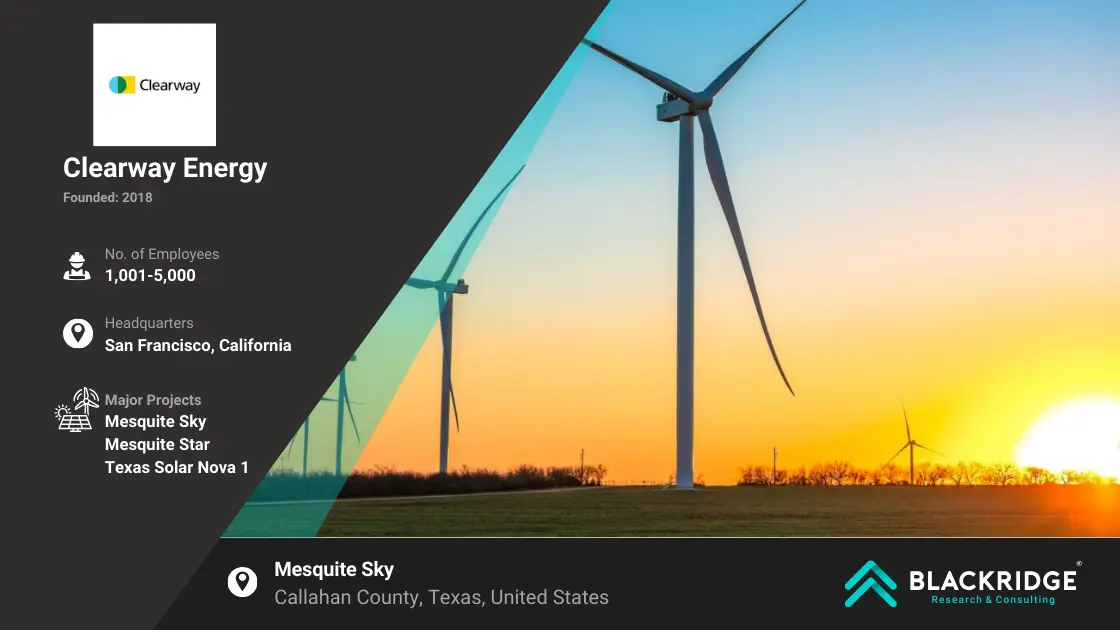
Clearway Energy, a subsidiary of the Clearway Energy Group, is one of the biggest renewable energy companies in the United States. It was founded in 2018 and is headquartered in San Francisco, California. Its portfolio is vast and boasts 400+ projects across 35 states of the US.
They specialize in:
Solar
Wind
Battery Energy Storage
| Project | Capacity | Location | Date of Commission |
Major Projects | Agua Caliente | 290 MW | Dateland, Arizona | 2014 |
| Alta I | 150 MW | Mojave, California | 2016 |
Upcoming Projects | Pine Forest 2 | 300 MW | Hopkins County, Texas | NA |
| Dan's Mountain | 55 MW | Allegany County, Maryland | 2025 |
They hold a gross capacity of 11.6 GW, including 9 GW of renewable energy capacity of wind, solar, and energy storage and over 2.7 GW of dispatchable power generation. A few of its major projects include Mesquite Sky, Mesquite Star, and Texas Solar Nova 1. It has most of its wind projects across Texas and solar projects across Arizona and California.
Vistra Energy Corp.
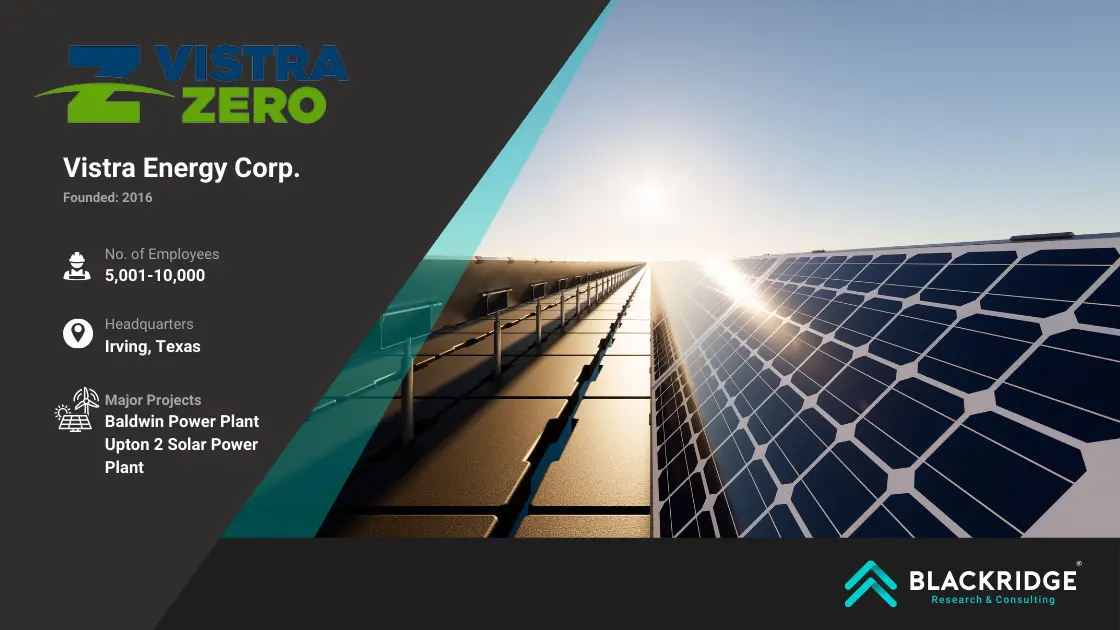
Vistra was established in 2016 and is headquartered in Irving, Texas. Vistra Zero (a part of the Vistra Energy Corp) has a portfolio of 7800 MW zero-carbon generation capacity. Apart from renewables like wind, solar, and battery energy storage facilities, it specializes in nuclear, coal, and natural gas services, making its total capacity 41 GW.
In 2024, Harbor Corp merged with Vistra Energy Corp as its newly-formed subsidiary and created an integrated retail electricity and zero-carbon generation company.
| Project | Capacity | Location | Date of Commission |
Major Projects | Pulaski Solar Facility | 405 MW | Pulaski County, Illinois | 2017 |
| Forest Grove Solar Facility | 200 MW | Henderson County, Texas | 2022 |
Upcoming Projects | ||||
In the third quarter of 2024, Vistra acquired two power purchase agreements for two new solar facilities of a combined 605 MW capacity. This includes a 200 MW deal with Amazon in Texas and a 450 MW deal with Microsoft in Illinois.
Apart from renewables, Vistra is actively expanding its other sectors. This includes an 860 MW peaking plant in West Texas, a 600 MW Natural Gas plant near Goliad, and upgrading existing gas plants by adding an additional 600 MW.
Read Next
XPLR Infrastructure LP
XPLR Infrastructure, formerly known as NextEra Energy Partners, is a US energy infrastructure company with investments in renewable generation and related infrastructure assets.
Its portfolio includes wind and solar generation, together with battery storage and other contracted energy infrastructure. The company focuses on owning and managing assets that generate long-term contracted cash flows.
XPLR is a separate listed entity and should not be confused with NextEra Energy Resources. When comparing their portfolios, analysts should account for corporate ownership relationships and avoid counting the same asset interests twice.
The benchmark places XPLR Infrastructure seventh, with 7.4 GW of operating utility-scale renewable capacity.
Main activities: Wind, solar, battery storage and contracted energy infrastructure.
Why it matters: XPLR provides an example of an infrastructure ownership model focused on operating renewable and energy-related assets.
Southern Company
Southern Company is a major US energy holding company with regulated utility operations and electricity generation businesses.
Its generation portfolio includes a range of energy sources, including solar, wind and hydropower. The company has invested in renewable generation as part of its wider electricity supply and infrastructure strategy.
Southern Company's renewable activities should be considered within the context of its larger utility business. Its total electricity generation capacity is not equivalent to its renewable capacity.
The benchmark places Southern Company eighth, with 6.4 GW of operating utility-scale renewable capacity.
Main activities: Solar, wind, hydropower, electricity generation and regulated utility operations.
Why it matters: Southern Company is a major US utility group with an established renewable generation presence.
AES Corp.
AES is a global power company with renewable energy and energy storage businesses in the United States and other international markets.
Its renewable activities include utility-scale solar, wind and hydroelectric generation. AES also develops and operates battery energy storage projects, which support grid reliability and the integration of renewable electricity.
The company's business includes project development, power generation, energy storage and electricity supply solutions for utilities and commercial customers.
The benchmark places AES tenth, with 5.4 GW of operating utility-scale renewable capacity.
Main activities: Solar, wind, hydropower, battery storage and electricity generation.
Why it matters: AES combines renewable generation with energy storage and power infrastructure development.
Arevon Energy
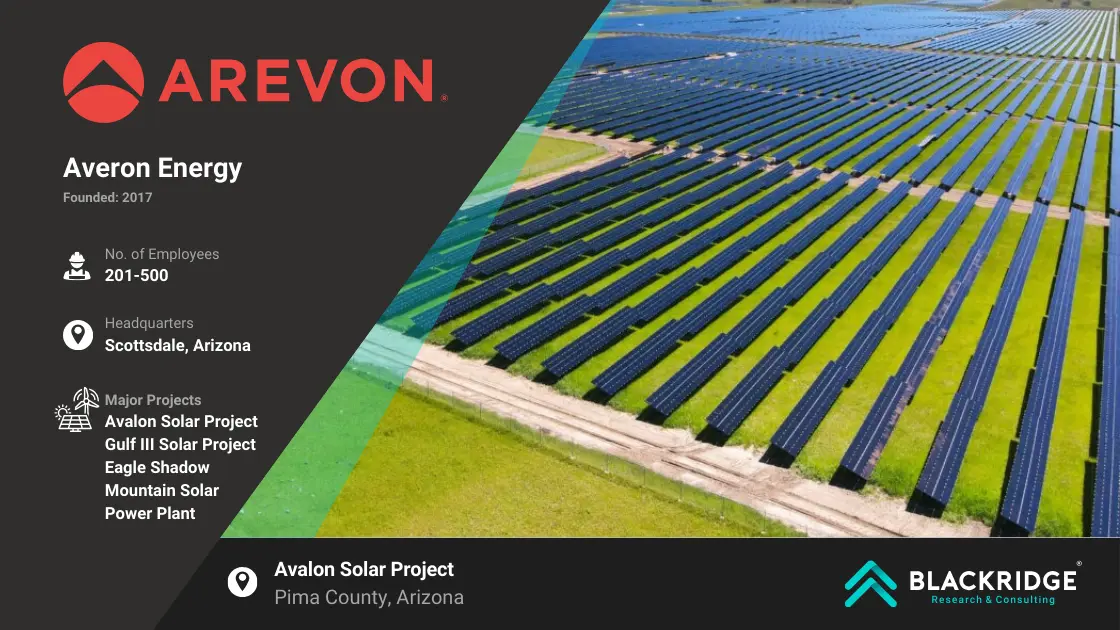
Arevon Energy is a renewable energy company based in Scottsdale, Arizona. It is known for its clean, reliable, cost-effective energy services in utility-scale solar, energy storage, and solar-plus-storage projects across 17 U.S. states.
It is known to develop, build, finance, own, and operate renewable energy projects, in the year 2024, Arevon Energy has completed project financings of more than USD 3 billion.
| Project | Capacity | Location | Date of Commission |
Major Projects | Eagle Shadow Mountain Solar Project | 383 MWdc | Clark County, Nevada | 2023 |
| Moapa Solar Project | 344 MWdc | Clark County, Nevada | 2016 |
Upcoming Projects | Gibson Solar Project | 251 MWdc | Gibson County, Indiana | 2025 (expected) |
| Ratts 1 Solar Project | 191 MWdc | Pike County, Indiana | 2026 (expected) |
Its portfolio holds more than 4500 MW of renewable energy projects, and is currently constructing 1400 MW of new solar and storage capacity. It operates about 3000 MW of renewable energy projects in California, and 700 MW is under construction. Additionally, it has a development pipeline of 6 GW. In September 2025, Arevon Energy celebrated surpassing USD 10 billion in operating assets across 17 U.S. states. On 6th October 2025, Arevon announced Ratts 1 and Heirloon Solar project in Pike County, Indiana, began operations. This project was built with an investment of USD 400 million.
US Renewable Energy Market 2026 : Forecast and Trends
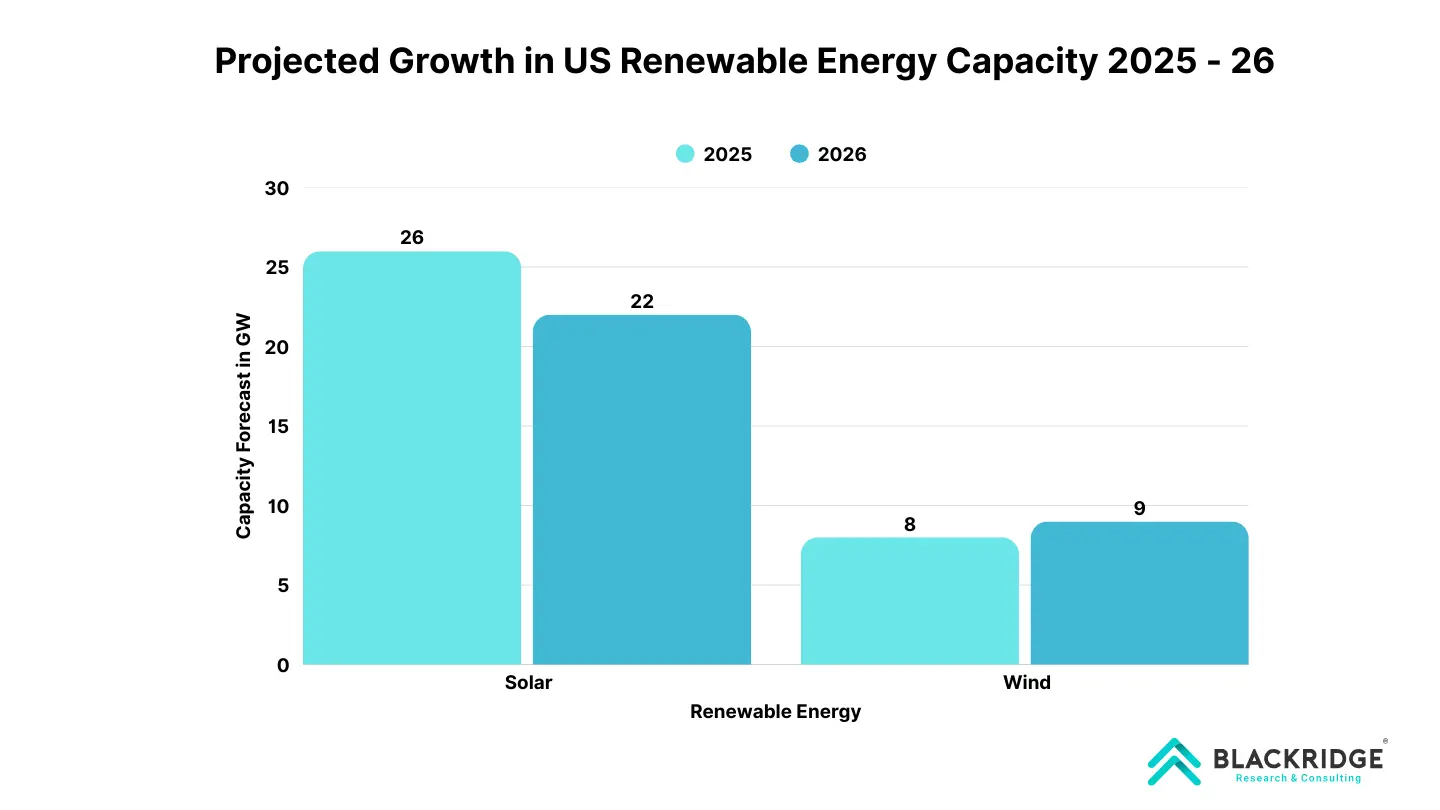
US renewable capacity is expected to witness growth driving the U.S. power generation over 2025-26. The US renewable energy is predominantly led by solar energy. The U.S. utilities and independent power producers are likely to add about 26 GW and 22 GW of solar capacity to the U.S. electric power sector in 2025 and 2026.
In 2024, the electric power sector recorded 37 GW of solar power capacity which was double the solar additions in 2023. Similar to solar, wind capacities are expected to increase by around 8 GW in 2025 and 9 GW in 2026 which is a slight increase from 7 GW recorded in 2024.
While US renewable energy capacity was primarly dominated by the significant increase in solar power capacity, the US government's federal solar tax credit plays a major role. Under the ITC (Investment Tax Credit) 2022, a 30% tax credit is granted on the solar PV system installed between 2022-2032.
The EIA(U.S. Energy Information Administration) forecasts that the renewable capacity additions will support a major portion of U.S. electric power generation which is expected to increase by 2% in 2025 and 1% in 2026.
The renewable energy power generation in the US is predicted to increase by 12% to 1,058 billion kWh in 2025 and further 8% by 1,138 billion kWh in 2026. While solar and wind are likely to witness growth, generating capacity from other energy sources is forecasted to remain unchanged for the years 2025 and 2026.
Thus, in 2024, renewable sources remained the second-largest contributor by contributing 845 billion kWh to the U.S. electricity power generation sector, while coal remained to be the largest source. The renewable sources contribution for U.S. power generation in 2024 witnessed a 9% increase from 2023.
For the coming years, the U.S. aims to accelerate coal retirements by removing 6% (11 GW) coal generating capacity from the U.S. electricity generation in 2025 and 2% (4 GW) in 2026. The U.S. government targets to reduce coal based electricity production to renewable capacity based through increased additions.
On the global front, as of 26th March 2025, the United States dominated the global wind energy expansion followed by China, says IRENA Annual Report 2025 (International Renewable Energy Agency). Stay ahead of your competitors with latest trends and insights from US renewable energy market.
Major renewable energy developers in the US
This section is just to inform you that these are basically come under the category of energy developers, but we have included in the top 15 renewable energy capcities list. The largest renewable energy owners are not necessarily the same as the largest project developers. Some companies specialise in identifying sites, securing permits, arranging grid connections, financing projects and advancing them towards construction or commercial operation.
The following businesses are important participants in the US renewable energy development market, but their project pipelines should not be added to the operating-capacity ranking above.
Invenergy
Invenergy is a US-based independent power producer and renewable energy developer. Its activities include the development, construction, ownership and operation of wind, solar and energy storage projects.
Its project portfolio includes assets at different stages of development. Operating facilities should be distinguished from projects under construction, contracted projects and early-stage development opportunities.
Cypress Creek Renewables
Cypress Creek Renewables is a US solar and energy storage developer. It develops, finances and manages utility-scale solar and storage projects.
Its business includes project development, asset management and energy infrastructure investment. Its reported development portfolio should not automatically be interpreted as capacity owned and operated by the company.
Recurrent Energy
Recurrent Energy is a renewable energy project developer and a subsidiary of Canadian Solar. It develops utility-scale solar and battery storage projects in the United States and international markets.
Its business includes project development, financing, construction management and asset ownership. Solar project capacity and battery storage energy capacity should be reported separately.
Arevon Energy
Arevon Energy develops, finances, builds, owns and operates utility-scale solar and energy storage projects in the United States.
Its portfolio includes operating facilities, projects under construction and development opportunities. These categories should be reported separately when assessing the company's installed generation capacity and future growth potential.
Other Notable Players in the US Renewable Energy Market
|
|
|
|
|---|---|---|---|
Companies | Established | Headquarters | Installed Renewable Capacity |
Iberdrola SA | 1992 | Orange, Connecticut | 9.5 GW |
EDP Renewables North America | 1976 | Houston | 5.8 GW |
Avangrid
Pattern Energy
US renewable energy market: key developments
The US renewable energy market is evolving as electricity demand rises and utilities, independent power producers and business invest in new generating capacity.
Wind and utility-scale solar together generated 760,000 GWh of electricity, or 17% of US utility-scale electricity generation, in 2025, the US Energy Information Administration says. Wind generation was 464,000 GWh, and utility-scale solar was 296,000 GWh.
Solar generation increased by 34% compared to 2024, and wind generation increased by 3%. The numbers illustrate the increasing role of renewable generation in the US electricity system.
Three developments are of particular importance:
Growing demand for electricity
The United States produced a record amount of electricity in 2025. Growth in electricity demand from commercial and industrial use, including demand associated with data centers and manufacturing, is driving the need for new generation and grid infrastructure.
Renewable energy companies are reacting with new project development, long-term power purchase agreements, and investments in energy storage.
Expanding utility-scale solar and wind
Solar and wind continue to be significant sources of new renewable electricity generation. Utility-scale solar has grown fast, and wind remains a leading source of renewable electricity in the US.
The location of new projects is determined by the quality of resources, availability of land, grid access, permitting and commercial terms available to developers and electricity buyers.
More importance of battery storage, grid infrastructure
Battery storage can help balance out differences between supply and demand for electricity. It can store electricity when generation is high and discharge it when extra supply is needed on the grid.
But storage is not a renewable generation source per se. The MW of capacity and the MWh of energy capacity from wind and solar generation should be reported separately.
Transmission infrastructure and grid interconnections are also important, as renewable projects need the appropriate connections to deliver electricity to customers.
How to compare renewable energy companies
A company’s total announced project pipeline does not tell us how much electricity it is generating today. When comparing renewable energy businesses, readers should distinguish between the following metrics:
Measure | Meaning | How to interpret it |
|---|---|---|
Operating capacity | Generating capacity in commercial operation | Measures the existing generation portfolio |
Gross capacity | Total facility capacity before adjusting for ownership interests | May include capacity attributable to joint-venture partners |
Net-owned capacity | Capacity attributable to the company's ownership share | Useful for understanding economic ownership |
Under-construction capacity | Projects being built but not yet commercially operating | Indicates near-term additions, not current operating capacity |
Development pipeline | Projects at planning, permitting, interconnection or other development stages | Indicates potential future growth, not installed capacity |
Battery storage power capacity | Maximum charging or discharging power, generally measured in MW | Report separately from renewable generation |
Battery storage energy capacity | Amount of energy a storage system can hold, generally measured in MWh | Do not confuse with MW of generation capacity |
It is also useful for investors, contractors, equipment suppliers and project developers to check the company’s geographic presence, project execution record, ownership structure, customer agreements and financial position.
Conclusion
The top renewable energy companies in the U.S. are driving the energy transition through renewable energy projects across the states of the country. Shifting the focus towards sustainable energy by providing renewable energy solutions, thus reducing the overall reliance on fossil fuels and ensuring energy efficiency.
These clean energy companies in the U.S. are expanding their portfolios through various solar projects, green hydrogen, and renewable electricity. Organizations like the American Clean Power Association and the Energy Information Administration (EIA) are supporting clean energy transition regulated by laws and regulations. Thus, the US continues to expand its renewable energy market.
In 2024, about 4,155 billion kilowatt hours (KWh) of electricity was produced by the U.S. electric power sector which was a 3% increase from 2023 as reported by EIA. The renewable energy sources remained the second-largest contributor by contributing 845 billion kWh to the U.S. electricity power generation sector.
Tracking the Latest Renewable Energy Projects in the United States is made easy!
Subscribe to Blackridge’s US Renewable Energy Projects Database and get access to:
Reliable and high-quality insights
Upcoming, in-progress, and completed construction
EPC projects
Essential details on key stakeholder contact information
Timely updates
Start a free demo to unlock new business opportunities!
Disclaimer: This blog includes affiliate links, meaning we may earn a small commission if you buy through these links at no extra cost to you. Thank you for your support!

Leave a Comment
We love hearing from our readers and value your feedback. If you have any questions or comments about our content, feel free to leave a comment below.
We read every comment and do our best to respond to them all.