


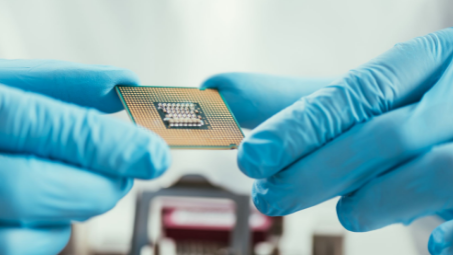
Japan To Shift Legacy Semiconductor, LCD And Battery Production To India
Japan and India are moving forward with plans to transfer production of older semiconductor and LCD screen technologies to India, as both nations seek to reduce their dependence on Chinese manufacturing and strengthen economic security cooperation. The initiative focuses on legacy technologies that rely on mature manufacturing tools and techniques rather than cutting-edge processes.
A comprehensive plan, jointly developed by the Japan External Trade Organization (JETRO) and the Confederation of Indian Industry, is set to be unveiled on Thursday. The announcement comes ahead of Indian Prime Minister Narendra Modi's visit to Japan for a summit with his counterpart, Shigeru Ishiba, beginning on Friday (29 August), where the economic security initiative is expected to be formally agreed upon.
Scope of Production Transfer
According to the plan, the initiative will “promote transferring the production of goods that are losing capacity in Japan due to low-priced Chinese products to India, while reorganizing and expanding production capacity in India.” The scope extends beyond semiconductors to include liquid crystal displays, solar power equipment, storage batteries, and compressors.
These older semiconductors remain crucial for various applications, including voltage control in electric vehicles and inverters that improve energy efficiency in air conditioners and refrigerators. The production transfer is considered relatively straightforward from both technical and cost perspectives, making it an attractive option for Japanese manufacturers facing pressure from low-priced Chinese alternatives.
Strategic Context and International Relations
The timing of this partnership is particularly significant as India's electronics industry, while growing, still heavily depends on imports from China for core semiconductor components. Prime Minister Modi has been pushing for domestic production of these critical components as part of his broader manufacturing strategy. The production transfer plan comes at a time when India is navigating complex international trade relationships.
The United States has recently imposed an additional 25 percent tariff on Indian goods in response to New Delhi's purchases of Russian crude oil. With the American “reciprocal” tariff of 25 percent, the total levy has risen to 50 percent, drawing India closer to China economically. Japan's push to bolster ties appears aimed partly at preventing India from becoming more closely aligned with Beijing, offering an alternative partnership that could help India diversify its technology supply chains while maintaining strategic autonomy.
40+ reviews
Find the Latest Semiconductor Fabrication Plant Projects in Japan
Gain exclusive access to our industry-leading database of Semiconductor Fabrication Plant opportunities with detailed project timelines and stakeholder information.
Collect Your Free Leads Here!
No credit cardUp-to-date coverage
Joined by 750+ industry professionals last month
Technology Protection and Corporate Initiatives
As part of the broader cooperation framework, India will also adopt legislation similar to Japan's that combats technology leakage, addressing concerns about intellectual property protection in high-tech manufacturing. Several Japanese companies are already moving forward with initiatives aligned with the transfer plan.
A Japanese storage battery manufacturer is reportedly set to sign a memorandum of understanding with an Indian company soon, marking a step toward joint production. Additionally, a Japanese electrical machinery maker has begun construction of a compressor plant in the southern Indian state of Tamil Nadu.
Economic Benefits for Both Nations
For Japan, the arrangement offers an opportunity to maintain competitiveness in legacy technology markets while leveraging India's cost-competitive workforce. Japanese manufacturers are seeking alternatives to compete with low-priced Chinese products in these sectors. For India, the partnership represents a significant step toward achieving manufacturing self-reliance in critical technology sectors.
New Delhi hopes to develop a mass production model that combines Japanese technological expertise with Indian cost competitiveness, potentially positioning itself as an alternative manufacturing hub to China. The initiative demonstrates how both countries are working to restructure their supply chains and reduce dependence on Chinese manufacturing, while creating new opportunities for technological cooperation and economic growth in legacy semiconductor and related industries.
Also Read: ACWA Power Signs Agreement to Study Syrian Renewable Energy Projects Including Solar and Wind Power
Connect with Decision-makers about the Semiconductor Fabrication Plant Projects in Japan for business Opportunities.
Subscribe to our database on Semiconductor Fabrication Plant Projects and Tenders in Japan to get access to reliable and high-quality insights on upcoming, Under-construction, and completed Semiconductor Fabrication Plant Projects across the world or in your desired geographical location.
Our user-friendly platform provides essential details, timely updates, key stakeholder contact information, and business opportunities tailored for engineering companies, industry professionals, investors, and government agencies.
Leave a Comment
We love hearing from our readers and value your feedback. If you have any questions or comments about our content, feel free to leave a comment below.
We read every comment and do our best to respond to them all.