


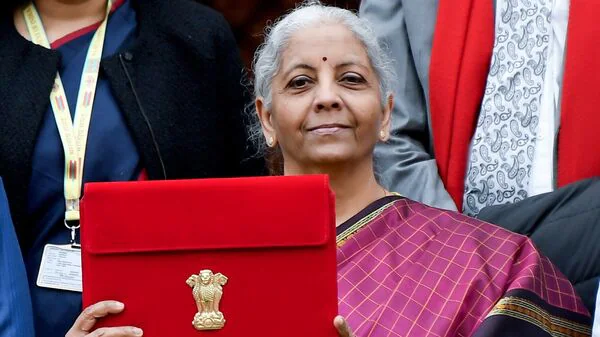
Finance Minister Nirmala Sitharaman announced a significant tax incentive in the Union Budget 2026, proposing a tax holiday until 2047 for foreign companies providing cloud services to customers globally, provided they use data centre services based in India. The proposal was presented during her Budget speech on Sunday, February 1, 2026.
Tax Holiday Structure and Requirements
The proposal allows foreign cloud service providers offering storage, computing, or software services online to set up data centre operations in India and earn revenue from global customers without their global income being taxed in India until 2047. However, to qualify for the benefit, such companies must serve Indian customers through a local reseller entity, which will continue to be taxed in India.
The Finance Bill 2026 proposes to retrospectively amend Schedule IV of the Income-tax Act, 1961, to exempt a foreign company's income accruing or arising in India as a result of procuring data centre services from a specified data centre, for a period up to the tax year ending on March 31, 2047. Upon passage of the Bill, the proposed amendments will take effect from April 1, 2026.
A 'specified data centre' is defined as a data centre which is set up under an approved scheme and is notified by the Central Government in the Ministry of Electronics and Information Technology, and is owned and operated by an Indian company. The foreign company must not own or operate any of the physical infrastructure or any resources of the specified data centre to qualify for the tax break.
Safe Harbour Provisions and Transfer Pricing
The finance minister also announced a safe harbour of 15% on cost in cases where the data centre service provider in India is a related entity, aimed at providing additional certainty on transfer pricing. In case the company providing data centre services from India is a related entity, a margin of up to 15 per cent over cost will be covered under safe harbour rules.
Safe harbour rules are defined under Section 92CB of the Income-tax Act, 1961, for the determination of arm's length price. Safe harbour means circumstances in which the income-tax authorities accept the transfer price as declared by the assessee.
40+ reviews
Find the Latest Datacenter Projects Worldwide
Gain exclusive access to our industry-leading database of offshore wind opportunities with detailed project timelines and stakeholder information.
Collect Your Free Leads Here!
No credit cardUp-to-date coverage
Joined by 750+ industry professionals last month
Government Rationale and Investment Projections
Revenue Secretary Arvind Shrivastava explained that global cloud companies typically operate data centres across multiple countries, making it difficult to link revenue to any single facility. Taxing global income merely because a data centre is located in India could create uncertainty and deter investment. The government views the setting up of data service centres in India as a net economic positive, as it expands scale and economic activity.
Speaking at a press conference following the Budget presentation, IT Minister Ashwini Vaishnaw said that investments in India's data centre sector could rise sharply to $200 billion, up from the $70 billion of investments currently being executed. Vaishnaw also noted that there is interest from AI server manufacturers to invest in India.
Currently, India accounts for just three per cent of data centres across the world, with 70 per cent of them located in high-income countries, according to World Bank data cited by the Economic Survey 2026-27. By 2026, India's total data centre capacity is projected to surpass 2 GW, up from a little over 1 GW. By 2030, it could exceed 8 GW, driven by capital investments estimated at over $30 billion.
Industry Response and Global Investment Commitments
Big tech companies and cloud hyperscalers welcomed the Finance Ministry's proposal. Puneet Chandok, President of Microsoft India & South Asia, called the proposed tax holiday a significant move, stating that long-term policy certainty recognises that digital infrastructure is now strategic national infrastructure. He noted that as AI adoption accelerates across sectors, secure and resilient compute capacity will underpin public services, enterprise innovation, and long-term competitiveness.
Arundhati Bhattacharya, President & CEO of Salesforce South Asia, described the tax holiday for cloud services until 2047 as a masterstroke in data sovereignty, attracting an estimated $50 billion in data center investments by 2030 and positioning India as the cloud hub for emerging markets.
Deepak Bhalla, Executive Vice President and Chief Risk Officer at Infosys, told Reuters the Budget showed a clear focus on the IT sector. He said the government was trying to attract foreign companies to set up global capability centres (GCCs) in India, supported by tax holidays for data centre companies and a five-year safe harbour for smaller IT firms.
The Budget announcement comes amid growing global investment commitments. Microsoft has pledged USD 17.5 billion for data center projects in India over the next four years; Amazon plans to invest $35 billion over five years in AI-driven operations; and Google has committed USD 15 billion towards developing data centres in partnership with Adani Group and Bharti Airtel. Media reports have also indicated that Meta is developing a 500 MW data centre facility in India.
Real estate and infrastructure players also welcomed the move. Amit Sarin, Managing Director at Anant Raj Limited, said the tax holiday reflects a long-term commitment to attracting capital and improving the viability of large-scale data centre investments. He said the measures would enable faster capacity addition, create high-quality jobs, and strengthen India's broader technology ecosystem.
Industry body Nasscom said that the proposed tax holiday linked to data centres sends a clear signal to attract long-term global investment and support the expansion of India's computing capacity. It added that the 15 per cent on-cost safe harbour proposal ensures pricing certainty for routine infrastructure services.
However, Sagar Vishnoi, Director and co-founder of Future Shift Labs, noted that because services to Indian users must be routed through an Indian reseller entity, smaller domestic players may end up competing for reseller margins rather than receiving comparable upstream incentives themselves. He also warned that large-scale data centre migration to India will significantly increase demand for power and water, making it imperative to pair fiscal incentives with clear sustainability and green-AI guidelines.
Discover Data Center Projects & Tenders Data before your Competitors Do!
Unlock India's Data Center Opportunities! Introducing Blackridge Research's Global Project Tracking (GPT) platform:
Instant access to India's latest Data Center Facility Projects
Comprehensive insights from planning to completion
Essential details: scope, CapEx, timelines, and key contacts
User-friendly interface for quick opportunity identification
Want more data center construction insights, including planned projects, active companies, and key decision-makers? Get started with our project tracker demo today.
Leave a Comment
We love hearing from our readers and value your feedback. If you have any questions or comments about our content, feel free to leave a comment below.
We read every comment and do our best to respond to them all.