


bp Approves $5 Billion Tiber-Guadalupe Oil Project in Gulf of America with 80,000 Barrel Daily Capacity
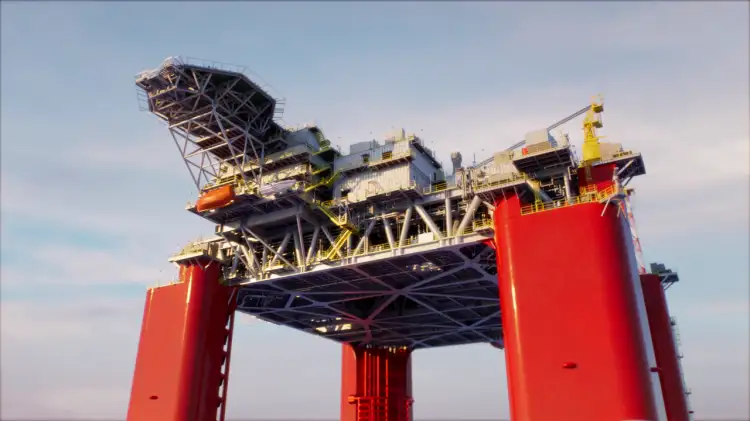
bp has reached a final investment decision on the Tiber-Guadalupe project in the Gulf of America, approving its second new production platform in less than two years in the critical US offshore region. The 100% bp-owned project represents an estimated USD 5 billion investment and is fully accommodated within bp's disciplined financial framework. The Tiber-Guadalupe will be bp's seventh operated oil and gas production hub in the Gulf of America, featuring a new floating production platform with the capacity to produce 80,000 barrels of crude oil per day.
Production is expected to start in 2030, making it one of the 8-10 major projects expected to start up globally between 2028 and 2030.
Project Scope and Resources
The project includes six wells in the Tiber field and a two-well tieback from the Guadalupe field. Tiber and Guadalupe fields are estimated to have recoverable resources of around 350 million barrels of oil equivalent from the initial phase. Additional wells could be drilled in future phases, subject to further evaluation. The Tiber and Guadalupe fields are located in the Keathley Canyon area, about 300 miles southwest of New Orleans.
The project is named after rivers in Italy and Texas. bp discovered the Tiber field in 2009 and has since worked closely with the offshore industry to help develop the 20K technology necessary to complete high-pressure wells.
Strategic Investment and Technology
Together with its 100% bp-owned Kaskida project, bp expects to invest around USD 10 billion to deliver its Gulf of America Paleogene projects. Tiber-Guadalupe and Kaskida are centerpieces of bp's new build projects in the deepwater Gulf of America. The project further unlocks around 10 billion barrels of discovered resources in place across bp's Gulf of America Paleogene assets.
bp is leveraging existing platform and subsea equipment designs to drive cost efficiencies across the Tiber-Guadalupe production hub's construction, commissioning, and operations. The Tiber floating production platform is based more than 85% on Kaskida's design. Tiber project development costs are anticipated to be around USD 3 per barrel lower than the Kaskida project, including benefits from using more than 85% of the design from bp's Kaskida project.
40+ reviews
Find the Latest Oil & Gas Production Projects Around the World
Gain exclusive access to our industry-leading database of Oil & Gas Production opportunities with detailed project timelines and stakeholder information.
Collect Your Free Leads Here!
No credit cardUp-to-date coverage
Joined by 750+ industry professionals last month
Advanced Pressure Management Technology
Tiber-Guadalupe will be bp's second development in the Gulf of America to produce from reservoirs using industry-proven technology that can safely manage pressures of up to 20,000 pounds per square inch (20K). This 20K equipment includes larger drilling rigs, subsea equipment, and thicker metal casing, which will be independently verified and approved to safely manage these wells.
Production Expansion Goals
Along with the five existing operating platforms in the Gulf, Tiber-Guadalupe and Kaskida will help enable bp to boost its capacity to produce more than 400,000 barrels of oil equivalent per day from the US offshore region by 2030. bp aims to increase its offshore and onshore production in the United States to more than 1 million barrels of oil equivalent per day by 2030.
bp currently operates five platforms in the Gulf of America: Argos, Atlantis, Mad Dog, Na Kika, and Thunder Horse. The company also holds interests in four non-operated hubs: Great White, Mars, Olympus, and Ursa. bp produced around 341,000 barrels of oil equivalent per day from the Gulf of America in 2024. bp recently started up a major expansion project at the Argos platform, called Argos Southwest Extension, and is planning two additional expansion projects at the Atlantis platform over the next two years.
Together, these three projects represent nearly a third of the 10 major projects bp is planning to bring online globally by the end of 2027. The company recently began construction on 100% bp-owned Kaskida, which will be bp's sixth platform in the region. Kaskida represents bp's first step toward unlocking the Paleogene, an oil-rich geological area about 250 miles southwest of New Orleans.
Kaskida, which will have a production capacity of 80,000 barrels per day, is expected to start up in 2029. Andy Krieger, bp's senior vice president, Gulf of America and Canada, stated that the decision to move forward on the Tiber-Guadalupe project is a testament to bp's commitment to continue investing in the Gulf of America and expand energy production from one of the premier basins in the world.
Krieger noted that along with its sister project Kaskida, Tiber-Guadalupe will play a critical role in bp's focus on delivering secure and reliable energy the world needs today and tomorrow. Gordon Birrell, bp's executive vice president of production and operations, described Tiber-Guadalupe as representing a significant step forward in efforts to unlock the potential of the Paleogene in the Gulf of America, building on decades of experience in the region.
Birrell expects that, together with the Kaskida project in the Paleogene, Tiber-Guadalupe will be another world-class development.
Also Read: SLB Secures Major Ultra-Deepwater Completions Contract from Petrobras for Santos Basin Project
Connect with Decision-makers about the Latest Oil & Gas Production Projects Around the World for business Opportunities.
Subscribe to our database on Oil & Gas Production Projects and Tenders Around the World to get access to reliable and high-quality insights on upcoming, under-construction, and completed Oil & Gas Production Projects across the world or in your desired geographical location.
Our user-friendly platform provides essential details, timely updates, key stakeholder contact information, and business opportunities tailored for engineering companies, industry professionals, investors, and government agencies.
Leave a Comment
We love hearing from our readers and value your feedback. If you have any questions or comments about our content, feel free to leave a comment below.
We read every comment and do our best to respond to them all.