



Abadi LNG Project Indonesia – Cost, Capacity, Timeline & Latest Updates
Project at a Glance | |
|---|---|
Project Name | Abadi LNG Project |
Project Type | Oil & Gas |
Project Status | FEED Started |
Project Location | Masela Block in Indonesia |
Project Cost | USD 20 billion |
Production Start Date | January 2030 (Expected) |
Terms of PSC | Until November 15, 2055 |
Contract Area | Approximately 2,503 square km |
Water Depths | 400 - 800 meters |
Block Location | 170-180 km Southwest of the Tanimbar Islands Regency |
Owner | INPEX Corporation |
Operators |
|
Project Overview
The Abadi LNG Project is a Liquefied Natural Gas (LNG) project located on the Masela Block in Indonesia. It is one of the largest LNG projects in Asia. Developed by INPEX, the project aims to neutralize CO2 extracted from natural gas production at the Abadi Gas Field through the incorporation of Carbon Capture and Storage (CCS).
It is considered the first LNG project where Carbon Capture and Storage (CCS) is launched during the time of production itself. It is entitled to cost recovery based on the production sharing contract (PSC) framework governing upstream oil and natural gas projects in Indonesia.
Upon the operation, the Abadi LNG Project is expected to produce approximately 9.5 million tons of LNG per year, which is equivalent to more than 10% of Japan’s annual LNG imports. Furthermore, up to 35,000 barrels of condensate per day and approximately 150 million cubic feet of natural gas per day. It aims to meet Indonesia’s goal to reach Net Zero CO2 emissions by 2060.
The project will contribute to improving energy security in Indonesia, Japan, and other Asian countries and generate a stable supply of low-carbon energy over the long term, based on its world-leading gas field properties and plentiful reserves, enabling efficient development as well as the project’s CCS component.
Abadi LNG Project Location
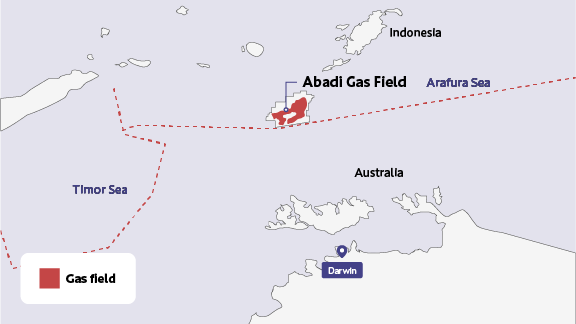
The Abadi LNG Project is located at the Masela Block, Indonesia. It is approximately 170 - 180 km southwest of the Tanimbar Islands Regency in the Saumlaki region of Maluku Province. The Masela Block covers an area of approximately 2,503 square kilometers in water depths of nearly 400 to 800 meters.
A key advantage of the selected location is its proximity to Indonesia’s eastern maritime basin, which is home to multiple gas reserves and is integrated with local and export infrastructure.
Abadi LNG Project Map
Project Background
The Abadi LNG Project was initially approved by the Indonesian government in 2019. Later, in April 2023, INPEX submitted a revised development plan, comprising a CCS Component. The plan got approved in December 2023. The aim behind the revised development plan was to make the project cleaner, ensuring long-term competitiveness and improving sustainability.
With the cooperation of other partners, the INPEX Corporation commenced the front-end engineering design (FEED) work in August 2025. Furthermore, the project is proceeding with the necessary development preparation work for the final investment decision (FID), such as obtaining environmental and social impact assessments and related approvals, securing land for the project, marketing activities for LNG sales, and financing discussions.
Abadi LNG Project Ownership Details
Initially, back in 2013, the project was operated by two partners, INPEX (65%) and Shell (35%). Subsequently, Shell decided to withdraw its stake from the project, and in October 2023, the 35% share held by Shell was taken over by two new partners, Pertamina and Petronas. Now, the ownership share is INPEX (65%), Pertamina (20%), and Petronas (15%). Both are companies with extensive experience in oil and gas development in Indonesia and LNG projects globally.
Trusted by Leading EPCs & Manufacturers
Find the Latest Oil & Gas Projects In Indonesia
Gain exclusive access to our industry-leading database of Oil & Gas project opportunities with detailed project timelines and stakeholder information.
Request Free Trial → Learn More →
No credit card Up-to-date coverage
Abadi LNG Project Development Concept
Abadi LNG Project Cost
The total estimated cost for the Abadi LNG Project is USD 20 billion. The cost includes the Carbon Capture and Storage (CCS).
Project Timeline
Date | Event |
2055 | End of the current Production Sharing Contract (PSC) |
2030 | Expected to begin production for the Abadi LNG Project |
2027 | Expected to receive Final Investment Decision (FID) |
August 2025 | FEED work commences for the Onshore LNG Plant. |
April 2025 | Front-end Engineering and Design (FEED) was officially launched |
December 2023 | The Indonesian government approved a revised development plan for the project. |
October 2023 | Pertamina and Petronas joined the Abadi LNG Project. |
April 2023 | INPEX submitted a revised development plan for the project. |
2019 | The Indonesian government initially approved the Abadi project. |
1998 | Masela Block awarded to INPEX. |
Project Scope
The Abadi LNG Project Scope includes the following:
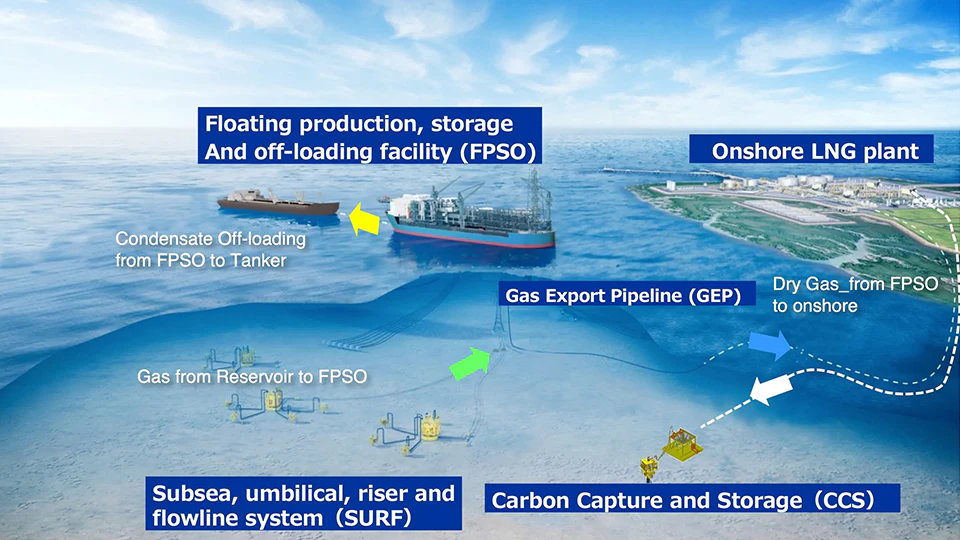
Onshore LNG Plant: The project is designed in a way that it produces up to 9.5 million tonnes per annum (MTPA) of LNG, and supplies up to 150 million standard cubic feet per day of pipeline gas to the domestic market.
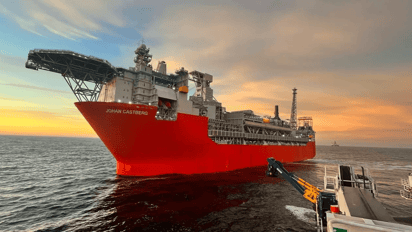
Offshore Production: The project involves the extraction of natural gas at the Abadi Gas Field (Masela Block), with a joint Floating Production, Storage and Offloading (FPSO) Vessel and condensate before being transferred to shore.
Subsea Infrastructure: The Abadi LNG Project comprises an extensive network of subsea umbilicals, risers, and flowlines (SURF), as well as gas export pipelines that connect the offshore FPSO to the onshore LNG plant.
Carbon Capture Storage (CCS): The CO₂ generated during the gas production and liquefaction process will be captured and injected into subsurface storage to minimize net emissions, making the project a regional milestone for decarbonized LNG production.
Condensate Production: The project includes facilities for the recovery and export of up to 35,000 barrels per day of condensate.
Trusted by Leading EPCs & Manufacturers
Find the Oil & Gas Projects In Indonesia
Gain exclusive access to our industry-leading database of Oil & Gas Project opportunities with detailed project timelines and stakeholder information.
Request Free Trial → Learn More →
No credit card Up-to-date coverage
Abadi LNG Project Contractor Details
Contractors | Details |
Technip Energies & JGC Consortium | Dual FEED Contracts for FPSO vessel treating gas and an Onshore LNG Plant with CO2 capture systems. |
KBR Consortium | FEED for Onshore LNG Plant in collaboration with Samsung E&A and PT Adhi Karya. |
Samsung E&A | Letter of award for the onshore LNG plant FEED in partnership with KBR and PT Adhi Karya |
Saipem Consortium | FPSO FEED, including offshore production facility design. The consortium includes PT Tripatra Engineers |
Worley | Contract for subsea umbilicals, risers, flowlines, and gas export pipeline design |
Abadi LNG Project FEED
INPEX Corporation (INPEX) announced in August 2025 its commencement of Front End Engineering and Design (FEED) work for the project’s Onshore LNG Plant (OLNG) by awarding an OLNG contract package. It includes four packages at the FEED work. Namely:
(i) OLNG
(ii) Floating Production, Storage and Offloading (FPSO)
(iii) Subsea Umbilicals, Risers and Flowlines (SURF), and
(iv) Gas Export Pipeline (GEP).
The FEED Work involves exploration and determination of the specifications of OLNG. The OLNG Contract Package comprises a “dual FEED” method involving two contractor consortium that work alongside but separately, ensuring a competitive environment.
The first consortium includes PT JGC Indonesia (lead contractor) and PT Technip Engineering Indonesia, and the second consists of PT KBR Indonesia (lead contractor), Samsung E&A, Co., Ltd., and PT Adhi Karya (Persero) Tbk.
In this method, the FEED Work and the Engineering, Procurement, and Construction (EPC) Contract will be awarded to the same contractor consortium that delivers technically and commercially superior FEED services. The FEED work includes a scope related to carbon capture and storage (CCS).
The OLNG FEED contract is designed in a way that includes two LNG Trains and their supporting infrastructure, comprising a jetty, materials offloading facilities, and a logistic supply base. Dry gas from the FPSO will be treated to remove impurities before liquefaction, storage, and offloading. The CO2 captured from the dry gas will be reinjected back into the well.
FEED work plays a major role in the expansion of its natural gas and LNG business, and reduces Greenhouse Gas (GHG) emissions, as highlighted in INPEX Vision 2035 announced in February 2025. Furthermore, it will help Indonesia achieve its goal of reaching Net-Zero CO2 emissions by 2060.
Conclusion
The Abadi LNG Project is located at the Masela Block in Indonesia and is one of the largest LNG projects in Asia. Owned by INPEX, with two additional partners, Pertamina and Petronas, the project generates up to 9.5 million tonnes per annum (MTPA) of LNG. Furthermore, the project condensates up to 35,000 barrels per day and supplies up to 150 million standard cubic feet per day of pipeline gas to the domestic market.
With cutting-edge technology, a focus on efficiency, and alignment with sustainability goals, the Abadi LNG Project is expected to play a pivotal role in advancing Indonesia’s energy transition. It not only positions the country as a key LNG exporter but also contributes to the broader objective of reducing greenhouse gas emissions by promoting natural gas as a lower-carbon alternative in the global energy mix.
Track the Latest & Upcoming Oil & Gas Projects In Indonesia
Subscribe to our upcoming and ongoing Oil & Gas Projects in Indonesia with ease to access reliable, high-quality insights on forthcoming and completed Projects across the country.
Our user-friendly platform provides essential details, timely updates, key stakeholder contact information, and business opportunities tailored for engineering companies, industry professionals, investors, and government agencies.
Start a free demo to take your business to the next level.
Leave a Comment
We love hearing from our readers and value your feedback. If you have any questions or comments about our content, feel free to leave a comment below.
We read every comment and do our best to respond to them all.