


India is undertaking one of the world's largest railway infrastructure expansion programmes, with multiple large-scale projects totalling more than 1,290 km and an estimated investment of over USD 27.9 billion. Backed by record capital expenditure and government support, several railway projects are progressing across the country to improve mobility, logistics efficiency, regional connectivity, and economic growth.
These projects include the 508-km Mumbai–Ahmedabad High-Speed Rail corridor, the 272-km Udhampur-Srinagar-Baramulla Rail Link (USBRL), the 125-km Rishikesh-Karnaprayag Railway, the 82-km Delhi-Meerut Regional Rapid Transit System (RRTS), the 149-km Bengaluru Suburban Rail Project, the 111-km Jiribam–Imphal Railway and the 45-km Sivok-Rangpo Railway.
These ventures collectively include the world’s most ambitious engineering achievements, including 320 km/hr high-speed rail operations, massive tunnelling in the Himalayas, iconic bridges like the Chenab Bridge and Anji Khad Bridge, and sophisticated urban and regional transit networks that will improve connectivity, boost economic growth and support regional development across India.
Over the last decade, the Government of India has raised investments in railway infrastructure focused on connectivity, logistics costs, regional development, and passenger mobility. Several major projects are underway, and new high-speed rail corridors are progressing through the planning and detailed project report (DPR) stages.
This article presents a selection of India's most important railway projects currently under construction, drawing on data from official government bodies and project authorities.
List of Top 7 Upcoming Railway Construction Projects in India
Project | Type | Length (km) | Estimated Investment | Current Status | Key Engineering Features |
Mumbai–Ahmedabad High-Speed Rail | High-Speed Rail | 508 | USD 11.34 Billion | Under Construction | 12 stations, 21 km tunnel section, 320 km/h design speed |
Udhampur–Srinagar–Baramulla Rail Link (USBRL) | Mountain Rail | 272 | USD 4.55 Billion | Final Completion Stage | Chenab Bridge, Anji Khad Bridge |
Rishikesh–Karnaprayag Railway | New Railway Line | 125 | USD 3.97 Billion | Under Construction | Extensive tunneling through Himalayas |
Delhi–Meerut RRTS | Regional Rapid Transit | 82 | USD 3.18 Billion | Under Construction | 180 km/h design speed |
Bengaluru Suburban Rail Project | Urban Rail | 149 | USD 1.97 Billion | Under Construction | Four suburban corridors |
Jiribam–Imphal Railway | New Railway Line | 111 | USD 1.51 Billion | Under Construction | World's tallest railway pier bridge |
Sivok–Rangpo Railway | New Railway Line | 45 | USD 1.37 billion | Under Construction | 38+ km tunnels |
Mumbai–Ahmedabad High-Speed Rail Project: India's First Bullet Train
At present, India’s first high-speed rail corridor is being implemented between Mumbai and Ahmedabad by National High Speed Rail Corporation Limited. The project is a major leap forward in modernizing India's transportation infrastructure. Spanning approximately 508 km, it will connect Mumbai and Ahmedabad. Trains are expected to run at speeds of up to 320 km/h when operational, reducing travel time from approximately 7 hours to around 2 hours between the two major economic centres.
Construction Progress Accelerates Across the Corridor
In recent years, construction activity has increased significantly. Official project updates indicate land acquisition is complete, construction of major viaducts is underway across Gujarat and Maharashtra, and station development is underway at several locations. Tunnel boring and specialist engineering work are also proceeding to schedule.
Economic and Regional Benefits
The project is expected to bring benefits well beyond simply getting people where they need to go faster. Better connectivity can make business travel easier, attract investment, encourage urban development around stations, and create new jobs. It can also support employment growth in the construction and operational phases of railway projects.
Mumbai–Ahmedabad High-Speed Rail Project Metrics
Parameter | Value |
Investment | USD 11.34 Billion |
Length | 508 km |
Stations | 12 |
Maximum Speed | 320 km/h |
Travel Time Reduction | 7 Hours to 2 Hours |
Construction Progress | 59%+ Physical Progress |
River Bridges | 24 |
Mountain Tunnel | 21 km |
Undersea Tunnel Section | 7 km |
States Covered | Maharashtra, Gujarat |
Status | Under Construction |
Economic Impact Metrics
Indicator | Expected Impact |
Direct & Indirect Employment | Thousands of Jobs |
Travel Time Savings | 70% Reduction |
Transit-Oriented Development | Multiple Station Zones |
Industrial Corridor Support | Mumbai–Ahmedabad Corridor |
Foreign Investment Support | Japanese Funding Assistance |
Udhampur–Srinagar–Baramulla Rail Link: Connecting Kashmir to the National Rail Network
The Udhampur–Srinagar–Baramulla Rail Link (USBRL) is said to be one of the most challenging railway engineering projects ever undertaken in India. The project aims to establish a continuous rail link between the Kashmir Valley and the rest of the country across the difficult Himalayan terrain.
Engineering Achievements on a Global Scale
The railway crosses via a number of tunnels and bridges built through difficult geological conditions.
The most significant construction is the Chenab Rail Bridge, which is the highest railway arch bridge in the world. The project also involves the Anji Khad Bridge, a cable-stayed structure that ranks among the tallest of its kind in India.
Strategic and Economic Importance
Besides the transportation benefits, the railway would also provide regional connectivity, tourism, access to markets, and all-weather mobility in Jammu and Kashmir.
Udhampur–Srinagar–Baramulla Rail Link - Key Project Metrics
Metric | Value |
Length | 272 km |
Estimated Cost | Approximately USD 4.55 Billion |
Major Tunnels | 36+ |
Status | Final Construction and Commissioning Stage |
Rishikesh-Karnaprayag Railway: Enhancing Access to Uttarakhand's Himalayan Region
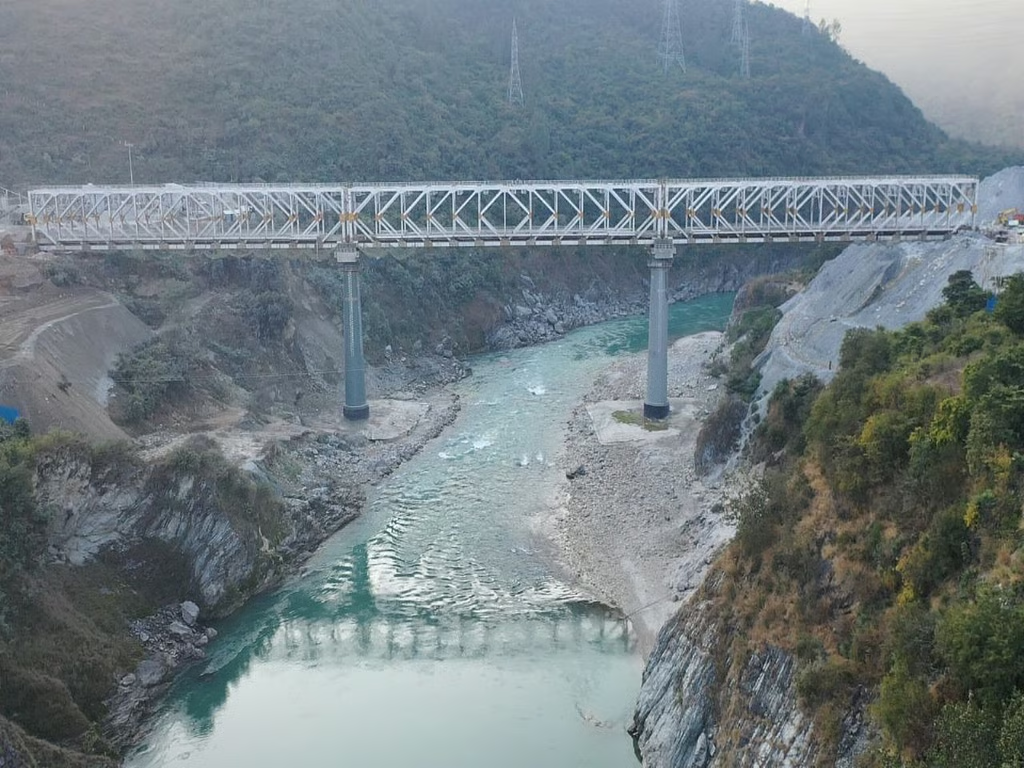
The Rishikesh-Karnaprayag Railway under construction is one of the most important mountain railway projects of India.
The line will boost connectivity across Uttarakhand, facilitating tourism, pilgrimage travel and regional development.
Extensive Tunnel Construction Drives Progress
The mountainous topography means a large part of the alignment runs through tunnels. This makes the project especially complex from the point of view of engineering and construction. Major tunneling activities are still underway in various sections of the route.
Supporting Tourism and Pilgrimage
The railway will enhance connectivity to major pilgrimage centres and improve intra-state connectivity.
Rishikesh-Karnaprayag Railway - Key Project Metrics
Metric | Value |
Length | 125 km |
Estimated Cost | Approximately USD 3.97 Billion |
Tunnel Share | About 85% |
Status | Under Construction |
Delhi–Meerut RRTS: Introducing a New Generation of Regional Mobility
India's first regional rapid transit corridor is the Delhi–Meerut RRTS (Regional Rapid Transit System). Developed by the National Capital Region Transport Corporation, the project will bring high-frequency, high-speed commuter rail services connecting major population centers in the National Capital Region.
A Faster Alternative for Daily Commuters
The corridor is designed for speeds of up to 180 kmph and will reduce travel time between Delhi, Ghaziabad, and Meerut to under 60 minutes. Several sections were already operational under the Namo Bharat service, and the rest of the stretches are under construction.
Improving Urban Sustainability
The RRTS project is expected to ease congestion, improve air quality, and promote more sustainable urban growth through a shift from private vehicles to public transportation.
Delhi–Meerut RRTS - Key Project Metrics
Parameter | Value |
Investment | USD 3.18 Billion |
Corridor Length | 82 km |
Design Speed | 180 km/h |
Operational Speed | 160 km/h |
Stations | 25 |
Travel Time | 60 Minutes |
Previous Travel Time | 2–3 Hours |
Daily Ridership Potential | Hundreds of Thousands |
Community Benefits Metrics
Indicator | Impact |
Commute Time Reduction | Up to 70% |
Road Traffic Reduction | Significant |
Air Pollution Reduction | Positive |
Public Transport Accessibility | Improved |
Economic Integration | NCR Region |
Status | Under Construction |
Trusted by Leading EPCs & Manufacturers
Track Railway Construction Projects Across India
Looking for detailed information on upcoming railway projects, tender opportunities, contract awards, and project stakeholders?
Request Free Trial → Learn More →
No credit card Up-to-date coverage
Bengaluru Suburban Rail Project: A Long-Term Mobility Solution for India's Technology Hub
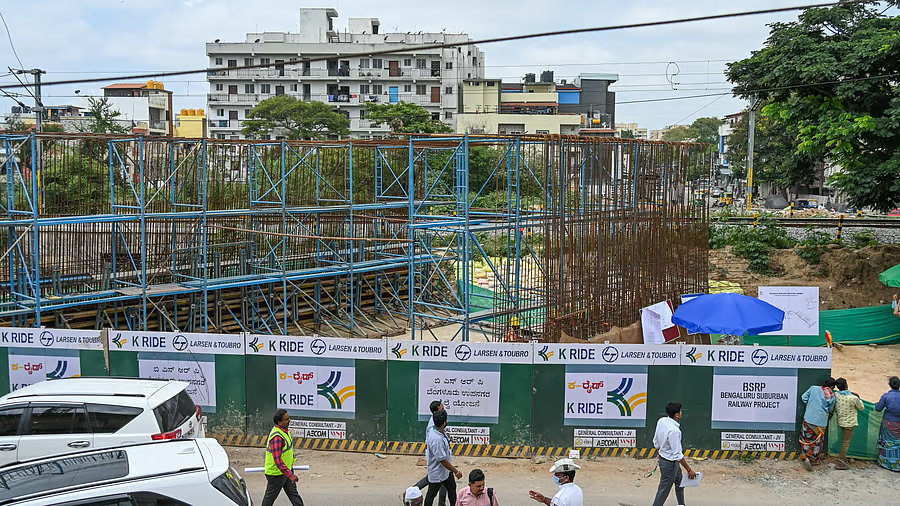
Rapid urbanization and increasing traffic congestion have created massive transportation problems in Bengaluru.
The Bengaluru Suburban Rail Project is proposed to resolve these issues by creating an integrated suburban rail system connecting the major residential, commercial, and industrial zones.
Building a Modern Regional Rail Network
The project implemented by Karnataka Rail Infrastructure Development Company has several corridors of around 149 kilometers.
The network is expected to be integrated with metro systems, bus services, and other modes of transportation to create a better urban mobility ecosystem.
Supporting Economic Productivity
The project is expected to improve workforce productivity and to support continued growth in Bengaluru’s technology and business sectors by reducing travel times and improving access.
Bengaluru Suburban Rail - Key Project Metrics
Metric | Value |
Length | 149 km |
Estimated Cost | Approximately USD 1.97 Billion |
Corridors | 4 |
Status | Under Construction |
Jiribam-Imphal Railway Line: Expanding Connectivity in Northeast India
The Jiribam-Imphal railway project is among the most important infrastructure projects in Northeast India. The project will connect the state capital, Imphal, to the national railway network for the first time.
Overcoming Complex Terrain
The region is mountainous, so construction requires a lot of tunneling, bridge building, and advanced engineering techniques.
The project involves some of the tallest railway bridge structures ever made in India.
Unlocking Regional Development
Better transport infrastructure can help in reducing logistics costs, in economic development, in better access to services, and in greater regional integration.
Jiribam-Imphal Railway Line - Key Project Metrics
Metric | Value |
Length | 111 km |
Estimated Cost | Approximately USD 1.51 Billion |
Tunnels | 45+ |
Status | Under Construction |
Sivok-Rangpo Railway: Bringing Rail Connectivity to Sikkim
The Sivok-Rangpo Railway is a strategically important project that will provide rail connectivity to Sikkim. The project is being built in difficult Himalayan terrain and requires the construction of many tunnels and bridges.
Improving Access to a Key Himalayan State
The railway is expected to boost tourism, facilitate the movement of goods, and improve transportation options for residents and businesses.
Strategic Infrastructure Development
The railway is also strategic because it is in the eastern Himalayan region, apart from its economic benefits.
Sivok-Rangpo Railway - Key Project Metrics
Metric | Value |
Length | 44.96 km |
Estimated Cost | Approximately USD 1.37 billion |
Tunnel Length | More than 38 km |
Status | Under Construction |
The Next Wave of High-Speed Rail Development in India
Work continues on the Mumbai-Ahmedabad corridor, and the Government of India is also promoting plans for more high-speed rail routes.
Delhi-Varanasi High-Speed Rail Corridor
The proposed Delhi-Varanasi corridor is anticipated to link the national capital with the major cities in Uttar Pradesh via a dedicated high-speed railway network. The project is currently in the planning phase, with Detailed Project Report (DPR) preparation underway.
Chennai-Bengaluru High-Speed Rail Corridor
Another important proposal is the high-speed rail link between Chennai and Bengaluru, two of South India's largest economic hubs.
The corridor can meet the business travel, regional economic integration, and future transportation demand.
Expanding India's High-Speed Rail Vision
These corridors are the next step in India’s long-term plan to develop a national high-speed rail network that can accommodate future economic growth and mobility needs.
Trusted by Leading EPCs & Manufacturers
Discover New Rail Infrastructure Opportunities Before Your Competitors
India's railway sector continues to attract billions of dollars in public and private investment. Stay ahead of emerging opportunities with project intelligence from Blackridge Research.
Request Free Trial → Learn More →
No credit card Up-to-date coverage
Western Dedicated Freight Corridor: Transforming Freight Transportation
Project | Type | Length (km) | Estimated Investment | Current Status | Key Engineering Features |
Western Dedicated Freight Corridor | Freight Rail | 1,506 | USD 8.89 Billion | Near Completion | Double-line electrified freight corridor |
Eastern Dedicated Freight Corridor | Freight Rail | 1,337 | USD 6.04 Billion | Operational / Final Works | High-capacity freight network |
The Western Dedicated Freight Corridor is one of the most important logistics infrastructure projects in India. The corridor is about 1,506 kilometres long and runs between Dadri in Uttar Pradesh and Jawaharlal Nehru Port near Mumbai. It is being implemented by the Dedicated Freight Corridor Corporation of India Limited.
Creating Dedicated Space for Freight Operations
For decades, both freight and passenger trains shared much of the same rail infrastructure, creating constraints on efficiency and capacity. The Western Dedicated Freight Corridor is building a dedicated route for freight movement, which addresses this challenge.
This division allows freight trains to operate more quickly and efficiently and releases capacity on existing passenger routes.
Supporting Industrial Growth
The corridor is of vital importance in supporting the manufacturing and export activity along the Delhi-Mumbai Industrial Corridor. Lower logistics costs and better supply chain reliability are expected to enhance India’s industrial competitiveness.
Western Dedicated Freight Corridor - Key Project Metrics
Parameter | Value |
Investment | USD 1.06 Billion |
Total Length | 2,843 km |
Eastern DFC | 1,337 km |
Western DFC | 1,506 km |
Axle Load Capacity | 32.5 Tonnes |
Maximum Freight Speed | 100 km/h |
States Covered | 9+ |
Major Ports Connected | Multiple |
Economic Impact Metrics
Indicator | Expected Impact |
Logistics Cost Reduction | 20–30% |
Freight Capacity Increase | More than Double |
Transit Time Reduction | Up to 50% |
Industrial Corridor Support | DMIC, EDFC Zones |
Carbon Emission Reduction | Significant Modal Shift |
Status | Under Construction / Near Completion |
Type | Dedicated Freight Railway |
Bilaspur Manali Leh Railway Construction Project
Project | Type | Length (km) | Estimated Investment | Current Status | Key Engineering Features |
Bilaspur–Manali–Leh Railway | Strategic Railway | 489 | Estimated > USD 1.06 Billion | Survey & Development Stage | One of world's highest railways |
Conclusion
India’s railway infrastructure sector is poised for a transformation with huge investments, technological advancements and ambitious connectivity targets. These developments are moving people and goods across the country from the Mumbai-Ahmedabad High-Speed Rail corridor and Dedicated Freight Corridors to important projects in Kashmir, Uttarakhand, the Northeast, and Sikkim.
The railway projects are also expected to generate economic gains, such as employment opportunities, lower logistics costs, regional integration, tourism, and encouragement of industrial development, in addition to improving transportation efficiency. Urban mobility projects such as the Delhi-Meerut RRTS and Bengaluru Suburban Rail Project are also aiding in solving congestion challenges while supporting more sustainable and efficient public transport systems.
As construction progresses and new high-speed rail corridors move through the planning pipeline, India’s railway network is emerging as a high-capacity transportation backbone that can support the country’s economic and social development goals. As India continues its programs of transportation infrastructure expansion in the world, the railway sector will continue to offer opportunities for contractors, suppliers, investors, and infrastructure stakeholders.
These projects, upon completion, would improve the connectivity of the country and play a pivotal role in achieving the objectives of India for decades to come. This supports India's broader goals of economic competitiveness, regional development, sustainability, and inclusive growth.
Track India's Railway Construction Projects with Blackridge Research
Want access to the latest railway infrastructure projects, tenders, contract awards, and investment opportunities across India?
The Global Project Tracking (GPT) platform by Blackridge Research helps you identify and monitor railway projects at every stage—from planning and procurement to construction and operation.
Gain access to:
Upcoming Railway Projects
Tender Notices
Contract Awards
Projects Under Construction
Owner & Contractor Information
Investment Values and Timelines
Project Status Updates and Market Intelligence
Whether you're a contractor, supplier, consultant, investor, or infrastructure stakeholder, GPT provides the actionable insights needed to identify new business opportunities and stay ahead of market developments in India's rapidly expanding railway sector.
From high-speed rail corridors and regional rapid transit systems to freight corridors and strategic connectivity projects, GPT helps you track the projects shaping the future of India's transportation infrastructure.
Request a Free Demo today and discover new railway infrastructure opportunities across India.
Leave a Comment
We love hearing from our readers and value your feedback. If you have any questions or comments about our content, feel free to leave a comment below.
We read every comment and do our best to respond to them all.