


Top 5 Desalination Plant Projects in Singapore 2026
Desalination plants in Singapore serve as one of its water sources, along with local, imported, and reused water. These four water resources in Singapore are known as the four National Taps that ensure sustainable water for the nation. The desalination plants in Singapore are a lifeline to meet its water needs and supply clean drinking water for millions of people. These plants remove salt from seawater to produce fresh drinking water.
Currently, Singapore has five operational desalination plants to meet its water needs. The recently built desalination plants in Singapore are unique and most energy-efficient. The Keppel Marina East desalination plant in Singapore is unique and can treat seawater and freshwater from the reservoir.
Singapore over the years, has turned desalination into a lifeline to secure its water supply and overcome water scarcity problems in the future. Increased demand and growing population led to dependence on desalination plants to supply fresh drinking water to fulfill their water needs.
Singapore’s Journey in the Desalination Industry
Singapore has several water sources to fulfill the water demand of its people. However, with increased demand and a growing population, natural water sources became limited. Hence, this led to a shift to desalination plants that can help meet the increasing water demand.
With immense research and investments, Singapore built its first desalination plant on 13th September 2005 in Tuas. Since then, Singapore built four more desalination plants to secure its water needs for the future. Currently, Singapore has five desalination plants providing potable water for this island.
Top Desalination Plants in Singapore (Based on Project year)
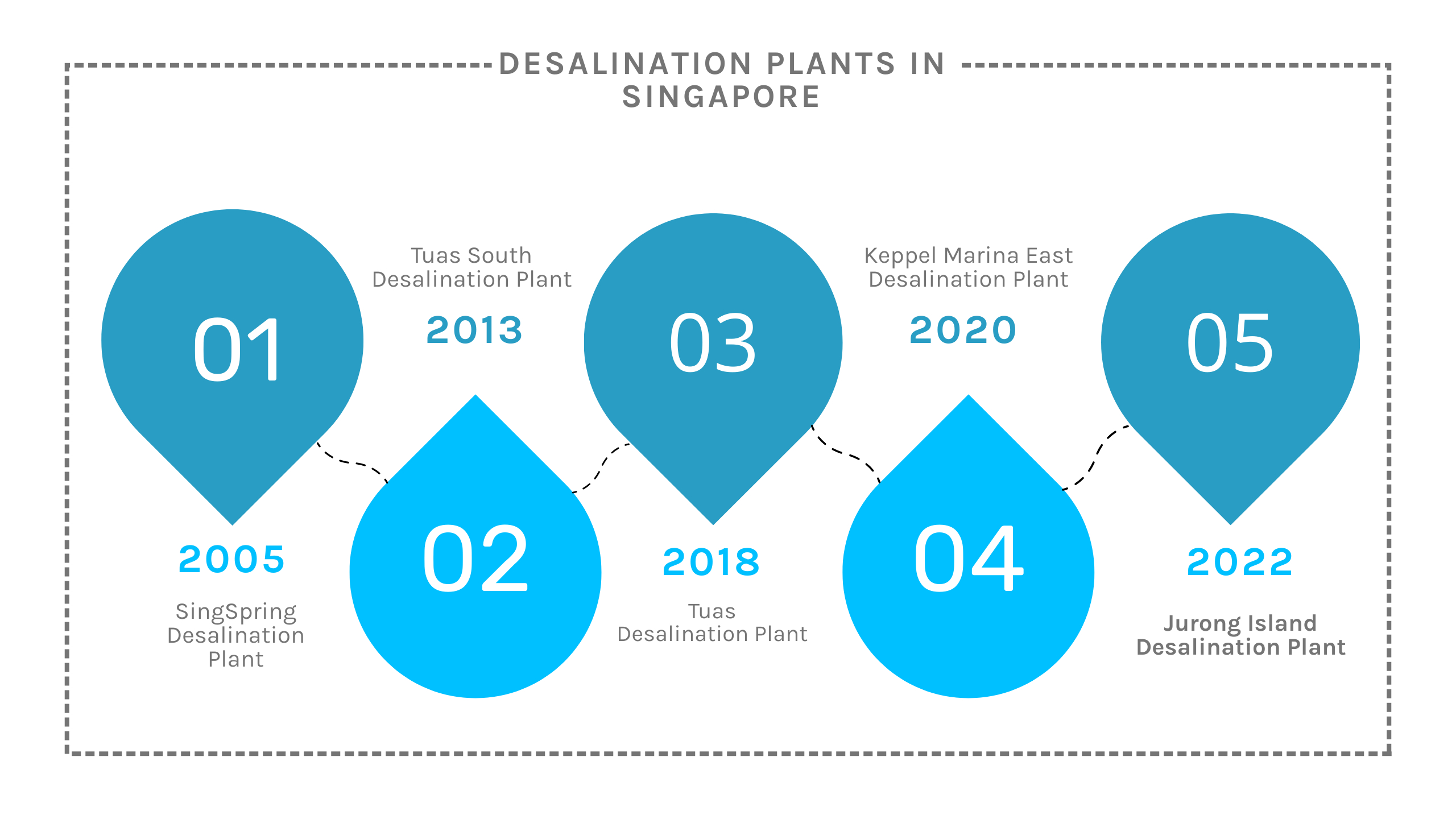
Project Name | Commissioned Year | Location | Capacity | Project Cost |
SingSpring Desalination Plant | 2005 | Tuas | 136,380 m³/day | N/A |
Tuas South Desalination Plant | 2013 | Tuas | 130,000 m³/day | USD 56–80 Million (Approximate) |
Tuas Desalination Plant | 2018 | Tuas | 300,000 m³/day | USD 200 Million |
Keppel Marina East Desalination Plant | 2020 | Marina East Drive | 137,000 m³/day | USD 345–430 Million (Approximate) |
Jurong Island Desalination Plant | 2022 | Jurong Island | 135,000 m³/day | N/A |
Singapore has five operational desalination plants built to meet its water requirements. These include SingSpring, Tuas South Desalination Plant, Tuas Desalination Plant, Keppel Marina East, and Jurong Island Desalination Plant.
Trusted by Leading EPCs & Manufacturers
Find Desalination Plant Projects and Tenders in Singapore
Gain exclusive access to our industry-leading database of Desalination Plant Projects opportunities with detailed project timelines and stakeholder information.
Request Free Trial → Learn More →
No credit card Up-to-date coverage
SingSpring Desalination Plant
Field | Details |
Project Name | SingSpring Desalination Plant |
Location | Tuas |
Commissioned In | 2005 |
Capacity | 136,380 m³/day |
Built By | SingSpring (Pte) Ltd |
Operated By | KIT and PUB |
The SingSpring desalination plant, built in 2005, was the first desalination plant in Singapore. This plant produces 136,380 cubic meters of water per day. It constitutes about 7% of Singapore's water needs.
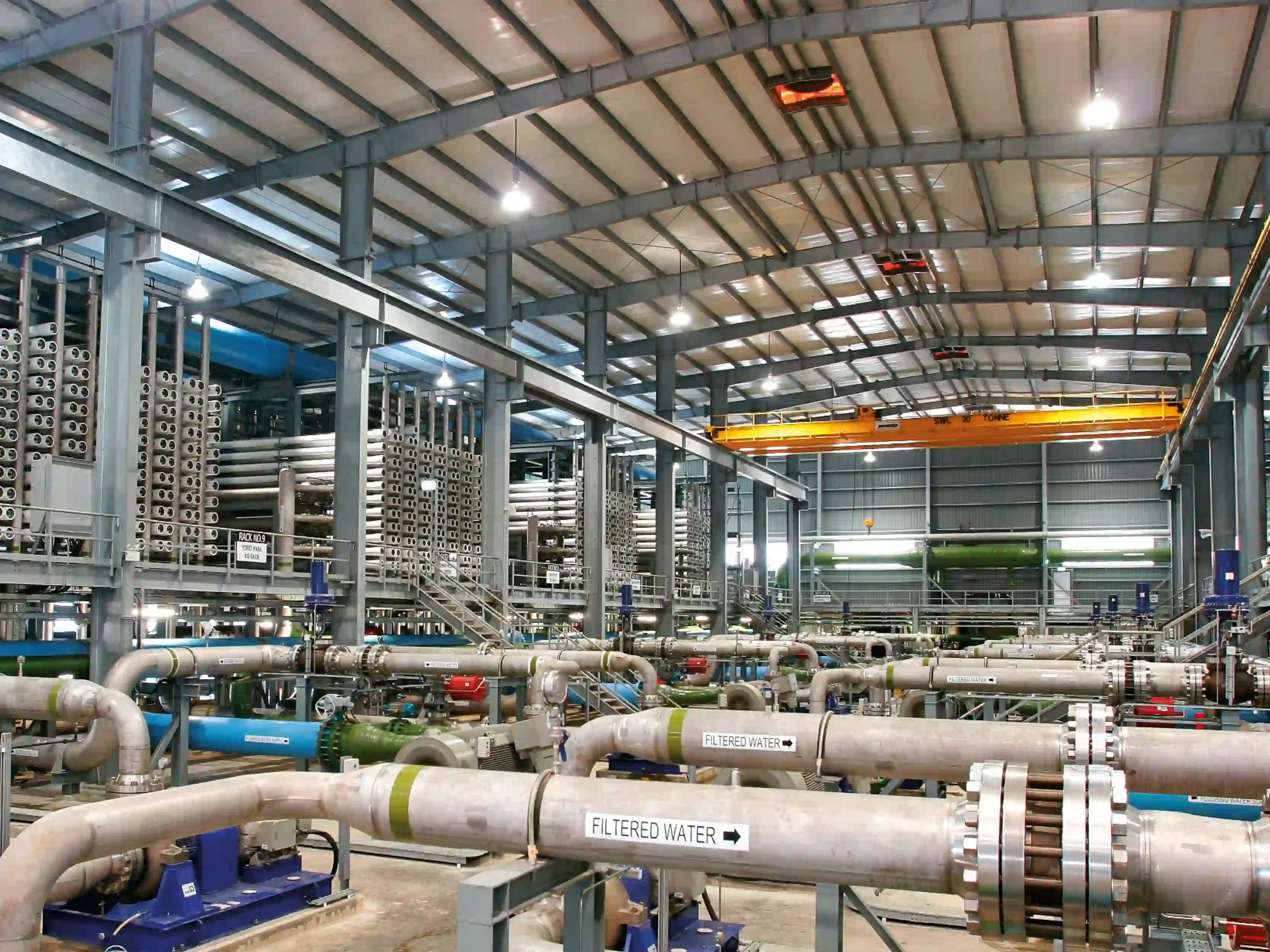
The Singspring desalination plant uses the reverse osmosis technology. It reduces the overall cost of the plant and is more energy-efficient. The Singspring desalination plant was Singapore's first large-scale seawater desalination plant.
It was also the largest membrane-based seawater desalination with reverse osmosis trains. The Singspring desalination plant is built by the Singspring (Pte) Ltd company. It is operated by KIT (Keppel Infrastructure Trust) and PUB (Public Utilities Board)-Singapore's National Water Agency.
Tuas South Desalination Plant
Field | Details |
Project Name | Tuas South Desalination Plant |
Location | Tuas |
Commissioned In | 2013 |
Capacity | 130,000 m³/day |
Built By | PUB, SingSpring Pte Ltd, Black & Veatch |
Operated By | PUB |
The Tuas South Desalination Plant was formerly known as the Tuaspring desalination plant. It is one of the largest desalination plants in Singapore.
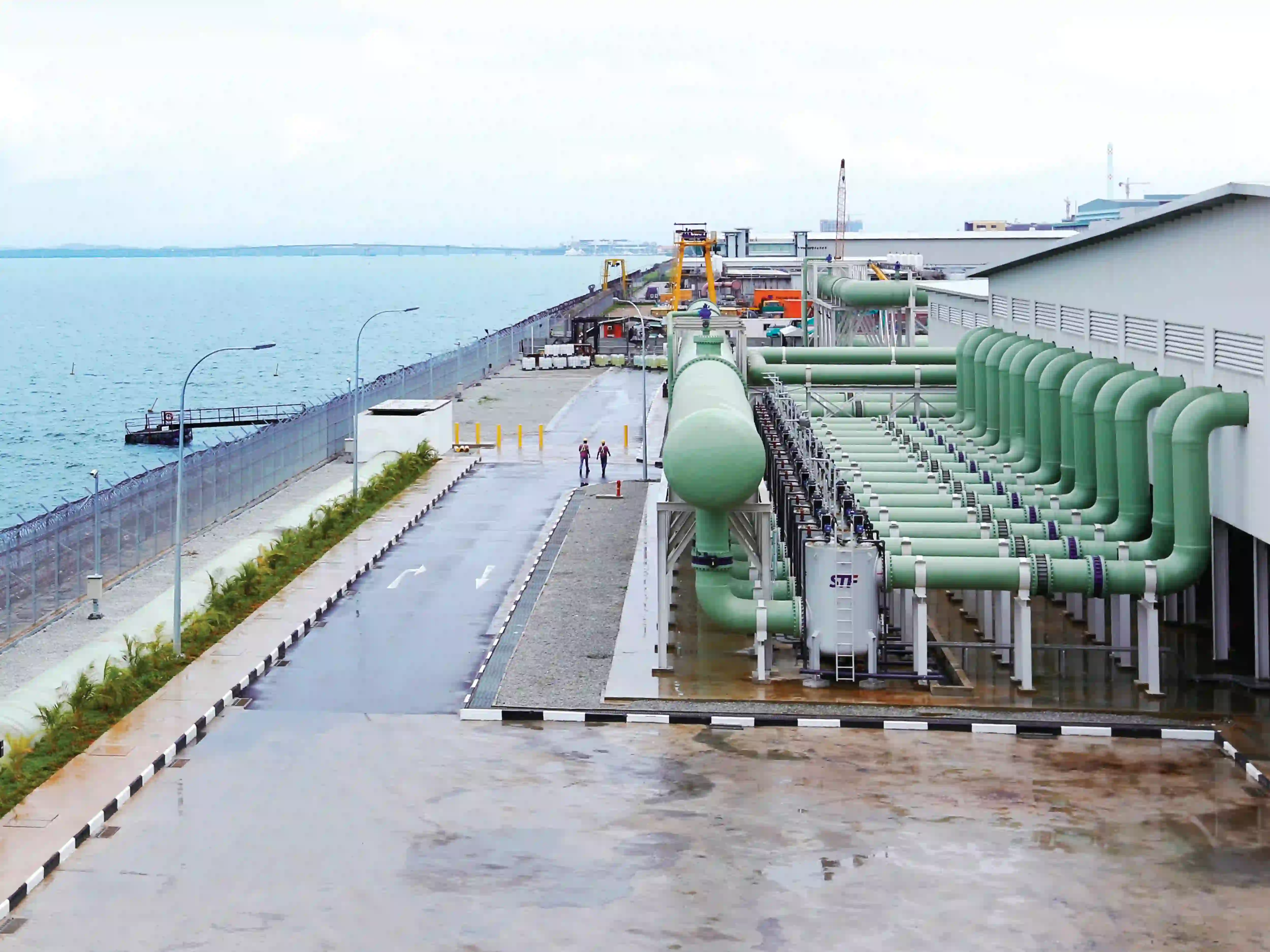
It was commissioned in 2013 and uses advanced desalination technology. It includes ultrafiltration and reverse osmosis desalination technology.
It produces 130,000 cubic meters of clean drinking water per day. The Tuas South desalination plant is the second-largest desalination plant in Singapore.
It was built through the DBOO(Design, Build, Own and Operate) contract. PUB contracted it to Singspring Pte Ltd and Black & Veatch companies. PUB took over the ownership and operation of the plant in May 2019 after its DBOO contract with Singspring was completed.
Tuas Desalination Plant
|
|
|
|
|
|
Project Name
|
|
Tuas Desalination Plant
|
|
|
|
|
|
|
|
Location
|
|
Tuas
|
|
|
|
|
|
|
|
Commissioned in
|
|
2018
|
|
|
|
|
|
|
|
Capacity
|
|
300,000 m3/day
|
|
|
|
|
|
|
|
Built By
|
|
PUB, SingSpring Pte Ltd, Black & Veatch
|
|
|
|
|
|
|
|
Operated By
|
|
PUB
|
|
|
|
|
|
|
The Tuas desalination plant was officially commissioned in 2018. It can produce up to 300,000 cubic meters of drinking water per day. Tuas desalination plant is one of the largest desalination plants in Singapore.
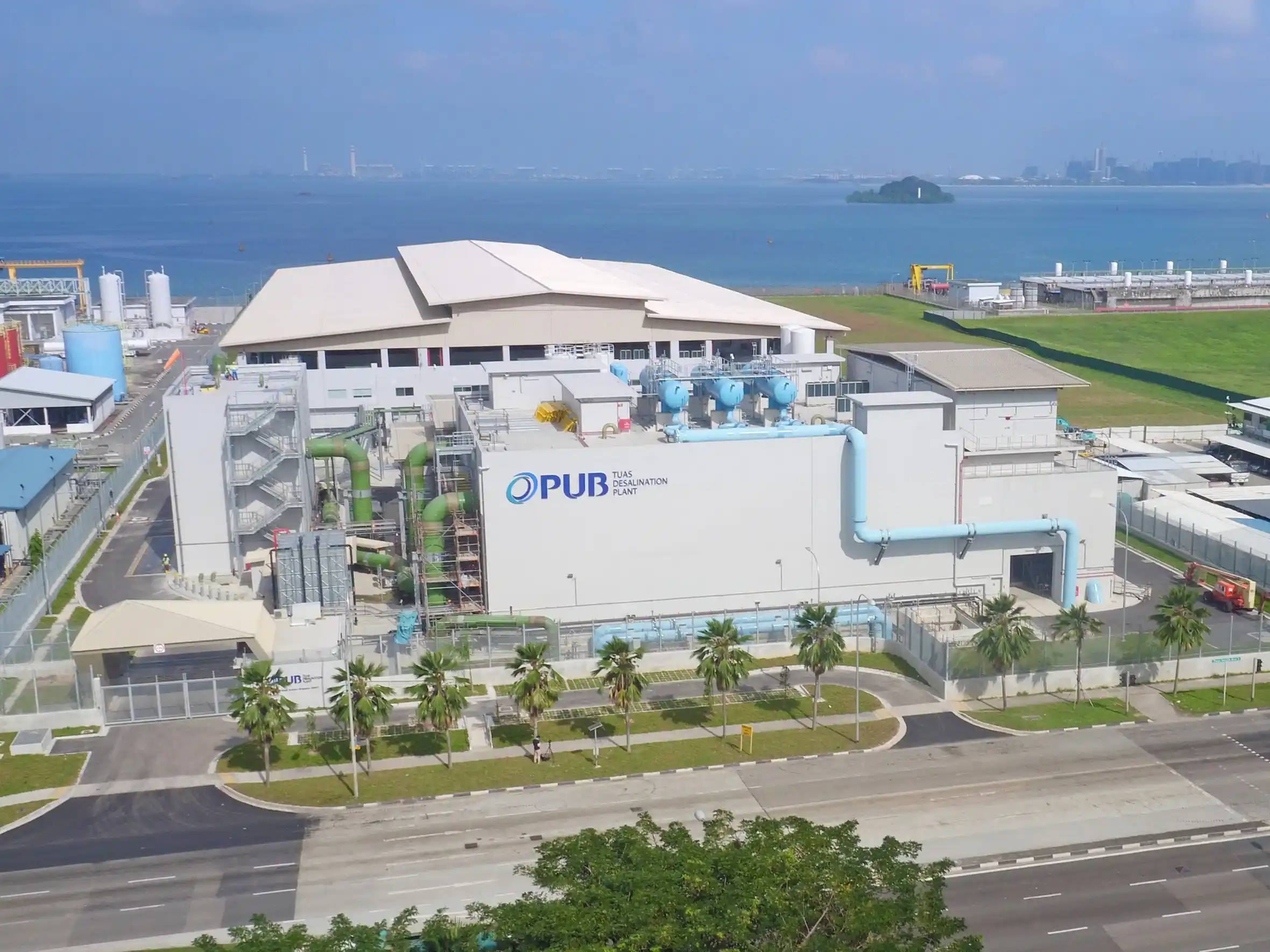
It is located in Tuas. Tuas is the first desalination plant in Singapore that uses pre-treatment technology. It includes dissolved air-flotation and ultrafiltration combined to enhance water quality.
This advanced desalination technology helps reduce membrane fouling. Hence, it treats sea water effectively. It further reduces the overall operation costs of replacing membranes regularly. Hence, it enhances the overall operational efficiency.
PUB and the DBOO contractor is Singspring Pte Ltd for the Tuca desalination plant. Black & Veatch company designed and monitored the permitting stages of the plant.
Keppel Marina East Desalination Plant
|
|
|
|
|
|
Project Name
|
|
Keppel Marina East Desalination Plant
|
|
|
|
|
|
|
|
Location
|
|
1 Marina East Drive
|
|
|
|
|
|
|
|
Commissioned in
|
|
2020
|
|
|
|
|
|
|
|
Capacity
|
|
137,000 m3/day
|
|
|
|
|
|
|
|
Built By
|
|
PUB & Marina East Water Pte Ltd
|
|
|
|
|
|
|
|
Operated By
|
|
Marina East Water Pte Ltd
|
|
|
|
|
|
|
The Keppel Marina East desalination plant was commissioned in 2020. It produces 137,000 cubic meters of clean drinking water per day.
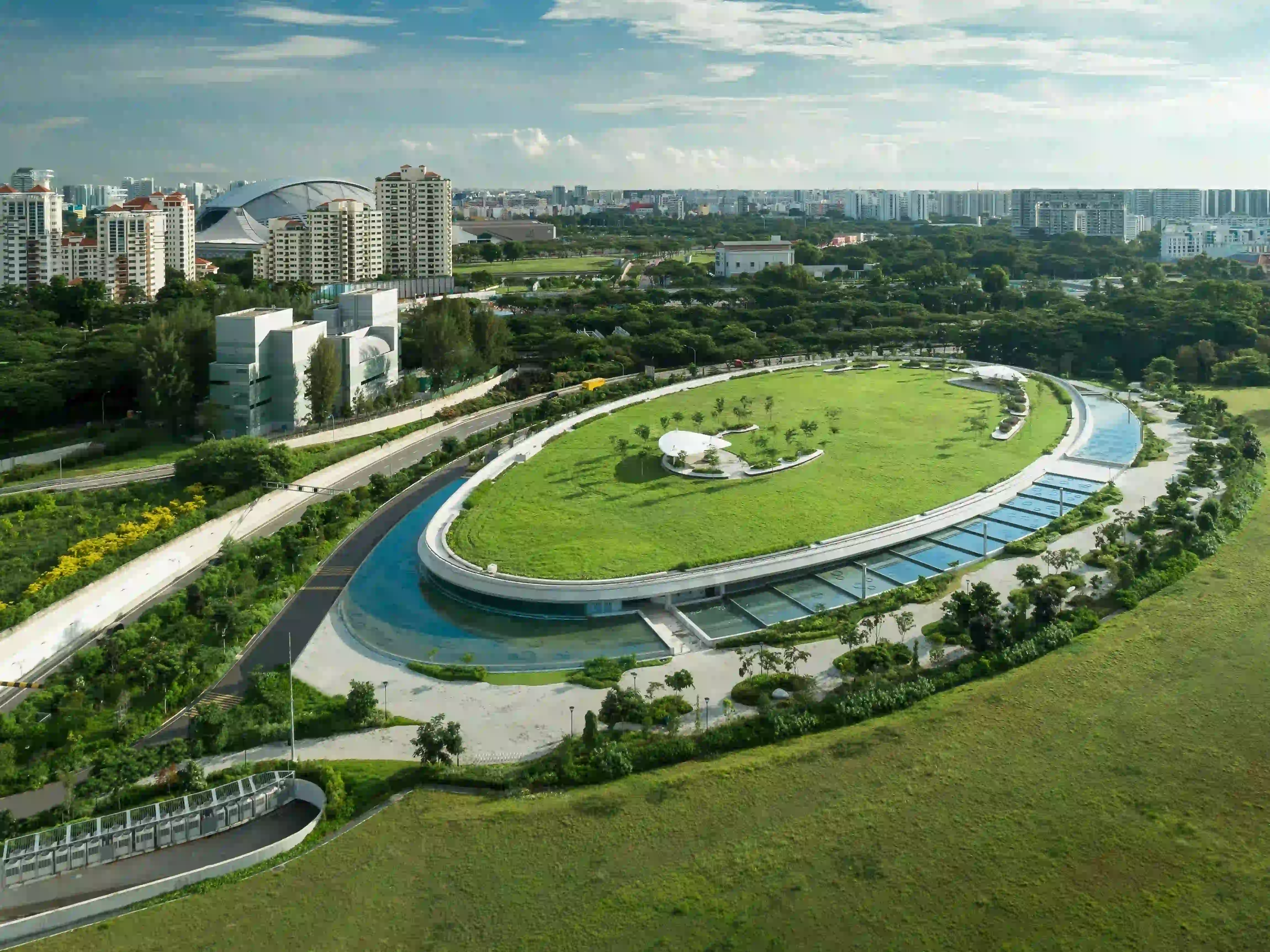
It is Singapore's first dual-mode desalination plant that can treat other water sources. It includes seawater during dry weather and freshwater from the Marina Reservoir during the rainy season.
A unique feature of the Keppel Marina East desalination plant is that the treatment facilities are located underground allowing a green roof integrated with open space for community activities.
It was awarded the 'Desalination Plant of the Year" at the Global Water Awards 2021. It is built and operated by Singspring Pte Ltd under the DBOO contract of PUB.
Jurong Desalination Plant
|
|
|
|
|
|
Project Name
|
|
Jurong Is Desalination Plant
|
|
|
|
|
|
|
|
Location
|
|
Jurong Island
|
|
|
|
|
|
|
|
Commissioned in
|
|
2022
|
|
|
|
|
|
|
|
Capacity
|
|
135,000 m3/day
|
|
|
|
|
|
|
|
Built By
|
|
PUB and Tuas Power-ST Engineering
|
|
|
|
|
|
|
|
Operated By
|
|
PUB and Tuas Power-ST Engineering
|
|
|
|
|
|
|
The (JIDP) Jurong desalination plant was commissioned in 2022. This is the fifth desalination plant in Singapore. It is co-located with TMUC (Tuas Power's Tembusu Multi-Utilities Complex).
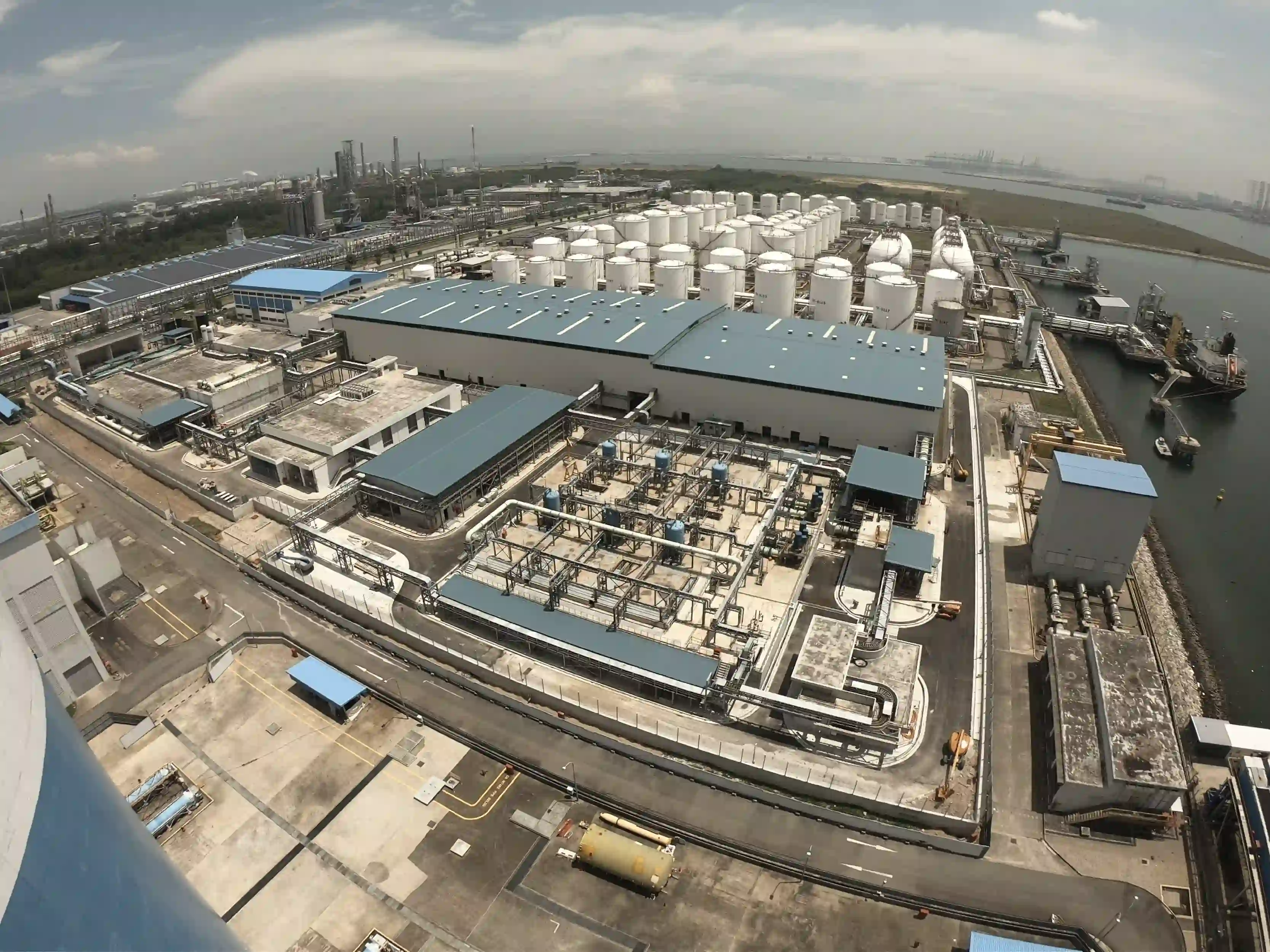
This allows the JIDP to derive resources such as seawater intake and energy. Thus, the Jurong desalination plant is 5% more energy-efficient than the other four desalination plants.
The Jurong desalination plant uses advanced membrane technologies for desalination. Its energy efficiency helps in reducing the environmental impact of desalination.
It was built and is operated by the PUB and Tuas Power-ST Engineering. Additionally, it contributes to Singapore's goal of increasing desalination capacity for water security.
Driving Forces of the Desalination Industry in Singapore
Singapore is an island nation and gets its water from water catchment, imported water, and NEWater (reused water). Limited natural resources and growing demand led to the rise of a national tap - desalinated water.
Desalination plants in Singapore contribute to securing the water for the future and serve as a major source of drinking water. Additionally, technological advancements and innovations in this sector ensured reduced environmental impact due to the desalination process.
A few notable achievements in this industry include energy-efficient and dual-mode desalination plants like Keppel Marina East and Jurong Island desalination plants. The 5 desalination plants in Singapore provide a reliable source of fresh water and environmental sustainability for the future generations to come.
Upcoming Challenges in the Desalination Industry in Singapore
High Energy Consumption: Increased capacity of desalinated water requires high electricity for uninterrupted production. Jurong Island desalination plant is designed energy-efficient. However, measures to reduce power consumption processes are high.
RO Membrane Replacement Cost: RO membranes required timely replacement to ensure a quality desalination process. This can increase the overall operational cost.
Brine Disposal: Brine disposal after the desalination process into coastlines or deep sea can affect marine life and ecosystems.
Future Water Demand: The water demand in the future is expected to rise and the existing 5 desalination plants in Singapore may shortly fall for supplying water.
Decrease Environmental Imbalance: High power consumption can lead to increased carbon emissions.
Conclusion
Singapore has desalination as an integral part of its water sources. Its five operational desalination plants contribute 30% of its current water needs. Through constant innovation, desalination plants in Singapore are becoming more energy efficient and enhanced. The latest desalination plant is 5% more efficient than other conventional desalination plants.
Connect with decision-makers of Desalination Plant projects in Singapore for business opportunities.
Subscribe to Blackridge's Desalination Plant Project and Tender in Singapore database to access reliable and high-quality insights on upcoming, in-progress, and completed desalination plant projects across the world or in your desired location.
Our user-friendly platform provides essential details, timely updates, key stakeholder contact information, and business opportunities tailored for engineering companies, industry professionals, investors, and government agencies.
Start a free demo to take your business to the next level!


Leave a Comment
We love hearing from our readers and value your feedback. If you have any questions or comments about our content, feel free to leave a comment below.
We read every comment and do our best to respond to them all.