


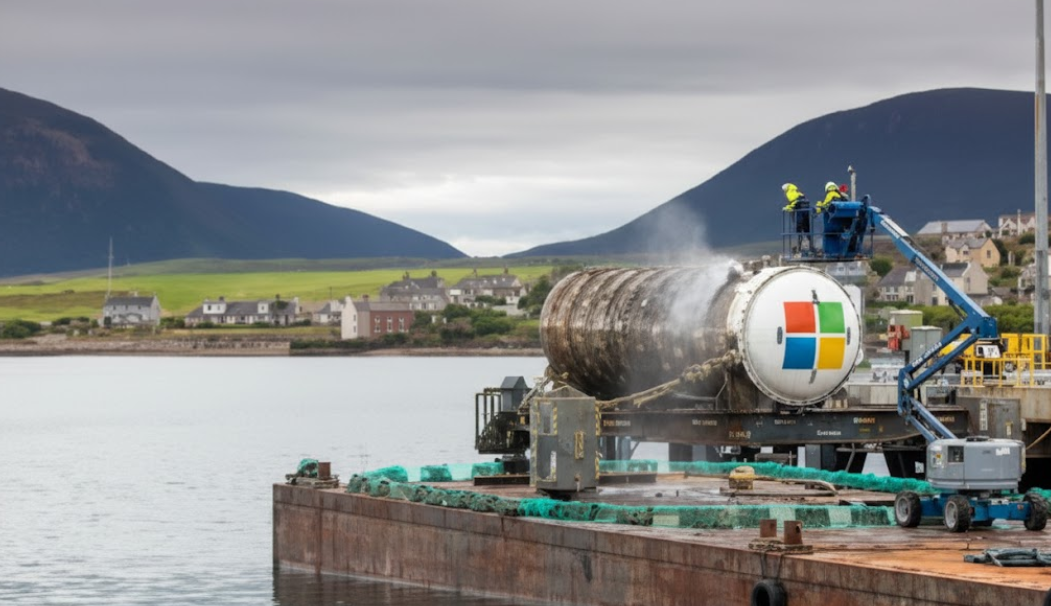
Microsoft Data Center in Ocean: Project Natick
Project at a Glance | |
Project Name | Microsoft Project Natick |
Type | Underwater Data Center Research & Development Initiative |
Owner | Microsoft Corporation (Microsoft Research + Cloud Operations & Innovation) |
Investor | Microsoft Corporation (Microsoft Research + Cloud Operations & Innovation) |
EPC Contractor | Naval Group (Marine Engineering & Pod Construction) |
Project Phases | Phase 1 (2015 prototype), Phase 2 – Northern Isles Pod (2018–2020) |
Deployment Location | Seabed near the Orkney Islands, Scotland |
Deployment Depth | 117 feet underwater |
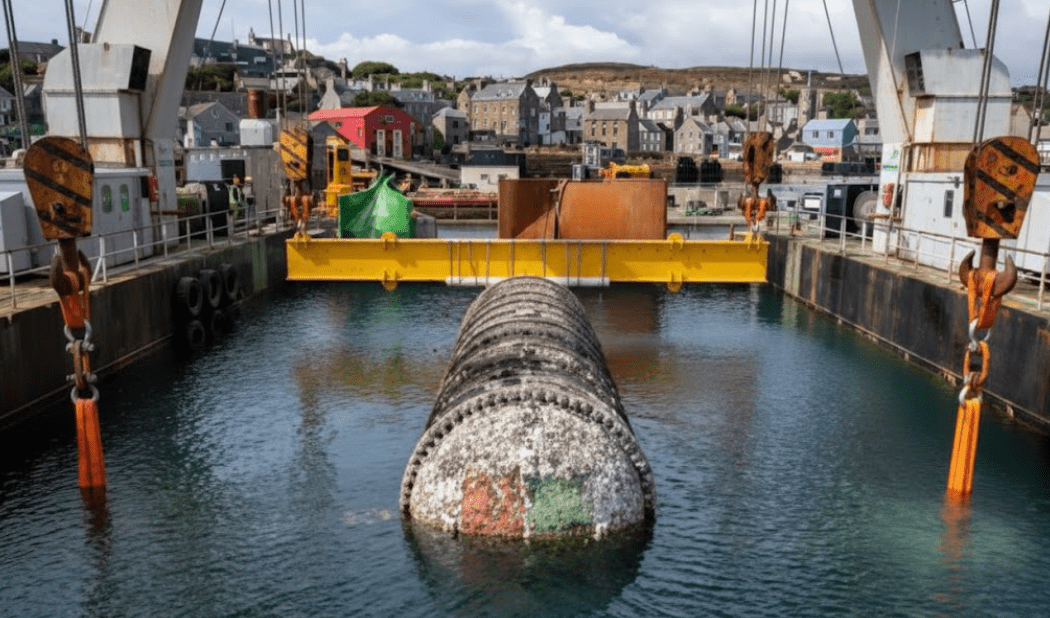
Pod Structure | Steel cylindrical capsule (12 meters long, 2 meters in diameter) |
Hardware Inside | 12 racks, 864 servers, 27.6 Petabytes storage |
Internal Atmosphere | Nitrogen-filled, sealed, humidity-controlled |
| Natural seawater cooling via heat exchangers |
Cooling Method | 240 kW |
Energy Efficiency (PUE) | 1.07 (very high efficiency) |
Runtime Duration | 25 months (2018–2020) |
Project Start Date | 2013 (Concept Initiated) |
Project End | 2024 (Project Discontinued) |
Project Overview
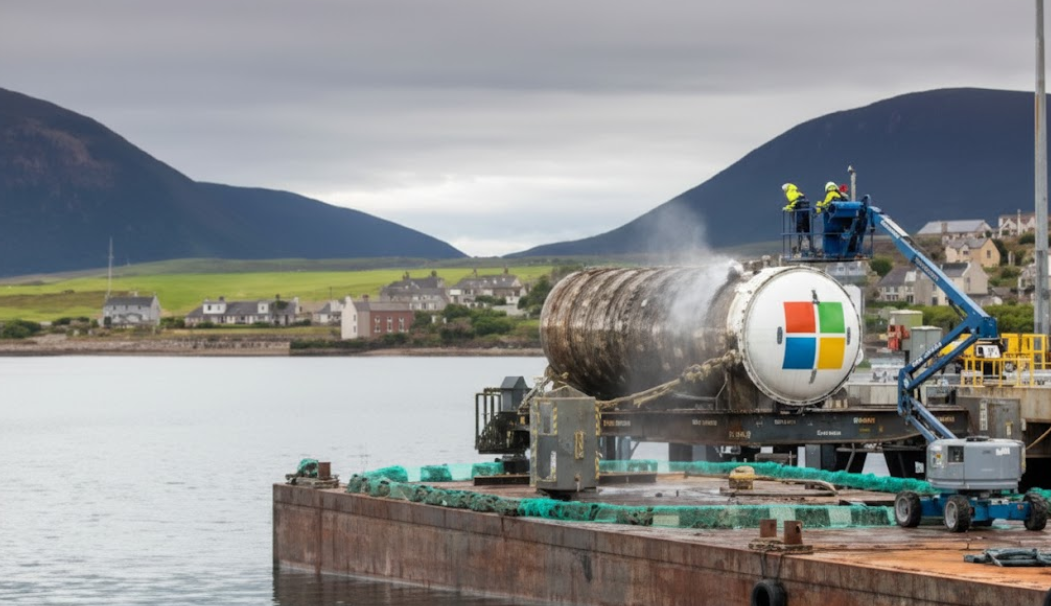
Microsoft developed an underwater data center known as Project Natick, which is a 40-foot sealed subsea module containing 12 racks and 864 servers with up to 27.6 petabytes of storage capacity. The Project Natick is designed and operated by Microsoft’s cloud infrastructure team to test whether ocean-based data centers could offer faster deployment, better cooling efficiency, and higher reliability compared to traditional land facilities.
The project was first announced back in 2013, as first floated inside a data center by Microsoft, and was officially launched internally in July 2014. However, in June 2024, Microsoft officially confirmed that Project Natick is no longer active and that there are no underwater data centers currently in operation.
Project Natick Location
Microsoft's underwater data centers were located at the European Marine Energy Center in Scotland, UK. The project was deployed in two phases. Phase 1 was deployed somewhere off the Pacific coast of the United States, while Phase 2 was deployed at EMEC, Orkney Islands, Scotland, in the UK.
Project Background
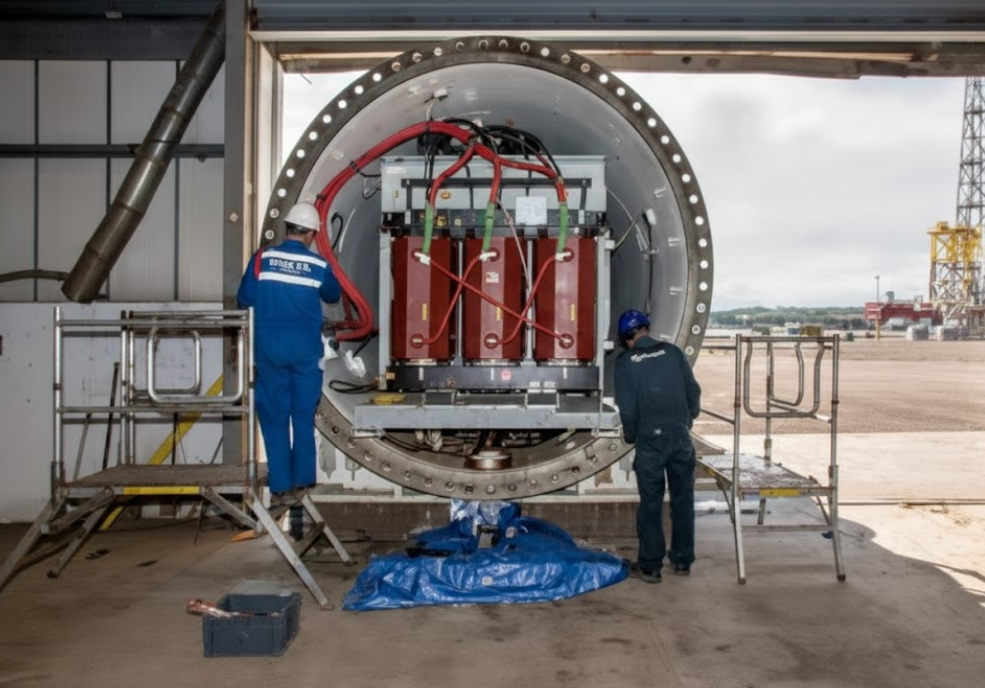
Microsoft's Project Natick was started as an internal research idea back in 2013, when a Microsoft researcher who was an ex-Navy submariner proposed the idea of setting up data centers underwater to cut down on the cooling costs and boost sustainability.
The prototype of phase 1 was launched in August 2015 as a small "micro" data center, which was placed about 30 feet underwater off the coast of California. The data center was run underwater for 105 days and then was retrieved; the results declared early successes that inspired Microsoft to pursue a phase II in 2018.
In phase II, a fully shipping container-sized capsule was installed off the coast of the Orkney Islands in Scotland at about 117 feet deep. The capsule was called the " Northern Isles" pod.
Project Timeline
Year | Description |
2024 | Official project termination and shift: Microsoft will instead apply learnings (e.g., for liquid-cooled or more efficient land-based data centers). |
June 2024 | Microsoft confirms publicly that Project Natick is discontinued, with no active underwater data centers, no future subsea deployments planned. |
2021 | Post-retrieval analysis and reporting; conclusions drawn about viability, reliability, sustainability, and lessons learned. |
September 2020 | Pod retrieved and project results published: very low failure rate underwater vs land, high energy/cooling efficiency, positive environmental findings. |
2018–2020 | Pod remained submerged for 25 months, running real workloads; continuous monitoring of performance, reliability, cooling, and environment. |
June 1, 2018 | Phase 2 launch: Pod named “Northern Isles / SSDC-002” — full 12-rack, 864-server underwater data center deployed near Orkney Islands, Scotland. |
2016–2017 | Planning and construction of the full-scale underwater pod (Phase 2) in collaboration with engineering partners. |
Aug 2015 | Phase 1: Prototype pod submerged off the California coast for 105 days — first proof-of-concept test of underwater data center viability. |
2014–2015 | Designed and built a small prototype capsule for Phase 1; prepared for underwater test deployment. |
2013 | Concept initiation. |
Trusted by Leading Manufacturers & EPCs
Find The Latest Data Center Projects Around The World
Gain exclusive access to our industry-leading database of Data Center Projects opportunities with detailed project timelines & stakeholder information
No credit card Up-to-date coverage
Microsoft Data Center in Ocean: Technical Specifications
Parameter | Details |
Datacenter Designation | Northern Isles (SSDC-002) |
Pressure Vessel Dimensions | 12.2 m length, 2.8 m diameter (3.18 m including external components); comparable to a standard 40' ISO shipping container |
Subsea Docking Structure Dimensions | 14.3 m length, 12.7 m width |
Electrical Power Source | 100% locally produced renewable energy (on-shore wind, solar, off-shore tidal and wave energy) |
Electrical Power Consumption | 240 kW |
Payload Capacity | 12 racks containing 864 Microsoft datacenter servers with FPGA acceleration |
Storage Capacity | 27.6 petabytes total storage (storage for 5 million movies) |
Location | European Marine Energy Centre (EMEC), Orkney Islands, Scotland, UK |
Internal Operating Environment | 1 atmosphere pressure, dry nitrogen environment |
Time to Deploy | Less than 90 days from factory to fully operational |
Planned Operational Duration without Maintenance | Up to 5 years of continuous underwater operation |
Microsoft Data Center in Seattle: Contractors & Suppliers
Role | Company |
Project Developer / Owner | Microsoft Research (Microsoft Corporation) |
Marine Engineering, Capsule Design & Construction (Primary EPC) | Naval Group (France) |
Subsea Deployment & Retrieval Contractor | Green Marine (Orkney) |
Renewable Energy Provider / Hosting Site Partner | European Marine Energy Centre (EMEC), Scotland |
Grid & Renewable Infrastructure (Support) | EMEC Onshore Wind, Solar, Offshore Wave & Tidal Systems |
Trusted by Leading Manufacturers & EPCs
Find The Latest Data Center Projects Around The World
Gain exclusive access to our industry-leading database of Data Center Projects opportunities with detailed project timelines & stakeholder information
No credit card Up-to-date coverage
Project Natick Investors
Project Natick was fully funded and backed internally by Microsoft Corporation as part of its long-term research and innovation strategy. This Microsoft data center in the sea was under Microsoft's Research Division and Cloud Operations & Innovation (CO+I) teams.
Both teams acted as the primary “investors” by allocating financial resources, engineering talent, and infrastructure capacity for high-risk, high-reward technological experiments.
A Milestone Achieved By Project Natick Microsoft in 2025
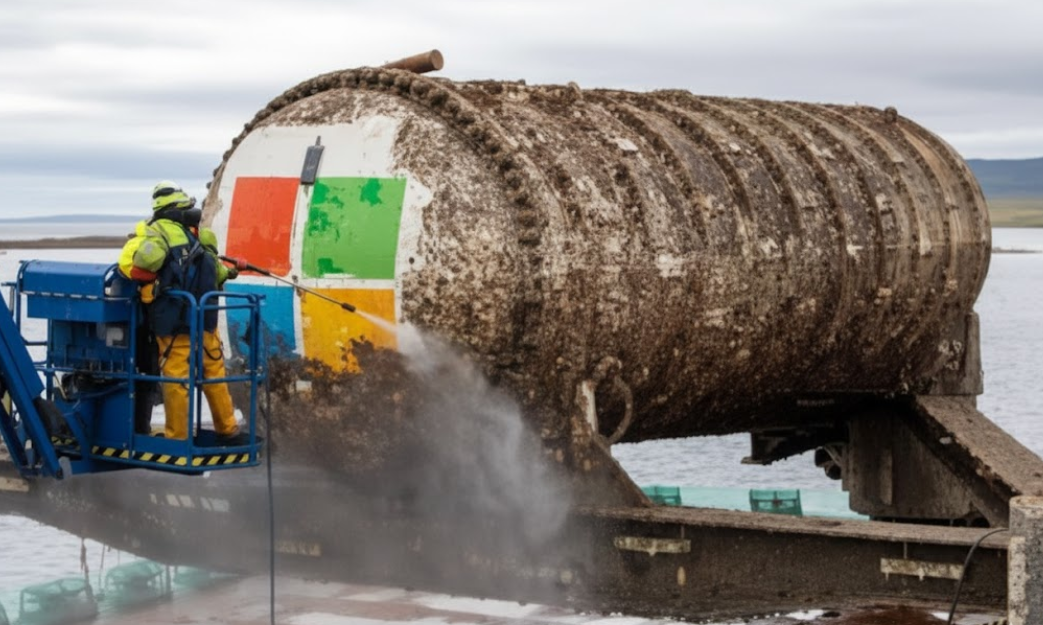
On 21st April 2025, Microsoft announced how it had safely recovered the underwater data center after its two-year deployment. When the Northern Isles pod was scheduled for retrieval from the deep sea, Microsoft made sure that the data center remained fully connected and operational until the very moment it was brought back to land, ensuring no networking or data was lost during the process.
Microsoft achieved this through a secure and dedicated network path using a leased line linking the subsea pod directly to the company's infrastructure hub in London.
Benefits & Lessons Learned
Project Natick was aimed at dramatically cutting down the cooling costs by replacing massive air-conditioning systems or evaporative cooling towers used in traditional land-based data centers with an underwater pod that naturally keeps the servers cool.
But beyond these direct technical benefits, Project Natick offered Microsoft valuable lessons to develop land-based or underwater data centers. It acts as a viable blueprint for future data center models, especially in an era where there is a growing demand for power and housing compute infrastructure. Instead of dedicating vast acres of land to new data centers, Natick demonstrated how compact, self-contained modules can deliver high-density compute in a more environmentally friendly way.
Conclusion
One of the most ambitious and unusual data center initiatives ever is Microsoft's Project Natick. The study showed that sealed, nitrogen-filled conditions and naturally cold seawater can make servers far more reliable, cool them down more efficiently, and make them last longer by putting a fully functional data center on the ocean floor. The two-year deployment yielded remarkable outcomes, demonstrating that underwater data centers may function with minimum upkeep and significantly lower failure rates.
Despite the project being successful, the project officially ended in 2024. Microsoft cited several reasons for discontinuation, such as the concept of underwater data centers is not feasible for modern cloud and AI demands.
Underwater pods remain sealed for years, making it difficult to upgrade the GPUs or add new servers to meet the growing demand or expand capacity. In addition, challenges like maintenance and costly deployment, and low retrieval costs made the project impractical to operate at hyperscale. Thus, Project Natick succeeded as an experiment; it was not deployed as a long-term project.
Also Read: Largest Data Centers in Europe 2026
Discover Data Center Projects & Tenders Data before your Competitors Do!
Unlock Global Data Center Opportunities! Introducing Blackridge Research's Global Project Tracking (GPT) platform:
Instant access to India's latest Data Center Facility Projects
Comprehensive insights from planning to completion
Essential details: scope, CapEx, timelines, and key contacts
User-friendly interface for quick opportunity identification
Want more data center construction insights, including planned projects, active companies, and key decision-makers? Get started with our project tracker demo today.
Why Blackridge’s Global Projects Tracker?
Blackridge’s Global Projects Tracker covers projects from 150 countries and is updated with real-time, accurate, and authentic project developments. By subscribing to our Global Data Center Database, you can get access to key contact details of ongoing and upcoming projects, project timelines and overviews, and regular alerts on project developments, all served to you through an easy-to-use interface.
Leave a Comment
We love hearing from our readers and value your feedback. If you have any questions or comments about our content, feel free to leave a comment below.
We read every comment and do our best to respond to them all.