

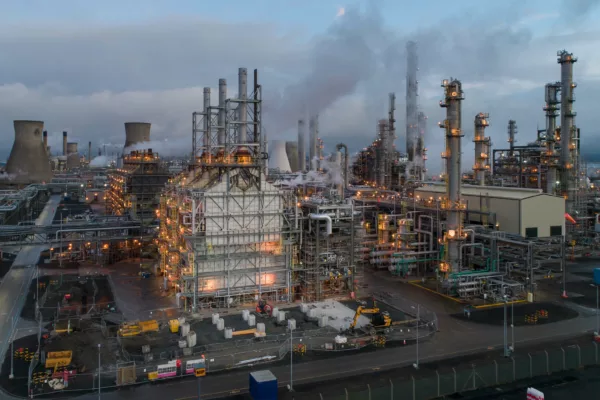
Acorn CCS Project
Table of Contents
- Loading contents...
Project at a Glance | |
Project Name | Acorn CCS Project |
Project Type | Greenfield |
Project Sector | Carbon, Capture, Utilisation, & Storage (CCUS) |
Project Location | Northeast Scotland |
Project Status | Government funding granted |
Project Funding | 200 million GBP (approximately USD 272 million) |
Project Developer | Pale Blue Dot Energy (a wholly owned subsidiary of Storegga) |
Project Overview
The Acorn is one of the top-tier UK Carbon Capture & Storage (CCS) and hydrogen projects developed by Pale Blue Dot Energy (a wholly owned subsidiary of Storegga). It is located in northeast Scotland.
The Acorn Hydrogen project will convert North Sea natural gas into hydrogen. The CO2 emissions will be safely mitigated through the Acorn CCS Infrastructure. Hydrogen will then be used in transport applications and in the gas grid to reduce carbon emissions in homes and industries.
In addition, the project includes offshore CO₂ storage and a repurposed 102 km Goldeneye pipeline for CO₂ transportation. The offshore CO₂ storage is in the Central North Sea, 100 km from St Fergus. It uses a sandstone reservoir 2.5 km below the seabed, sealed by a 400-meter caprock that prevents CO₂ from moving upward.
Following government funding approval in June 2025, the project is progressing towards the Final Investment Decision (FID). Full-scale capture is planned at 10 million tonnes/year of CO₂ across the cluster by 2030.
What is Acorn CCS?
Acorn is a CO₂ transportation and storage system that recycles legacy oil & gas infrastructure to transport captured industrial CO₂ emissions from the Scottish Cluster, to permanent storage 2.5 km (1.5 miles) under the North Sea.
It is connected to the Scottish mainland via legacy pipelines, with a transport capacity of up to 20 Mtpa of CO₂ to the Acorn stores during peak operations.
Project Location
The Acorn CCS project is located in northeast Scotland. It includes key onshore infrastructure centered at the St Fergus Gas Terminal near Peterhead, Aberdeenshire, where the UK’s used natural gas is transported onshore.
Acorn CCS Project Map

Project Background
The Acorn CCS Project is designed to reduce CO2 emissions and develop a complete loop carbon capture and storage solution in northeast Scotland. It began with the feasibility studies funded by the European Union's Accelerating CCS Technologies (ACT) program.
The aim was to repurpose existing oil and gas infrastructure at the St Fergus gas terminal for CO₂ capture, transport, and offshore storage in the North Sea.
It demonstrated the commercial, technical, and regulatory feasibility of used oil and gas fields for safe, permanent CO₂ storage. The project addressed storage permits, funding frameworks, and public engagement methodologies.
In December 2018, the project received regulatory assistance. The UK Oil and Gas Authority granted a carbon storage license. The Acorn CCS Project is now positioned as the transport and storage backbone for the Scottish Cluster. It aims to store up to 10 million tonnes of CO₂ annually by 2030 and plays a crucial role in meeting Scotland's net-zero targets.
Furthermore, the Acorn Project covers the Acorn Hydrogen initiative, which plans to produce low-carbon hydrogen from North Sea natural gas with CO₂ capture using Acorn's CCS infrastructure.
40+ reviews
Find the Latest CCUS Projects In The United Kingdom
Gain exclusive access to our industry-leading database of CCUS Project opportunities with detailed project timelines and stakeholder information.
Collect Your Free Leads Here!
No credit cardUp-to-date coverage
Joined by 750+ industry professionals last month
Acorn CCS FID
The Acorn will receive 200 million GBP (approximately USD 272 million) in development funding from Britain (UK Government). The Government announced it on 12 June 2025. The investment will support detailed engineering, planning, and commercial work required to reach Final Investment Decision (FID).
For CCS to fully realize the UK's potential, both an immediate and a sustained long-term commitment from the government is needed to facilitate FID and secure private investment.
Acorn CCS Project Partners
The Acorn CCS project is developed by Pale Blue Dot (a wholly owned subsidiary of Storegga). Along with it, it includes industrial partners, namely:
Shell UK – technical developer role
Harbour Energy – project partner
North Sea Midstream Partners
Furthermore, the Acorn consortium includes academic partners such as the University of Aberdeen, the University of Edinburgh, Heriot-Watt University, and the University of Liverpool, as well as international partners such as the Bellona Foundation and Radboud University.
Acorn Hydrogen Project
The Acorn Hydrogen Project is a part of the broader Acorn decarbonization initiative at the St Fergus Gas Terminal in northeast Scotland. It aims to produce clean hydrogen by transforming natural gas extracted from the North Sea, while capturing and safely storing the resulting CO₂ emissions through the connected Acorn CCS infrastructure.
The Acorn Hydrogen Project converts North Sea natural gas into clean hydrogen, safely mitigating CO2 emissions through the Acorn CCS infrastructure. The produced hydrogen is considered for a range of applications by using the existing gas grid and new hydrogen infrastructure to decarbonize heating in homes and industries.
The first phase plans a 200-megawatt hydrogen plant reform, with annual CO₂ capture from Phase 1 projected to begin at 400,000 tonnes by 2026 and increase to 1.6 million tonnes by 2030, in line with hydrogen production scale-up.
It aligns with Scottish and UK government targets to install 1 GW of hydrogen production by 2025 and 5 GW by 2030. This positions Acorn as one of Europe's first operational large-scale clean hydrogen plants.
In addition to its 2030 goal, the project aims to build up to 10 GW of hydrogen capacity by 2045, supporting widespread decarbonization of heat and industry.
Acorn Project Funding
The UK Government plans to invest 200 million GBP (USD 272 million) in the Acorn CCS project in Scotland, helping reach Final Investment Decision (FID).
It marks a milestone not only for Acorn, but also for the development of Scotland’s CCS infrastructure and the growth of a UK-wide carbon capture and storage industry.
The funding is part of 9.4 billion GBP that the government pledged to carbon capture technology over the spending review period, and the 21.7 billion GBP it said would be spent on CCS over 25 years.
Project Timeline
Year | Event |
2030 | Acorn will have T&S infrastructure with a storage capacity of up to 10 million tonnes of CO₂ per Year. |
June 2025 | The UK Government confirmed funding support to advance Acorn towards FID. |
July 2023 | The UK Government awarded Acorn Track-2 status, enabling it to move into FEED. |
2021 | Scottish Cluster transport & storage system submitted to CCS Cluster Sequencing competition (Track-1) by the UK Government. |
2018-19 | Front-end engineering studies (FEED) and funding steps progressed. |
December 2018 | The UK Oil and Gas Authority granted a carbon storage license. |
Project Scope
The following is the project scope of the Acorn CCS project:
CO2 Storage: The project’s initial phase will capture and store up to 300,000 tonnes of CO2 every year from existing industrial emission sources at the St Fergus gas terminal complex in northeast Scotland.
Project Infrastructure: The project reuses four existing pipelines totaling approximately 300 km, two offshore platforms, and onshore processing facilities. It also involves constructing a new CO₂ injection well and making minimal topside modifications (surface facility changes) at the Goldeneye platform.
Reusing Oil & Gas Infrastructure: The project reuses redundant North Sea oil and gas infrastructure, reducing costs and accelerating deployment.
Enhance CCS Systems: The project studies different ways to scale the CCS system to capture and store CO2 from other large industrial sources in the region, as well as via CO2 tankers passing through Peterhead Port.
Acorn CCS Contractors
Contractors | Role |
Pale Blue Dot Energy (Storegga) | Lead developer & project management |
Shell | Contributes expertise in gas infrastructure and storage. |
Harbour Energy | Support project integration with offshore assets. |
Wood | Engineering, process design, and construction planning support. |
Petrofac | Engineering and Project Management Office support, including Front End Engineering Design (FEED) |
ERM | Environmental, safety, and stakeholder support services. |
40+ reviews
Find the Latest CCUS Projects In The United Kingdom
Gain exclusive access to our industry-leading database of CCUS project opportunities with detailed project timelines and stakeholder information.
Collect Your Free Leads Here!
No credit cardUp-to-date coverage
Joined by 750+ industry professionals last month
Acorn CCS Investors
Investors | Role |
UK Government | Invested 200 million GBP (USD 272 million) in development funding. |
Storegga (Pale Blue Dot Energy) | Drives project management and funding coordination. |
North Sea Midstream Partners | Industry investor involved in project development and operations. |
European Commission | Provided funding through the Connecting Europe Facility (CEF) to support project feasibility. |
Mitsui | Strategic investor, offering financial backing. |
ADNOC | Strategic investor and partner, adding international investment. |
Benefits
The project offers the following benefits:
Generate export revenue: With growing demand for CO₂ storage, the project will position Scotland & the UK to attract CO₂ from European nations and generate a steady income through exports.
Achieve Net Zero Emissions: As part of the Acorn CCS project, industrial emissions will be permanently stored deep beneath the North Sea, reducing emissions by 5–10 million tonnes by 2030, rising to 18 million tonnes when combined with partner projects, helping Scotland and the UK achieve net zero emissions.
Boost UK’s Economy: The project will add up to 17.7 billion GBP to the UK’s economy by 2050. Furthermore, it will attract inward investment and position the UK as a leader in exportable CCS technology and low-carbon products.
Increases employment opportunities: The Acorn CCS project will create up to 10,800 jobs during its construction phase and up to 4,700 jobs upon its operation. Along with it, it creates up to 18,800 jobs safeguarded across the UK.
Low-Cost Development: Reusing existing oil and gas pipelines, platforms, and subsurface data from the North Sea saves around 648 million GBP compared to new-build infrastructure and minimizes taxpayer costs for decommissioning.
Conclusion
The Acorn CCS project accelerates the UK’s carbon capture and storage capacity by providing a clear, scalable model for decarbonising high-carbon regions. By leveraging existing North Sea infrastructure, Acorn offers a scalable, low-risk CCS solution at St Fergus Gas Terminal, expandable beyond its current scope.
Along with meeting the UK’s net-zero target by 2050, the Acorn CCS project also safeguards critical jobs, fosters new economic opportunities, and demonstrates that legacy fossil-fuel assets can be repurposed for climate leadership.
The project primarily serves as a technical and commercial model for future CCS deployments within the UK and internationally, helping to secure a sustainable, low-carbon future while reinforcing the UK’s position as a leader in carbon management innovation.
Track the Latest Carbon Capture Utilisation & Storage (CCUS) Projects in the United Kingdom for Business Opportunities.
Subscribe to our upcoming and ongoing CCUS Projects in the United Kingdom to access reliable, high-quality insights on forthcoming and completed infrastructure projects across the country.
Our user-friendly platform provides essential details, timely updates, key stakeholder contact information, and business opportunities tailored for engineering companies, industry professionals, investors, and government agencies.
Start a free demo to take your business to the next level.
Leave a Comment
We love hearing from our readers and value your feedback. If you have any questions or comments about our content, feel free to leave a comment below.
We read every comment and do our best to respond to them all.