



The energy storage conversation is buzzing with sodium-ion technology, and rightly so. It is the humble sodium that is accelerating the energy transformation worldwide. The modern economy is pushing the demand for affordable and eco-friendly energy sources.
The scarcity of lithium supplies is the driving factor behind the growing need to tap into alternative battery systems for large-scale energy storage. When it comes to the quest for sustainable post-lithium batteries, research shows a promising alternative in sodium-ion batteries (SIBs).
While the lithium market is showing a supply deficit in relation to demand, the sodium market looks promising with a balanced level of demand and supply. Lithium-ion batteries (LIBs) may not cater to the future demand for cost-effective and sustainable energy storage.
However, the relative abundance and low cost of sodium position it as a popular choice for next-generation battery technologies. The sodium-ion battery is slowly but steadily gaining a competitive edge in the global battery market.
Let us get to know the ins and outs of sodium-ion batteries and, of course, the future roadmap.
History and Background of Sodium-Ion Batteries
In 1807, Sir Humphry Davy—an English chemist and inventor—discovered sodium by the electrolysis of sodium hydroxide. The alkali metal is well known for its versatile uses.
Although the history of sodium-ion batteries goes back to the 1980s, lithium-ion batteries took center stage in the 1990s due to their high energy density that proved successful for energy storage needs.
A decade ago, the focus shifted to sodium-ion batteries because of an alarming awareness of dwindling lithium supplies globally. As batteries are ubiquitous in our lives, they need to provide value for money—consistently and cost-effectively.
Is it difficult to find the best compromise between sustainability and maximization of battery performance? It is not difficult but doable.
The main factors that determine battery efficacy include:
- Raw material availability
- Cost
- Cycle life
- Energy density
- Safety
- Temperature operational range
Sodium-ion batteries score well on the above parameters except for energy density that needs augmentation to compete on par with lithium-ion batteries. Now, we will see the components of a sodium-ion battery.
Recently, some of the top sodium ion battery companies like CATL,BYD and leading ev manufacturers form an alliance in china for solid-state battery commercialization.
What is a Sodium-Ion Battery?
A sodium-ion battery is a powerhouse of performance that optimizes a sodium-ion cell for electric output. Before diving deep into the working principle of a sodium-ion battery, it is good to know some key terms related to the sodium-ion battery.
Battery: A battery is a device that converts chemical energy into electricity/electrical energy.
Sodium: Sodium (Na) is a highly reactive, soft, silvery-white chemical element with an atomic number 11. Its symbol is derived from the Latin name, Natrium.
Ion: An ion is an atom or a group of items with a net electric charge due to the gain or loss of electrons.
Electrode: An electric conductor that carries electric current and is vital to producing a battery’s electric charge.
Anode: An anode is where oxidation takes place during the discharge process. It acts as an electron acceptor.
Cathode: A cathode is where reduction takes place during the discharge process. It acts as an electron donor.
Electrolyte: It is the ionic medium for current transfer.
Separator: A separator is a polymer-based membrane that is porous and acts as an electrical insulator to prevent an internal short circuit. It facilitates ion transport and averts contact between the anode and cathode.
Solvent Mixture: A solvent mixture is an electrolyte solvent that enables high ionic conductivity and has a wide operating temperature range.
Al Current Collector: Aluminum foil acts as a suitable current collector because it provides high electrical conductivity and stability.
Binder: Binder materials prevent electrode swelling and hold active material particles within an electrode together.
Intercalation: The process refers to the reversible inclusion of ions between layered materials or structures.
Deintercalation: The process refers to removing molecules inserted between layered materials or structures.
How Does a Sodium-Ion Battery Work?
A battery consists of an anode and a cathode. A sodium-ion or Na-ion battery works on the principle of a reversible reaction between the electrodes of a battery.
Like a lithium-ion or Li-ion battery, sodium ions travel between the two electrodes (anode and cathode) to generate electricity. Therefore, standard anode material and cathode material components are recommended for achieving optimum results.
How does this electrochemical process work? The working principle is based on the “rocking chair mechanism” involving the charging and discharging processes with oxidation and reduction occurring at the electrodes.
In a sodium-ion battery, the sodium-ion source is the positive electrode (cathode) and the sodium-free source is the negative electrode (anode). The charging process transfers the sodium ions through the electrolyte to the negative electrode.
The formation of the solid electrolyte interphase (SEI) and cathode electrolyte interphase (CEI) prevent continuous electrolyte degradation and preserve cell functionality.
Ongoing charging releases more sodium ions via adsorption and intercalation mechanisms until the point of reaching a predetermined end-of-charge voltage. The discharging process reverses the movement of the sodium ions from the negative to the positive electrode. There is a consistent decrease of cell voltage until the point of reaching a defined cut-off voltage.
Each cycle includes the shuttling of sodium ions from the positive to the negative electrode (charge) and in reverse (discharge).
Sodium-Ion Batteries vs. Lithium-Ion Batteries
Lithium-ion batteries (LIBs) have dominated the battery landscape for a long while. Lithium-ion batteries are likely to dominate the global market share in both portable and stationary battery energy storage applications in the foreseeable future. Nonetheless, other battery technologies are progressively gaining ground.
Why is the focus shifting away from lithium-ion batteries to sodium-ion batteries? As supply tightens for lithium and lithium-based components, limited availability and high mining costs make it difficult to manufacture and sell lithium-ion batteries.
Let us see some major differences:
| Sodium-Ion Batteries | Lithium-lon Batteries |
|
|
Find out more Insights about Sodium ion battery MarketDownload a Free Sample Now
Sodium-Ion Battery Advantages
Limited lithium reserves are paving the way for versatile and economically viable sodium for a variety of battery applications. Shall we take a look at the many advantages of sodium-ion batteries?
Abundantly Available
The alkali metal is the sixth most bountiful material on Earth. The abundant availability is the reason behind the ever-growing R&D on the development and deployment of sodium-ion batteries.
Highly Adaptable
Sodium-ion batteries can be used for a broad range of battery applications, including renewable energy storage for homes and businesses, grid storage, and backup power for data and telecom companies.
Energy Efficient
Sodium-ion batteries are highly energy efficient and can charge fast without compromising performance quality.
Fire Safe
Lithium-ion cells have an overheating or thermal runaway risk—leading to battery failure, explosion, or cell fire. The relative stability of sodium-ion batteries is a positive differentiator.
Low-cost Alternative
Lithium-ion battery materials are very expensive. In comparison, sodium-ion battery components are less expensive. A sodium-ion battery is believed to be safer and 30% cheaper than its lithium-ion counterpart.
Less Toxic
Lithium-ion battery fires can release toxic gases into the environment. In contrast, sodium-ion batteries are safe and eco-friendly.
Stable
Sodium ionizes easily and sodium-ion batteries are relatively stable at wider temperatures with demonstrable system integration efficiency.
Sodium-Ion Battery Disadvantages
While lithium-ion batteries have been around for quite some time, sodium-ion batteries are relatively new to the commercial landscape. The absence of a robust industrial supply chain and the current market situation are not suitable for the active application of sodium-ion batteries.
As sodium-ion technology is still in an ongoing R&D phase to improve its structural stability and resilience for commercial applications, it is crucial to know the biggest disadvantages of sodium-ion batteries:
Low Energy Density
The single-most disadvantage is the low energy density compared to lithium-ion batteries. Providing as big a charge as a lithium-ion battery is not currently feasible for a sodium-ion battery owing to its low energy density.
Large Size
As sodium is three times heavier than lithium, sodium ions cannot move easily in the liquid electrolyte. This is the reason behind the bulkiness of sodium-ion batteries.
Applications of Sodium-Ion Batteries
Studies have shown that replacing the standard internal components of a lithium-ion battery with corresponding sodium components yields meaningful outcomes. Extensive research supports the use of sodium-ion batteries to meet the growing demands for clean and green energy.
Some of the well-known applications of sodium-ion batteries include:
Automobiles and Transportation
The carbon emission reduction goal has a significant impact on transportation electrification. Therefore, cost-effective battery chemistry is a necessity in electric vehicle (EV) innovation. As EV sales are expected to grow in the coming years, sodium-ion technology is the undeniable choice for electric vehicles, including electric bikes and electric cars.
Grid-level Applications
Smart grids rely on reliable power. The intermittent power supply can impede grid functioning. Sodium-ion batteries can help optimize solar energy and wind energy to effectively meet unique grid energy storage requirements.
Industrial Mobility
Sodium-ion batteries can maximize asset utilization and minimize operating costs with a constant state of readiness and powerful peak power.
Power Backup
Data and telecom sectors rely heavily on battery-powered infrastructure and operations to drive the global economy. Sodium-ion batteries can provide on-demand power to ensure a safe and seamless power supply.
Who Makes Sodium-Ion Batteries?
Various companies across the world manufacture sodium-ion batteries. Leading battery manufacturers have specialized teams to develop sodium-ion technology applications.
The three major sodium-ion battery companies are:
Faradion
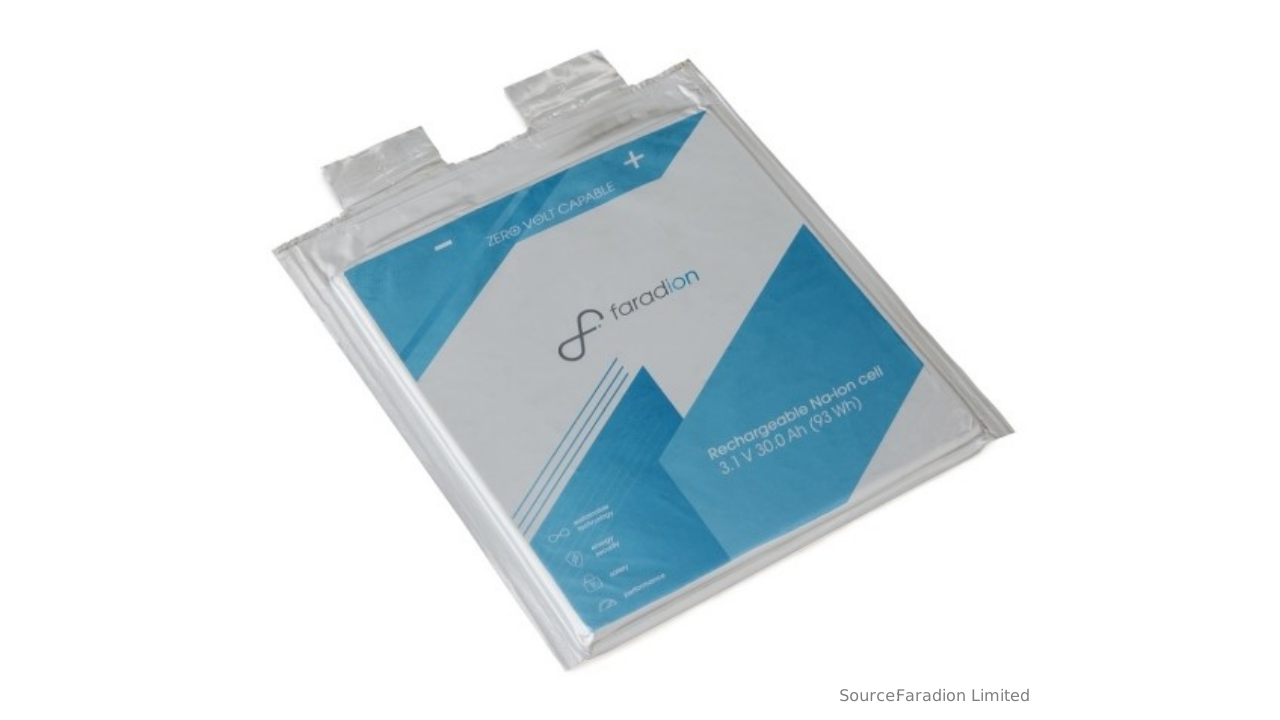
Faradion is the world’s first sodium-ion battery company to commercialize the Na-ion technology. The UK-based company specializes in non-aqueous sodium-ion cell technology and holds impressive patents related to sodium-ion batteries with a comprehensive and wide-reaching IP portfolio.
From backup power and low-cost electric transport to residential and industrial storage, Faradion provides efficient and cost-effective real-world Na-ion battery solutions known for cheap and clean energy.
Natron
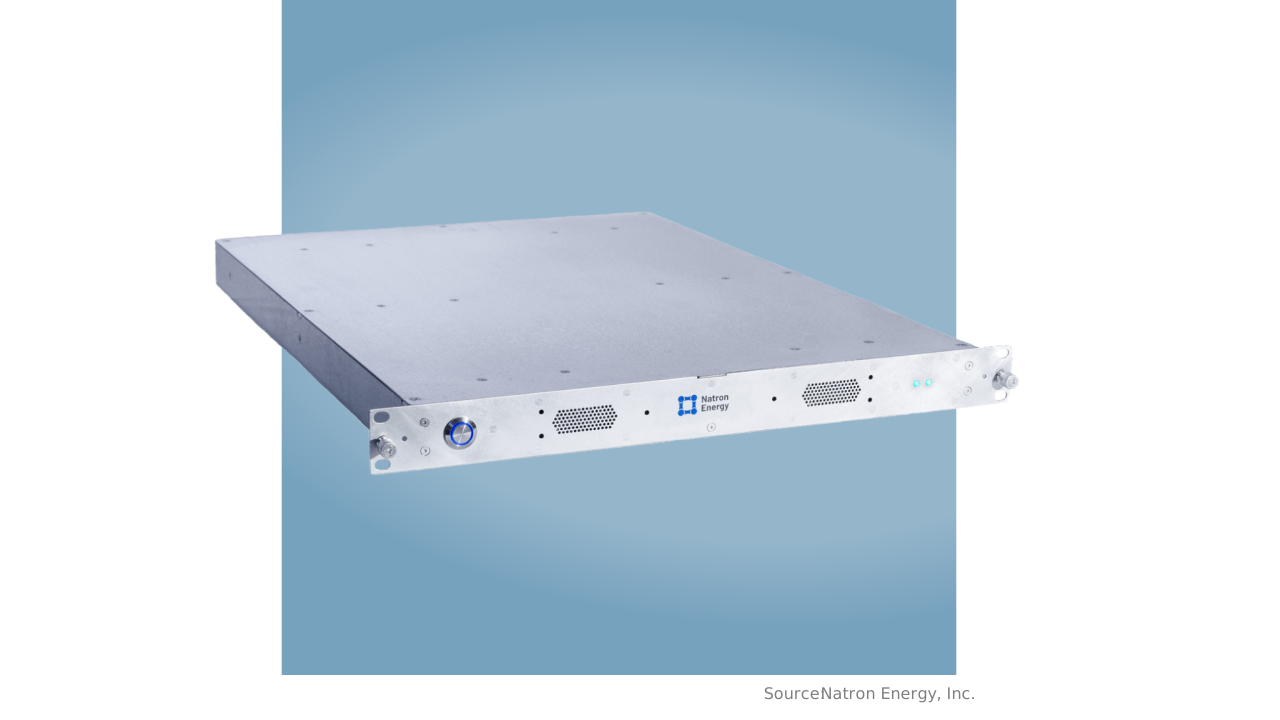
Natron (Natron Energy) provides stand-alone or integrated battery solutions to improve the total cost of ownership (TCO). The company has been pushing the boundaries of traditional battery technology with innovative battery solutions that offer impressive benefits, such as higher peak capacity, safety, and long cycle rate.
Natron’s Prussian Blue sodium-ion technology is built for better performance with better battery chemistry.
This is Natron’s BlueTray™ 4000—the first-ever UL-listed sodium-ion battery:
CATL
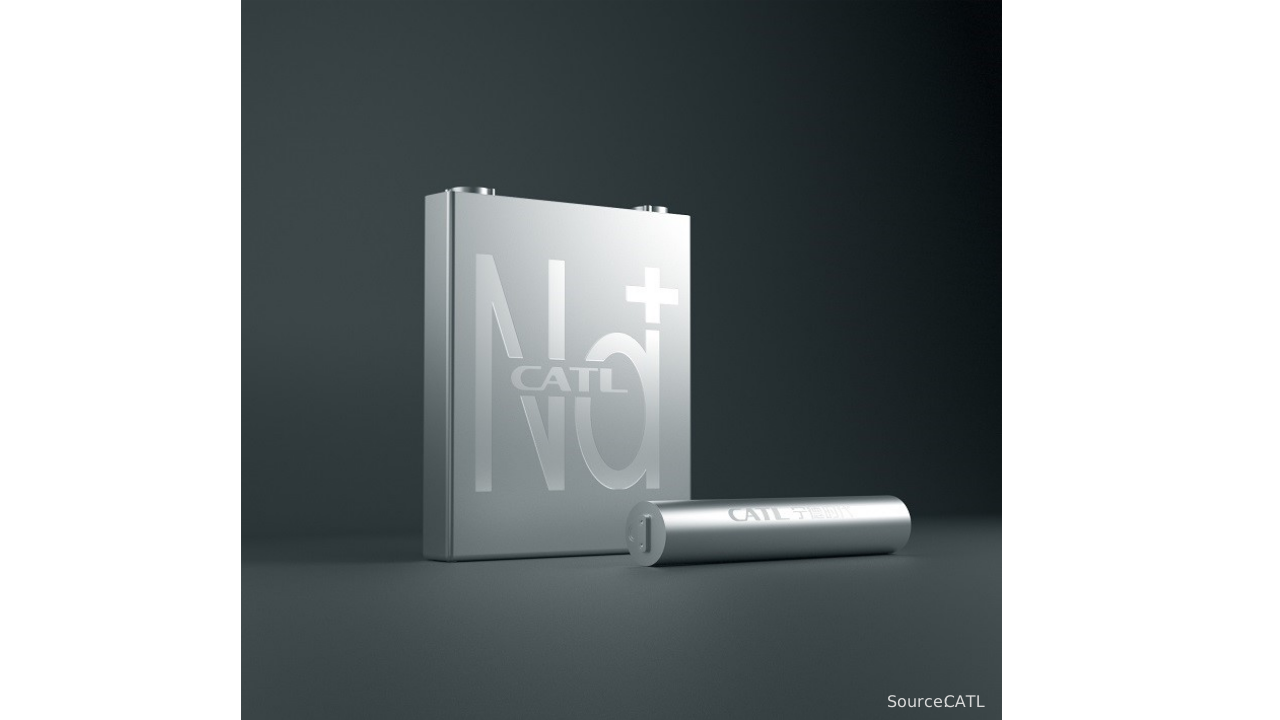
China-based CATL (Contemporary Amperex Technology Co., Ltd.) Research Institute launched its first sodium-ion battery in July 2021. The battery giant is planning to begin commercial production in 2023.
Apart from the sodium-ion battery, CATL launched its AB battery pack solution—a beautiful integration of sodium-ion cells and lithium-ion cells in a single pack. CATL also developed a hard carbon material with a unique porous structure to boost cycle performance.
This is CATL’s first-generation sodium-ion battery:
Global Battery Market Growth
Battery Boom in Recent Years
Battery innovation has come a long way since the early 21st century. Lithium-iron-phosphate (LFP), nickel-cobalt-aluminium (NCA), and nickel-cobalt-manganese (NCM) are the three primary battery technologies.
The diminishing lithium resources encouraged the search for less expensive and more viable alternatives. It is not surprising that automakers, businesses, governments, utility companies, and other organizations started moving toward sodium-powered energy storage devices and systems.
The Indian acquisition of Faradion, a UK-based sodium-ion battery manufacturer, throws the spotlight on the desirability of and demand for sodium-ion batteries. While countries are looking for renewable energy choices, they are stepping up efforts to commercialize the technology through integrated manufacturing facilities.
As the impending lithium shortage accelerates the search for cheaper and safer battery solutions, sodium-based batteries are among the breakthrough energy storage technologies that can fulfill the ever-increasing global energy storage requirements.
Blackridge Research & Consulting – Market Research Reports
Do you want to know the sodium-ion battery market size and demand forecast? The Blackridge Research Global Sodium Ion Battery Market Report provides a meticulous analysis of the sodium-ion battery market and segmentation.
In addition, you’ll find deep insights into the sodium ion battery market drivers and restraints, regional market analysis, market share of key players, and much more. Get in touch for free report customization and custom research services.
The Future Roadmap for Sodium-Ion Batteries
Sodium-Ion Battery R&D
The current R&D capabilities in the battery technology space are growing rapidly to accommodate the exponential demand for energy storage. Alleviating the pressure on lithium reserves in the world is the primary focus of researchers looking for viable non-lithium battery options.
For example, the U.S. National Science Foundation partly funded research that helped develop a fast and stable sodium-ion battery that resists dendrite (filament) growth and reduces the risk of a fire or explosion. Researchers at UC San Diego collaborated with other researchers to design and manufacture a new solid electrolyte to boost solid-state sodium-ion batteries’ efficiency, lifespan, and stability.
Decarbonization, the growing integration of renewables into electrical grids, and rising electric vehicle adoption are some factors encouraging the development of environment-friendly and socially conscious energy storage technologies.
The worldwide R&D efforts are intensifying the industrialization of sodium-ion batteries.
In particular, the electric vehicle market is likely to reap the R&D benefits of sodium-ion battery technology to increase operational efficiency, reduce costs, and drive more revenue opportunities.
The Road Ahead for Sodium-Ion Batteries
What does the future hold for sodium-ion batteries? Among non-lithium alternatives, the desirability of sodium-ion batteries is driven primarily by abundance, low cost, and high performance. Advanced technological capabilities and battery innovation are crucial to the acceptance and adoption of sodium-ion batteries on a commercial scale.
The diversified and complex development stage for sodium batteries will lead to innovation in the battery landscape. For example, hybrid batteries present promising possibilities to blend the best of sodium and lithium features for better battery performance.
Will the benefits of sodium-ion batteries take battery innovation to the next level?
Research affirms the potential of low-cost and high-performance sodium-ion batteries to gain a strong foothold in the battery market. As the world increasingly looks for safe and sustainable energy storage, sodium-ion technology innovation is only going to get better in the future.
Also Read: Global Top 7 Sodium-ion Battery Manufacturers [2025]
Conclusion
The rechargeable battery market is driven by innovation. Battery tech is no longer limited to lithium-ion batteries. Battery producers and battery scientists have been working on lithium-ion battery alternatives in the wake of the high costs and imminent lithium shortage. Moreover, the increasing use of disruptive battery technologies is in line with the goal of carbon neutrality.
The dominant Global lithium-ion battery market has a potential successor in the deserving sodium-ion battery. Over the years, successful commercialization led to the heavy deployment of Li-ion cells in portable electronics, EVs, energy storage systems, etc.
However, we’re seeing a niche market for sodium-ion battery components—and a surge in sodium-driven innovation from sodium-ion-powered generators to customized sodium-ion batteries for data centers.
The sodium-ion battery market is expected to grow rapidly in the coming years with more investments and targeted R&D efforts to ease the transition from pilot plant-scale production to full commercialization.
Compared to lithium-ion batteries, sodium-ion batteries are economically viable, energy efficient, safe, and sustainable. It is time to power up with sodium-ion batteries. Is the sodium-ion battery a game changer? The answer is a resounding yes.
Leave a Comment
We love hearing from our readers and value your feedback. If you have any questions or comments about our content, feel free to leave a comment below.
We read every comment and do our best to respond to them all.